
Panduan lapangan hewan
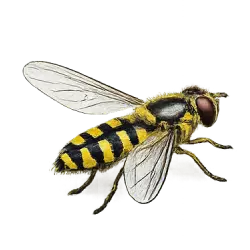
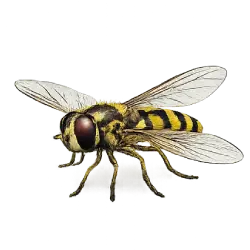
Common Hoverfly
Identifikasi, habitat, rarity, perilaku, simbolisme, fakta, dan pelajaran praktis dari alam.
striped flower-hover specialist. The striped hover-and-dart pollinator. A Common Hoverfly holds position in the air, darts between flowers, and turns small precision into pollination, aphid control, and quick escape.
Kartu AnimalDex
Buka kartu hewan ini
Pindai atau tangkap hewan ini dengan AnimalDex untuk membuka kartu koleksi dan menambahkannya ke koleksi satwa liarmu.
Dapatkan AnimalDexNama ilmiah
Syrphus ribesii
Kategori
Animal
Habitat
Gardens, meadows, hedgerows, woodland edges, parks, farms, and other flower-rich open habitats.
Rarity
Relatively common · 35/100
Native range
Gardens, meadows, hedgerows, woodland edges, parks, farms, and other flower-rich open habitats.
Hover Balance
Hold steady, then move.
Flower-Hover Precision
Apa yang diajarkannya
Precision works best when it can pause, adjust, and move again quickly.
Coba
Use Common Hoverfly energy when the task requires light control: pause in place, read the opening, adjust fast, and move without wasting force.
Bukti alam
Common Hoverflies use rapid wingbeats to hover near flowers, inspect landing spots, and dart away from danger. Their larvae often prey on aphids, so the species combines delicate pollination with practical garden cleanup.
Gunakan untuk
Tangkapan Common Hoverfly berperingkat
Belum ada tangkapan komunitas berperingkat untuk spesies ini.
Mengapa Hover Balance?
Alasan di balik Prinsip Hewan ini dan biologi yang mendukungnya.
Common Hoverflies are small flower-visiting flies that use hovering precision, striped warning-like colors, and quick movement to survive around gardens, meadows, hedges, and woodland edges.
Cara mengidentifikasi Common Hoverfly
- striped abdomen
- hovering flight
- flower feeding
- aphid-hunting larvae
- quick darting escape
Kenapa Common Hoverfly menarik
- Adults visit flowers for nectar and pollen.
- Larvae of many Syrphus hoverflies prey on aphids.
- Their hovering flight lets them inspect flowers while staying ready to dart away.
Habitat: Gardens, meadows, hedgerows, woodland edges, parks, farms, and other flower-rich open habitats.
Native range: Gardens, meadows, hedgerows, woodland edges, parks, farms, and other flower-rich open habitats.
To find Common Hoverfly in the wild, focus on the exact habitat patches that match its body design and daily behavior, not just the broad country where it exists. You usually do better by working one good piece of habitat inside gardens, meadows, hedgerows, woodland edges, parks, farms, and other flower-rich open habitats. than by covering too much ground.
- Forest edge, canopy gaps, fruiting trees, or shaded trails where cover and food meet
- Open grassland edges, lightly wooded plains, or raised ground where you can scan long distances
- Protected habitat blocks within gardens, meadows, hedgerows, woodland edges, parks, farms, and other flower-rich open habitats.
- Start early, pick one strong patch of habitat, and stay long enough for movement to return after you arrive.
- Work edges, clearings, fruiting trees, and stream crossings rather than walking randomly through dense cover.
- Move quietly, stop often, and give the habitat time to settle; many mammals and insects show themselves only after the first pause.
Adults feed on nectar and pollen; larvae commonly prey on aphids.
Birds, spiders, robber flies, wasps, mantises, and other insect-eaters.
Diurnal; active by day, especially in warm sunny conditions.
Usually weeks to months depending on season, temperature, and food availability.
Females place eggs near aphid colonies so larvae hatch close to prey.
Sexes are similar at a glance; close inspection is usually needed.
- striped abdomen
- hovering flight
- flower feeding
- aphid-hunting larvae
- quick darting escape
Common Hoverfly most often symbolizes hover balance in AnimalDex because its real survival behavior repeatedly shows this pattern.
Precision works best when it can pause, adjust, and move again quickly.
Common Hoverflies use rapid wingbeats to hover near flowers, inspect landing spots, and dart away from danger. Their larvae often prey on aphids, so the species combines delicate pollination with practical garden cleanup.
- Observe from a respectful distance and avoid changing the animal's behavior.
- Do not block feeding, shelter, nesting, or travel routes.
- Use a live camera capture without handling or staging wildlife.
statsTitle
statsDescription
statsSourceLabel: statsSourceSpeciesProfile
dominanceStat
24
speedStat
56
sizeStat
3
intelligenceStat
34
rarityStat
35%
Total
152
Size scale
Microscopic edge
Uses the canonical size stat for consistent placement

US$75 – US$157
Perkiraan rentang nilai
Kepercayaan 69%
Perkiraan nilai AnimalDex dibuat dari stat spesies kanonik.
Not a marketplace listing.
Perkiraan nilai berdasarkan hewan yang teridentifikasi dan konteks harga yang tersedia. Bukan daftar marketplace.
Seberapa langka Common Hoverfly?
Rarity: Relatively common (35/100)
AnimalDex canonical rarity score: 35/100, maintained by the live indexed species profile.
Public Animal Power
Explore this Animal Power
This is a public capture, so you can explore its Animal Power here. Personal Apex matches and challenges use your Wild Profile and animals you own.
Own an animal with this power to use it in Growth challenges.
Hewan terkait
Lebih banyak hewan dengan kekuatan Precision
Jelajahi semua hewan Precision
Acorn Weevil
Female Acorn Weevils use elongated rostrums to bore into acorns and lay eggs. The larva…
Baca panduan spesies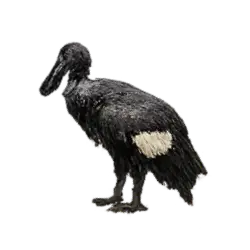
African Openbill
African Openbill is a bird known for gap between upper and lower mandibles,…
Baca panduan spesies
African Pygmy Kingfisher
Pygmy Kingfisher expresses Flashperch through tiny bright body, watchful perch, sudden…
Baca panduan spesiesBawa ensiklopedia ke dunia nyata
AnimalDex membantumu memindai hewan nyata, mengidentifikasi spesies, mengoleksi kartu, dan belajar dari alam di mana pun kamu berada.