
Animal field guide
Siberian Tiger
Identification, habitat, rarity, behavior, symbolism, facts, and practical lessons from nature.
The Cliff-Shadow Tigress. The Bengal Tiger moves alone with patience, silence, and explosive finish. It shows that focus can make one path stronger than many options.
Scientific name
Panthera tigris tigris
Category
Mammal
Habitat
forest, riverine grassland, mangrove, and woodland edge
Rarity
Rare · 78/100
Native range
India, Bangladesh, Nepal, and Bhutan
Silent Ascent
Climb in silence.
Climb quietly until the moment is yours.
What it teaches
Solitude becomes power when every step serves the same aim.
Try it
Its lesson for us is clear: timing matters just as much as effort.
Nature proof
Tigers are solitary ambush predators that use cover, strength, and short bursts of speed to take prey.
Use it for
Ranked Siberian Tiger captures
2 ranked captures in this group from AnimalDex collectors.
Why Silent Ascent?
The creator's reasoning behind this Animal Principle and the biology that supports it.
Bengal Tiger is a mammal known for broad-shouldered striped body, rich orange coat, and close-range ambush power.
How to identify a Siberian Tiger
- broad-shouldered striped body
- rich orange coat
- close-range ambush power
- Often associated with forest, riverine grassland, mangrove, and woodland edge
Why Siberian Tiger are interesting
- Bengal Tiger is a useful example of how anatomy and habitat fit together as one survival system.
- Its shape, movement style, and food strategy make it easy to compare with related animals.
- This species turns one page into a lesson about adaptation, ecosystem role, and identification.
Habitat: forest, riverine grassland, mangrove, and woodland edge
Native range: India, Bangladesh, Nepal, and Bhutan
Native range
Natural range, not this specific capture location.
forest, riverine grassland, mangrove, and woodland edge
To find Siberian Tiger in the wild, focus on the exact habitat patches that match its body design and daily behavior, not just the broad country where it exists. You usually do better by working one good piece of habitat inside india, Bangladesh, Nepal, and Bhutan than by covering too much ground.
- Quiet marsh edges, reedbeds, river bends, or shallow wetland margins
- Forest edge, canopy gaps, fruiting trees, or shaded trails where cover and food meet
- Open grassland edges, lightly wooded plains, or raised ground where you can scan long distances
- First light and late afternoon are often best, when animals come out to feed along the edge of water.
- Work edges, clearings, fruiting trees, and stream crossings rather than walking randomly through dense cover.
- Move quietly, stop often, and give the habitat time to settle; many mammals and insects show themselves only after the first pause.
Mostly crepuscular and nocturnal, resting in cover during heat.
Wild tigers often live around 10-15 years, with longer lives possible under protection.
Females raise cubs alone, teaching them to hunt before independence.
Males are larger and hold wider territories than females.
- Bengal Tiger adjusts movement and feeding to match light, temperature, and food access in its habitat.
- Body design, timing, and shelter choices all help this species stay effective in the wild.
- Patient observation usually reveals more behavior than close approach or fast movement.
Siberian Tiger most often symbolizes silent ascent in AnimalDex because its real survival behavior repeatedly shows this pattern.
Solitude becomes power when every step serves the same aim.
Tigers are solitary ambush predators that use cover, strength, and short bursts of speed to take prey.
- Keep distance and let the animal choose the space.
- Avoid blocking movement routes, nesting areas, or feeding behavior.
- Use optics, patience, and quiet observation instead of crowding for a closer view.
- Regional relatives may look similar at a distance.
- Juveniles, adults, and seasonal forms can differ in color or size.
- Light, angle, and habitat context can change how field marks appear.
0/1 XP toward Level 2
Siberian Tiger stat profile
Canonical species stats are shown when available. Public analysis records are only used as fallback while species profiles are backfilled.
Stats source: Canonical species profile
Dominance
96
Speed
76
Size
62
Intelligence
62
Rarity
78%
Total
374
Size scale
Huge
Uses the canonical size stat for consistent placement




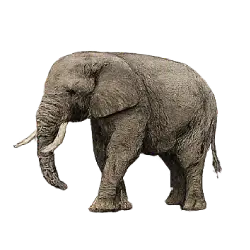

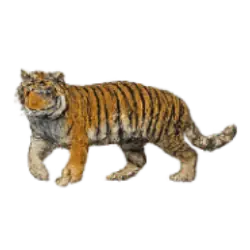
$333 – $693
Estimated value range
Confidence 69%
Estimated AnimalDex value generated from canonical species stats.
Not a marketplace listing.
Estimated value based on the identified animal and available pricing context. Not a marketplace listing.
How rare are Siberian Tiger?
Rarity: Rare (78/100)
Bengal Tiger is never easy to find and becomes less secure when forest, riverine grassland, mangrove, and woodland edge is reduced or broken apart.
Public Animal Power
Explore this Animal Power
This is a public capture, so you can explore its Animal Power here. Personal Apex matches and challenges use your Wild Profile and animals you own.
Own an animal with this power to use it in Growth challenges.
Comparison hearts ready
3 of 3 hearts remaining. Each loss removes 1 heart.
✦ Available actions
Compare this public animal when your deck meets the current rules.
⚡CompareUnavailable›Related animals
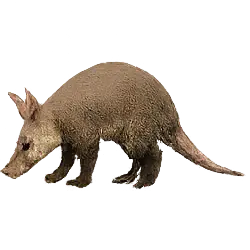
Aardvark
The aardvark is a nocturnal African mammal known for its long snout, strong digging…
Read species guide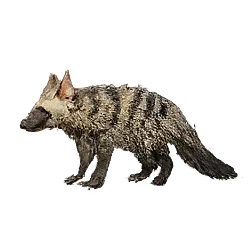
Aardwolf
The aardwolf is a small striped relative of hyenas that feeds mainly on termites rather…
Read species guide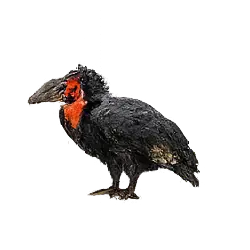
Abyssinian Ground Hornbill
Abyssinian Ground Hornbill is a bird known for bare red facial skin, huge…
Read species guideMore animals with Focus
Browse all Focus animals
African Pygmy Kingfisher
Pygmy Kingfisher expresses Flashperch through tiny bright body, watchful perch, sudden…
Read species guide
Atlantic Yellow-nosed Albatross
Atlantic Yellow-nosed Albatross is a bird known for long gliding ocean wings, yellow…
Read species guide
Barred Eagle-Owl
Barred Eagle-Owl teaches Barred Eagle Owl · Canopy Vigilance through its real biology:…
Read species guideTake the encyclopedia outside
AnimalDex helps you scan real animals, identify species, collect cards, and learn from nature wherever you are.