

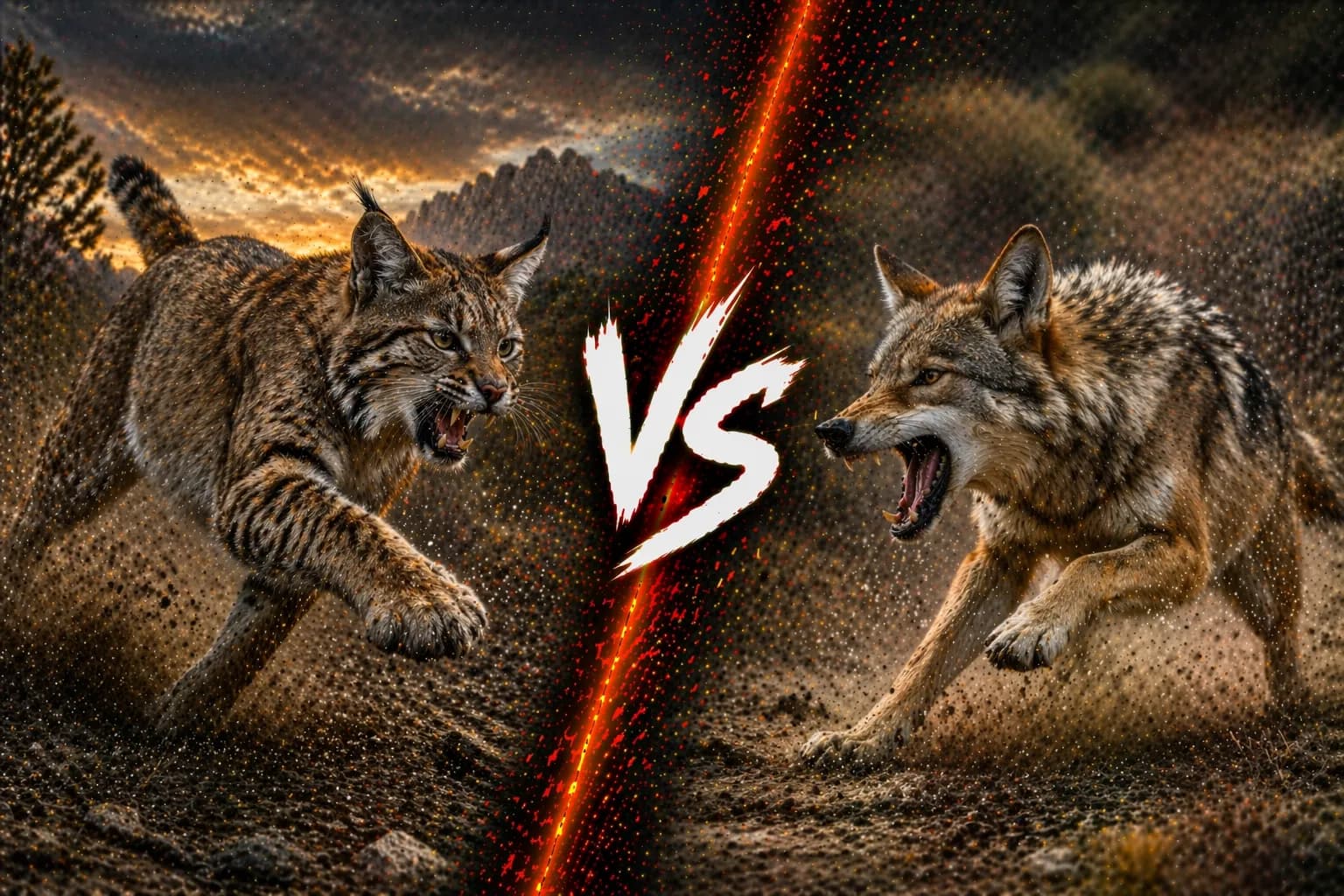
Meet the animals in this matchup
Go straight to the species guides behind this comparison for identification, habitat, rarity, and deeper AnimalDex context.
Quick verdict
Start with the direct answer, then use the structured comparison below to see what changes the outcome.
Coyote often gets the overall edge in open direct conditions because it is usually larger and more durable in a straightforward contest. Bobcat improves sharply in cover, surprise, and short explosive contact.
This matchup is close enough to be interesting. Bobcat is the sharper ambush side. Coyote is the more robust open-ground pressure side.
Why this matchup is interesting
It is a strong mid-sized predator page because terrain changes the answer more than people expect.
Head-to-head species stats
These are the same core AnimalDex stat dimensions used on the dedicated animal pages, pulled side by side so the matchup is faster to scan.
Bobcat
Stats source: Canonical species profile
Coyote
Stats source: Canonical species profile
Trait-by-trait comparison
Only the categories that matter to this matchup are included. The goal is not filler stats, but the real design differences that change the result.
Open-ground pressure
Bobcat
Less ideal if it cannot control the first contact
Coyote
Better mover in open repeated engagement
Why it matters
Coyote benefits when the space stays open.
Ambush quality
Bobcat
Sharper short-range surprise toolkit
Coyote
Less specialized for silent pounce work
Why it matters
Bobcat wants the first clean violent moment.
Persistence
Bobcat
Better in short decisive windows
Coyote
Better at hanging in a longer chase or pressure sequence
Why it matters
If the fight drags, coyote often likes the shape more.
Scenario breakdown
This is where shallow battle content usually fails. Terrain, spacing, timing, and engagement style can change the answer.
Cover ambush
Bobcat edge
This is the cat's best route to a win.
Open faceoff
Coyote edge
The canid model works better once surprise is reduced.
Human-edge habitat
Depends on who controls cover
Edges create both ambush pockets and open movement lanes.
Explore these animals
Use the full species pages to go deeper on biology, habitat fit, and the real traits behind this verdict.
Bobcat
Bobcat is a mammal known for short tail and spotted coat, quiet edge-country movement, and adaptable ambush hunting.
Read species guideCoyote
Coyote is a mammal known for narrow canid muzzle, adaptable edge-habitat movement, and high-pitched social calls.
Read species guideSystems Intelligence & Hidden Purpose
See the animals behind this comparison as engineered biological systems: what each one is built to do, where it gains leverage, and why the matchup changes by scenario.
System Role
The Short-tail Edge Hunter
Bobcat
Specialized Hardware
short tail and spotted coat, quiet edge-country movement, and adaptable ambush hunting give the Bobcat a body plan tuned for its niche.
Systems Script
Bobcats operate through scrubland, forest edge, canyon country, and semi-open woodland. Their design links movement, feeding, shelter, and timing into one workable survival system.
Strategic Insight
Dense environments reward precision, patience, and the ability to read layered cover.
Final take
Coyote gets the slight overall verdict. Bobcat remains very live in any version of the matchup that rewards concealment and the first hard strike.
Collect both animals in AnimalDex
Track the species behind this matchup, compare their real traits, and build the rivalry into your AnimalDex collection.
Comparison FAQ
Short, direct answers to the next questions readers usually ask after the headline verdict.
Who wins, bobcat or coyote?
Coyote gets a slight overall edge, but bobcat can absolutely flip the answer in the right ambush-heavy terrain.
Why is the answer not simple?
Because this matchup is one of the clearest examples of open-ground pressure versus short-range ambush control.
Related comparisons
Continue with nearby matchups to compare more real-world animal traits without dropping into junky who-wins filler.
Fox vs Wolf: Who Actually Has the Edge?
Wolf clearly has the edge in a direct fight. Fox stays impressive because it is more about adaptability, stealth, and opportunistic survival than trying to overpower larger canids.
Read comparisonCougar vs Wolf: Which Predator Has the Edge?
Cougar gets the edge in a clean one-on-one because the cat is built for ambush, grappling, and fast finishing contact. Wolf becomes more dangerous the moment the scenario includes pack pressure, pursuit, or repeated harassment.
Read comparisonDeer vs Coyote: What Does the Real Matchup Look Like?
Healthy adult deer usually has the edge over a single coyote because size, speed, and kicking danger are real. Coyote improves against younger, weaker, or badly positioned deer and gets stronger with numbers.
Read comparisonFox vs Coyote: Which Canid Comes Out Ahead?
Coyote is the stronger overall answer because it is larger, tougher, and much better suited to a direct confrontation. Fox stays successful through stealth, speed, and edge-country opportunism rather than through dominance.
Read comparison