

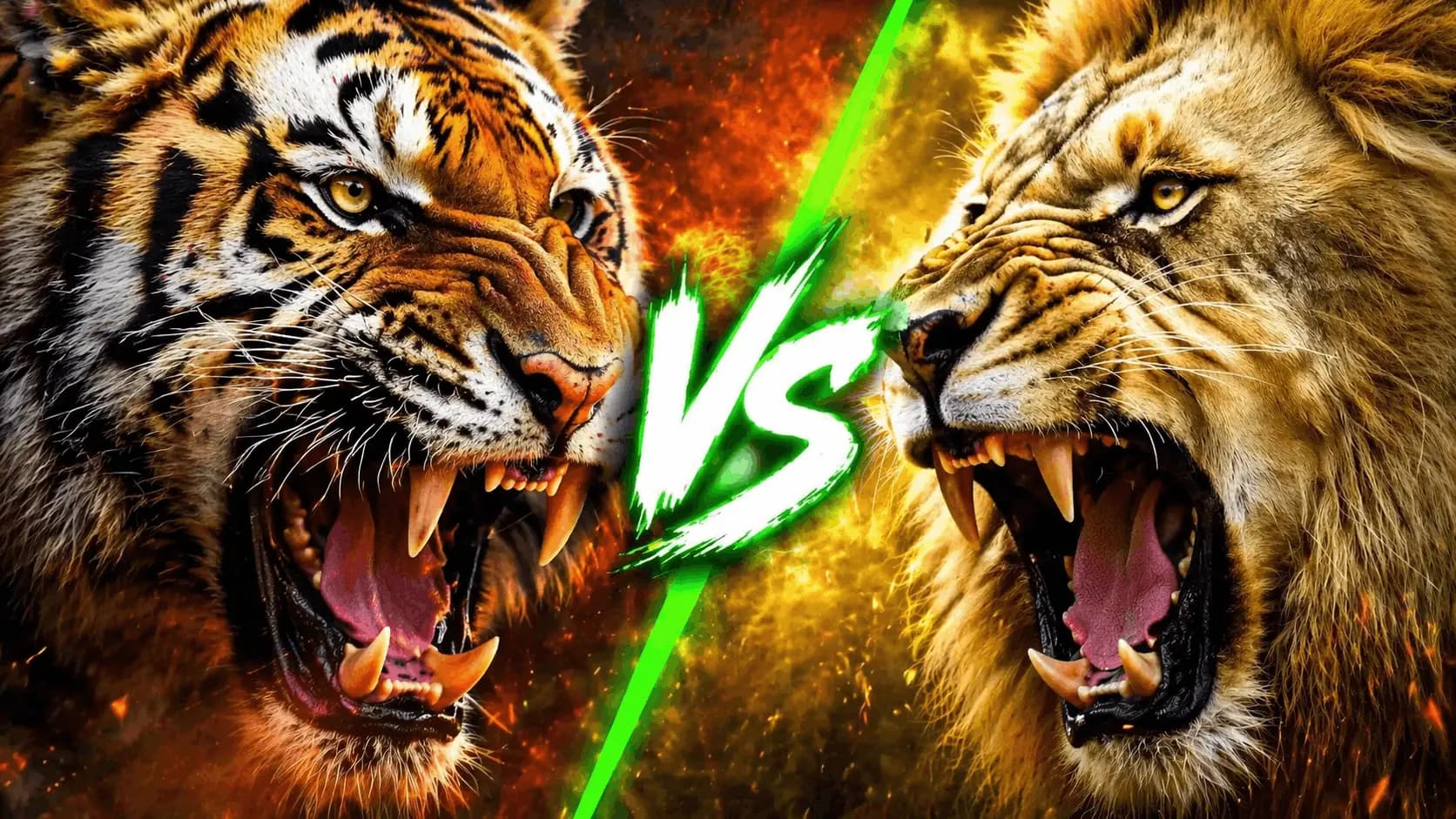
Meet the animals in this matchup
Go straight to the species guides behind this comparison for identification, habitat, rarity, and deeper AnimalDex context.
Quick verdict
Start with the direct answer, then use the structured comparison below to see what changes the outcome.
In a one-on-one land fight, the tiger usually has the edge. Lions become more dangerous when the matchup stops being a duel and starts rewarding coalition pressure, open-country control, or prolonged group conflict.
Tiger vs lion only sounds like a simple power question. In practice, it is a comparison between two different apex-cat operating models: a solitary ambush specialist and a social pressure predator built for group dominance.
If the question is strictly one adult against one adult on land, tiger usually gets the stronger verdict because it combines explosive force, grappling ability, and stealth-oriented attack mechanics in a single body plan. If the question expands to lion social context, territorial pressure, or multiple attackers, the lion side improves fast.
Why this matchup is interesting
This matchup matters because both animals sit near the top of their food webs, but they solve dominance differently. Tigers are optimized for solo execution. Lions are optimized for coordinated control, especially where open ground and pride structure matter.
That difference makes the page useful for SEO and for readers: the real answer is not fantasy hype but how design changes when you build a predator for solitude versus shared pressure.
Head-to-head species stats
These are the same core AnimalDex stat dimensions used on the dedicated animal pages, pulled side by side so the matchup is faster to scan.
Tiger
Stats source: Generated canonical stats
Lion
Stats source: Canonical species profile
Trait-by-trait comparison
Only the categories that matter to this matchup are included. The goal is not filler stats, but the real design differences that change the result.
Explosive power
Tiger
Heavy forelimbs, strong grappling, and high solo fight output
Lion
Heavy forequarters and blunt-force control at close range
Why it matters
Both cats hit hard, but tiger hardware is usually better suited to a true one-on-one finish.
Ambush control
Tiger
Built for dense-cover stalking and sudden close-range commitment
Lion
Capable stalker, but less specialized for solitary cover-based execution
Why it matters
Tiger usually creates the cleaner first-contact advantage when terrain offers concealment.
Close-range durability
Tiger
Robust body, strong neck, and confident solo engagement
Lion
Thick forequarters and strong tolerance for violent close contact
Why it matters
Neither animal is fragile. This category is more about how they use force than whether they can absorb it.
Coalition pressure
Tiger
Minimal support in a true solo framework
Lion
Pride structure changes defense, pursuit, and intimidation dynamics
Why it matters
Lion advantage rises sharply the moment the scenario includes partners or shared territorial pressure.
Terrain flexibility
Tiger
Excellent in cover, edges, and broken ground
Lion
Excellent in open country and social pursuit spaces
Why it matters
The better terrain match depends on whether the fight rewards concealment or shared open-ground pressure.
Scenario breakdown
This is where shallow battle content usually fails. Terrain, spacing, timing, and engagement style can change the answer.
One-on-one with cover
Tiger edge
Dense cover rewards stealth, surprise, and short explosive commitment. That is a tiger-favored operating environment.
Open-ground duel
Slight tiger edge
The lion is comfortable in open terrain, but a strict duel still favors the tiger's solo-fight design more than pride-oriented control.
Territorial pressure with coalition support
Lion side
The moment support enters the picture, lion social hardware stops being background context and becomes the deciding factor.
Extended chaotic engagement
Depends on context
Short, clean clashes lean tiger. Longer conflict with positional shifts, multiple angles, or coalition interference leans lion.
Explore these animals
Use the full species pages to go deeper on biology, habitat fit, and the real traits behind this verdict.
Tiger
The tiger is a large striped cat built for stealth, ambush, and territorial control across forests, wetlands, and grassland edges in Asia.
Read species guideLion
Lions are social big cats recognized for pride living, coordinated hunts, and heavy-bodied strength on open African landscapes and a small remnant Asian range.
Read species guideSystems Intelligence & Hidden Purpose
See the animals behind this comparison as engineered biological systems: what each one is built to do, where it gains leverage, and why the matchup changes by scenario.
System Role
The Solitary Ambush Accountant
Tiger
Specialized Hardware
Striped camouflage, padded feet, strong night vision, and explosive forelimb power make the tiger highly effective close-range strike hardware in dense cover.
Systems Script
Tigers regulate herbivore pressure and prey behavior across forests, wetlands, and grasslands. Their presence changes how other animals move, feed, and allocate risk, which then reshapes vegetation and recovery patterns.
Strategic Insight
A high-value move beats a high-volume one. Save force for the window where surprise and position make the cost worth paying.
System Role
The Pride-Based Pressure Broker
Lion
Specialized Hardware
Heavy forequarters, social coordination, strong jaws, and low-light hunting ability turn lions into open-country control hardware built for decisive close-range force.
Systems Script
Lions regulate herd behavior and prey distribution across grassland systems. Their influence is partly in the kill and partly in the fear patterns that reshape where herbivores linger.
Strategic Insight
Shared force works best when roles are clear. Good teams do not all do the same thing at once.
Final take
Tiger has the cleaner one-on-one advantage, especially when the matchup rewards surprise, explosive force, and independent decision-making.
Lion success rises when the question becomes less about a duel and more about coalition pressure, open-country control, or repeated group conflict. That is the biologically grounded answer: tiger wins the cleaner solo comparison, lion gains leverage as social context increases.
Collect both animals in AnimalDex
Track the species behind this matchup, compare their real traits, and build the rivalry into your AnimalDex collection.
Comparison FAQ
Short, direct answers to the next questions readers usually ask after the headline verdict.
Who is stronger, tiger or lion?
In a straight one-on-one comparison, tiger usually gets the stronger verdict because its body plan is more optimized for solo finishing power and ambush execution.
Would a tiger beat a lion in a real fight?
Usually the tiger gets the edge in a true duel, but lion outcomes improve quickly when pride support or open-country group pressure changes the scenario.
Why are lions still so dangerous if tigers have the solo edge?
Because lions are not built only for solitary combat. Their danger rises through cooperation, territorial coordination, and pressure applied by more than one animal.
Related comparisons
Continue with nearby matchups to compare more real-world animal traits without dropping into junky who-wins filler.
Tiger vs Cheetah Speed: Which Big Cat Is Actually Faster?
Cheetah is the faster cat when the question is raw land speed. Tiger is more powerful and more dangerous in a fight, but speed is the cheetah's clear domain.
Read comparisonKomodo Dragon vs King Cobra: What Happens in a Real Clash?
Komodo dragon usually has the edge in a direct physical clash because of its size, armor, and crushing close-range force. King cobra remains dangerous because one clean venom-delivering strike can change the outcome fast.
Read comparisonBear vs Tiger: Who Has the Edge in a Real Clash?
Tiger is the safer general answer in a one-on-one land clash when stealth, timing, and clean engagement matter. A very large bear represented here by the polar bear changes the problem through sheer mass and durability, especially in open, cold terrain.
Read comparisonGiraffe vs Lion: Can a Giraffe Actually Win?
Adult giraffe is far more dangerous than people assume and can absolutely repel or injure lions. Lion still gets the better overall predation answer once pride pressure, target vulnerability, or repeated attacks enter the story.
Read comparison