
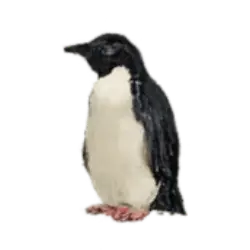
Adelie Penguin
Species principle: Hardiness
March the ice.
Cheerful motion can still be built for brutal places.
Adelie Penguins breed in Antarctica, walk across ice, and dive into freezing waters using strong flippers and dense waterproof plumage.

Behavioral Principles
March the ice.
Animals grouped here share a similar survival strategy in nature. Each species still has its own lesson, meaning, and field-guide page.
22 species
Species principle: Hardiness
March the ice.
Cheerful motion can still be built for brutal places.
Adelie Penguins breed in Antarctica, walk across ice, and dive into freezing waters using strong flippers and dense waterproof plumage.

Species principle: Convergence
Gather on the sign.
What one eye misses, many wings can find together.
Black Vultures often forage socially and may follow other vultures or flock members to carrion. Unlike Turkey Vultures, they rely more heavily on vision and social cues than smell.
Species principle: Borrowed Defense
Carry the ally.
Small allies become strength when held with care.
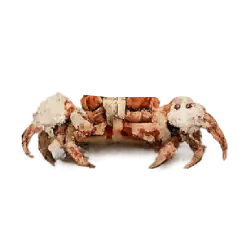
Boxer Crabs carry small sea anemones in their claws, using the stinging tentacles for defense and possibly food gathering.

Species principle: Pack Surge
Rush as one.
Small bodies become a wave when the group moves as one.
Bush Dogs are social canids with webbed feet and pack-hunting behavior, often moving through forests, wetlands, and water edges in coordinated groups.
Species principle: Rotation
Take the front, then share it.
A group travels farther when the burden of the front is shared.
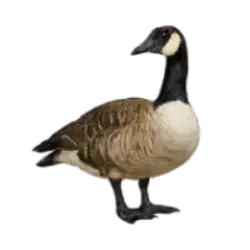
Canada Geese fly in V-formations that reduce drag for birds behind the leader. Flock members communicate during flight and can rotate positions during long-distance travel.
Species principle: Elasticity
Bend through the edges.
Survival bends without breaking when it can feed in many worlds.
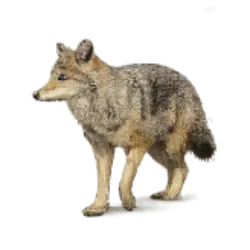
Coyotes are highly flexible canids with broad diets and strong ability to live in wild, rural, suburban, and urban edge habitats. Their adaptability has allowed them to expand across many environments.
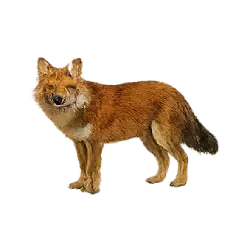
Species principle: Whistled Coordination
Whistle the pack forward.
A team moves as one when the signal is clear enough to travel through cover.
Dholes are social canids that hunt cooperatively and use whistles and other vocalizations to coordinate pack movement through forests and grasslands.

Species principle: Echo Social Intelligence
Find your pod. Share the signal.
Clear communication becomes power when the environment is noisy.
Dolphins combine echolocation, whistles, social learning, and coordinated movement to navigate murky water, hunt together, and maintain group bonds across distance.
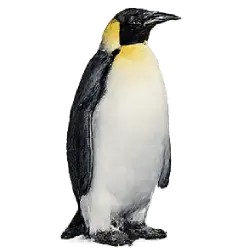
Species principle: Huddled Warmth
Hold the huddle.
Warmth becomes possible when the circle keeps moving for everyone.
Emperor Penguins survive Antarctic breeding conditions by forming dense huddles that rotate individuals between the colder outside and warmer center.
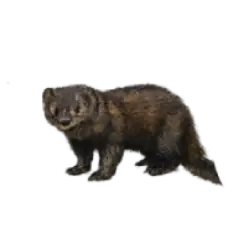
Species principle: Forest Versatility
Use every shadow.
The dark forest belongs to the hunter with more than one route.
Fishers are agile mustelids that move through trees and on the ground, hunting varied prey and using forest structure with flexible predatory behavior.

Species principle: Teamwork
Coordinate roles. Compound outcomes.
In Goose, teamwork creates a repeatable survival edge when conditions are uncertain.
Goose is a bird known for long-distance migratory v-form flight, strong social call coordination, and grazing wetland adaptation. wetland, grassland, river floodplain, and agricultural open country Goose remains fairly widespread where wetland, grassland, river floodplain, and agricultural open country is still available.
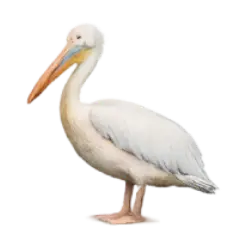
Species principle: Scoop Strategy
Scoop cleanly.
The right tool turns effort into one clean motion.
Great White Pelicans use large bill pouches to scoop fish and often forage cooperatively in groups on lakes and wetlands.

Species principle: Teamwork
Coordinate roles. Compound outcomes.
Shared force works best when roles are clear. Good teams do not all do the same thing at once.
Heavy forequarters, social coordination, strong jaws, and low-light hunting ability turn lions into open-country control hardware built for decisive close-range force. Lions regulate herd behavior and prey distribution across grassland systems. Their influence is partly in the kill and partly in the fear patterns that reshape where herbivores linger.

Species principle: Service
Carry the path.
Strength becomes trust when it helps carry the weight of the journey.
Llamas have long been used as pack animals in Andean mountain regions. Their padded feet, sure movement, thick coats, and endurance help them carry loads across rough terrain.

Species principle: Vigilance
Watch the horizon.
The group stays free because someone is willing to watch the horizon.
Meerkats live in cooperative groups where individuals often take sentry positions, standing upright to watch for predators while others forage. Alarm calls warn the group of danger.
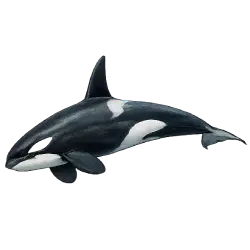
Species principle: Pod Intelligence
Hunt as one.
Strength becomes strategy when the family learns to hunt as one mind.
Orcas live in social pods with learned hunting traditions, vocal communication, cooperative prey capture, and strong family bonds.

Species principle: Teamwork
Coordinate roles. Compound outcomes.
In Penguin, teamwork creates a repeatable survival edge when conditions are uncertain.
Penguin is a bird known for upright seabird posture, flipper-like wings, and dense waterproof plumage. southern ocean coast, island colony, and cold marine feeding ground Penguin can still be found in good habitat, but local numbers shift when southern ocean coast, island colony, and cold marine feeding ground changes.

Species principle: Ingenuity
Find a way.
Use what is available and make it work.
Pig is known for flexible foraging and opportunistic problem-solving in changing environments.
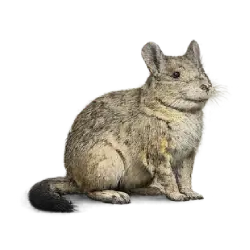
Species principle: Burrow Society
Build the neighborhood.
Security grows when many lives share the work of shelter.
Plains Vizcachas live in social colonies and build extensive burrow systems called vizcacheras, which provide refuge on open grasslands.

Species principle: Colony
Return to the rookery.
Repeated trust turns a group into a place of power.
Rooks are social corvids that nest communally in rookeries and forage in groups across fields, using calls, memory, and repeated social association.

Species principle: Teamwork
Coordinate roles. Compound outcomes.
Endurance and coordination beat isolated bursts of talent. A disciplined group with shared direction can reshape a landscape over time.
Long-distance scent detection, endurance locomotion, social signaling, and coordinated pack behavior give wolves durable hardware for tracking, testing, and wearing down prey across large territories. Wolves apply top-down pressure that changes prey distribution, browsing intensity, and risk behavior. They remind ecosystems that movement patterns matter as much as raw population numbers.
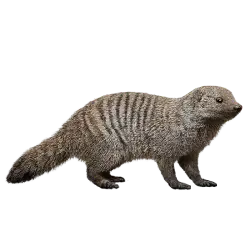
Species principle: Foraging Unity
Scurry as one.
A group becomes one mind when many noses follow the same hunger.
Banded Mongooses, also called zebra mongooses, forage in cohesive groups with contact calls, cooperative vigilance, and coordinated movement across the ground.