
Panduan lapangan hewan
Abyssinian Ground Hornbill
Identifikasi, habitat, rarity, perilaku, simbolisme, fakta, dan pelajaran praktis dari alam.
The Ground-Thunder Beak. The Abyssinian Ground Hornbill uses a giant curved bill and booming calls to stalk across open ground like a feathered giant. It reminds us that walking can be just as powerful as flying.
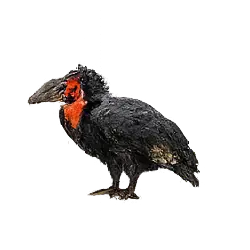
Kartu AnimalDex
Buka kartu hewan ini
Pindai atau tangkap hewan ini dengan AnimalDex untuk membuka kartu koleksi dan menambahkannya ke koleksi satwa liarmu.
Dapatkan AnimalDexNama ilmiah
Bucorvus abyssinicus
Kategori
Bird
Habitat
dry savannah, thorn scrub, and open woodland
Rarity
Rare · 72/100
Native range
Northern Sub-Saharan Africa
Grounded Power
Walk with thunder.
Boom-Call Ground Stalking
Apa yang diajarkannya
Not every powerful thing needs to leave the ground.
Coba
Your team is panicking, so you slow the room and name the next step.
Bukti alam
Abyssinian Ground Hornbills are large terrestrial hornbills that walk across savannas and open habitats, using strong bills, deep calls, and long legs while hunting small animals.
Gunakan untuk
Tangkapan Abyssinian Ground Hornbill berperingkat
Belum ada tangkapan komunitas berperingkat untuk spesies ini.
Mengapa Grounded Power?
Alasan di balik Prinsip Hewan ini dan biologi yang mendukungnya.
Abyssinian Ground Hornbill is a bird known for bare red facial skin, huge downward-curved bill, and long-striding ground hunt.
Cara mengidentifikasi Abyssinian Ground Hornbill
- bare red facial skin
- huge downward-curved bill
- long-striding ground hunt
- Often associated with dry savannah, thorn scrub, and open woodland
Kenapa Abyssinian Ground Hornbill menarik
- Abyssinian Ground Hornbill is a useful example of how anatomy and habitat fit together as one survival system.
- Its shape, movement style, and food strategy make it easy to compare with related animals.
- This species turns one page into a lesson about adaptation, ecosystem role, and identification.
Habitat: dry savannah, thorn scrub, and open woodland
Native range: Northern Sub-Saharan Africa
nativeRangeCardTitle
nativeRangeCardDescription
dry savannah, thorn scrub, and open woodland
To find Abyssinian Ground Hornbill in the wild, focus on the exact habitat patches that match its body design and daily behavior, not just the broad country where it exists. You usually do better by working one good piece of habitat inside northern Sub-Saharan Africa than by covering too much ground.
- Forest edge, canopy gaps, fruiting trees, or shaded trails where cover and food meet
- Open grassland edges, lightly wooded plains, or raised ground where you can scan long distances
- Water sources, dune bases, rocky wadis, or shaded scrub at first and last light
- Start early, pick one strong patch of habitat, and stay long enough for movement to return after you arrive.
- Work edges, clearings, fruiting trees, and stream crossings rather than walking randomly through dense cover.
- Use sound, flight lines, and perch trees as clues; birds often reveal themselves before they sit in the open.
They feed on insects, reptiles, small mammals, birds, and carrion. The diet fits the principle because food is not just fuel here; it is the problem the animal's body has learned to solve efficiently.
Predators and threats include large carnivores, raptors for chicks, and habitat loss. Those pressures make the principle meaningful because survival depends on using the animal's specific design before danger gets too close.
They are diurnal, walking and calling across territory. That rhythm supports Grounded Power because timing decides when the animal spends energy, hides, feeds, or protects itself.
They may live can live for decades, especially in care. The lifespan matters because the species' strategy is not a single trick but a pattern repeated across seasons.
Females typically produce usually one or two eggs in a tree cavity. The offspring notes fit the lesson because young begin life inside the same habitat pressures that shaped the adult strategy.
Males have blue and red throat skin; females more blue. Sex differences matter only where they change the visible strategy; otherwise the shared body plan carries the main lesson.
- Abyssinian Ground Hornbill adjusts movement and feeding to match light, temperature, and food access in its habitat.
- Body design, timing, and shelter choices all help this species stay effective in the wild.
- Patient observation usually reveals more behavior than close approach or fast movement.
Abyssinian Ground Hornbill most often symbolizes grounded power in AnimalDex because its real survival behavior repeatedly shows this pattern.
Not every powerful thing needs to leave the ground.
Abyssinian Ground Hornbills are large terrestrial hornbills that walk across savannas and open habitats, using strong bills, deep calls, and long legs while hunting small animals.
- Keep distance and let the animal choose the space.
- Avoid blocking movement routes, nesting areas, or feeding behavior.
- Use optics, patience, and quiet observation instead of crowding for a closer view.
- Regional relatives may look similar at a distance.
- Juveniles, adults, and seasonal forms can differ in color or size.
- Light, angle, and habitat context can change how field marks appear.
statsTitle
statsDescription
statsSourceLabel: statsSourceSpeciesProfile
dominanceStat
58
speedStat
45
sizeStat
34
intelligenceStat
48
rarityStat
72%
Total
257
Size scale
Medium
Uses the canonical size stat for consistent placement



US$213 – US$441
Perkiraan rentang nilai
Kepercayaan 69%
Perkiraan nilai AnimalDex dibuat dari stat spesies kanonik.
Not a marketplace listing.
Perkiraan nilai berdasarkan hewan yang teridentifikasi dan konteks harga yang tersedia. Bukan daftar marketplace.
Seberapa langka Abyssinian Ground Hornbill?
Rarity: Rare (72/100)
Abyssinian Ground Hornbill is never easy to find and becomes less secure when dry savannah, thorn scrub, and open woodland is reduced or broken apart.
Systems Intelligence & Hidden Purpose
Sudut pandang systems biology untuk melihat bagaimana spesies ini dibangun, peran apa yang dijalankannya di ekosistem, dan pelajaran praktis apa yang bisa dipetik manusia.
System Role
The Red-faced Ground Hornbill
Abyssinian Ground Hornbill
Specialized Hardware
bare red facial skin, huge downward-curved bill, and long-striding ground hunt give the Abyssinian Ground Hornbill a body plan tuned for its niche.
Systems Script
Abyssinian Ground Hornbills operate through dry savannah, thorn scrub, and open woodland. Their design links movement, feeding, shelter, and timing into one workable survival system.
Strategic Insight
Harsh places reward efficiency, timing, and bodies that waste very little.
Public Animal Power
Explore this Animal Power
This is a public capture, so you can explore its Animal Power here. Personal Apex matches and challenges use your Wild Profile and animals you own.
Own an animal with this power to use it in Growth challenges.
Hewan terkait
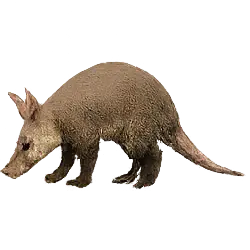
Aardvark
The aardvark is a nocturnal African mammal known for its long snout, strong digging…
Baca panduan spesies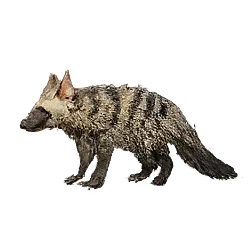
Aardwolf
The aardwolf is a small striped relative of hyenas that feeds mainly on termites rather…
Baca panduan spesies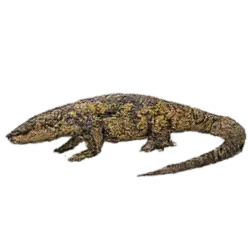
Ackie Monitor
Ackie Monitor is a reptile known for spiny defensive tail, compact muscular monitor…
Baca panduan spesiesLebih banyak hewan dengan kekuatan Grounded Power
Jelajahi semua hewan Grounded Power
Crested Caracara
Crested Caracaras are falcons that spend much of their time on the ground. They feed on…
Baca panduan spesies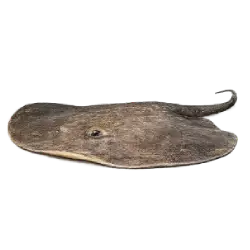
Giant Freshwater Stingray
Giant Freshwater Stingray is a fish known for huge river-floor disc body, long…
Baca panduan spesies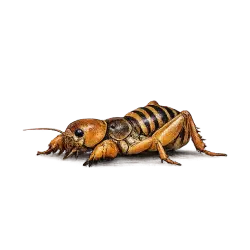
Jerusalem Cricket
Jerusalem Crickets are large ground-dwelling insects that spend much of life in soil or…
Baca panduan spesiesBawa ensiklopedia ke dunia nyata
AnimalDex membantumu memindai hewan nyata, mengidentifikasi spesies, mengoleksi kartu, dan belajar dari alam di mana pun kamu berada.