
Panduan lapangan hewan
African Harrier-Hawk
Identifikasi, habitat, rarity, perilaku, simbolisme, fakta, dan pelajaran praktis dari alam.

Kartu AnimalDex
Buka kartu hewan ini
Pindai atau tangkap hewan ini dengan AnimalDex untuk membuka kartu koleksi dan menambahkannya ke koleksi satwa liarmu.
Dapatkan AnimalDexPanduan lapangan hewan
African Harrier-Hawk
The African Harrier-Hawk bends its legs backwards and sideways to feel inside tree holes and weaver nests for prey it cannot see. It shows us that reaching further often matters more than striking harder.
No captures yet
Native range
Natural range, not this capture location
Native range keys: sub_saharan_africa. Woodland, forest edge, riverine trees, palm stands and wooded gardens across sub-Saharan Africa suit African Harrier-Hawks because Flexible Reach needs surfaces to cling to and cavities to search. The place rewards the bird that can work a trunk rather than only the open air.
Search near meAnimalDex stats
Dominance
57
Speed
52
Size
36
Intelligence
55
Rarity
58%
Total
258
Size scale
Nama ilmiah
Polyboroides typus
Kategori
Bird
Habitat
Native range keys: sub_saharan_africa. Woodland, forest edge, riverine trees, palm stands and wooded gardens across sub-Saharan Africa suit African Harrier-Hawks because Flexible Reach needs surfaces to cling to and cavities to search. The place rewards the bird that can work a trunk rather than only the open air.
Rarity
Uncommon · 58/100
Native range
Native range keys: sub_saharan_africa. Woodland, forest edge, riverine trees, palm stands and wooded gardens across sub-Saharan Africa suit African Harrier-Hawks because Flexible Reach needs surfaces to cling to and cavities to search. The place rewards the bird that can work a trunk rather than only the open air.
Mengapa African Harrier-Hawk?
Alasan di balik Prinsip Hewan ini dan biologi yang mendukungnya.
African Harrier-Hawk teaches Flexible Reach through legs that bend where other raptors are rigid. Hanging off a trunk with wings beating for balance, it feels into holes and nests that stay closed to sharper, faster hunters.
Cara mengidentifikasi African Harrier-Hawk
- Intertarsal joints that bend both forward and sideways
- Clambers and hangs on trunks and nests, wings flapping for balance
- Bare facial skin that flushes from yellow to red
- Grey plumage with a single broad white band across a long tail
Kenapa African Harrier-Hawk menarik
- Its double-jointed legs let it reach into cavities, crevices and weaver nests that other raptors cannot open.
- The bare skin of its face changes colour, flushing red when the bird is excited or displaying.
- It is one of very few raptors that regularly eats fruit, taking the oily flesh of oil palm nuts.
- It is also called the Gymnogene, a name describing that bare face.
- Two eggs are often laid, but usually only one chick is raised.
Habitat: Native range keys: sub_saharan_africa. Woodland, forest edge, riverine trees, palm stands and wooded gardens across sub-Saharan Africa suit African Harrier-Hawks because Flexible Reach needs surfaces to cling to and cavities to search. The place rewards the bird that can work a trunk rather than only the open air.
Native range: Native range keys: sub_saharan_africa. Woodland, forest edge, riverine trees, palm stands and wooded gardens across sub-Saharan Africa suit African Harrier-Hawks because Flexible Reach needs surfaces to cling to and cavities to search. The place rewards the bird that can work a trunk rather than only the open air.
nativeRangeCardTitle
nativeRangeCardDescription
Native range keys: sub_saharan_africa. Woodland, forest edge, riverine trees, palm stands and wooded gardens across sub-Saharan Africa suit African Harrier-Hawks because Flexible Reach needs surfaces to cling to and cavities to search. The place rewards the bird that can work a trunk rather than only the open air.
To find African Harrier-Hawk in the wild, focus on the exact habitat patches that match its body design and daily behavior, not just the broad country where it exists. You usually do better by working one good piece of habitat inside native range keys: sub_saharan_africa. Woodland, forest edge, riverine trees, palm stands and wooded gardens across sub-Saharan Africa suit African Harrier-Hawks because Flexible Reach needs surfaces to cling to and cavities to search. The place rewards the bird that can work a trunk rather than only the open air. than by covering too much ground.
- Quiet marsh edges, reedbeds, river bends, or shallow wetland margins
- Forest edge, canopy gaps, fruiting trees, or shaded trails where cover and food meet
- Headlands, reef edges, island colonies, tidal channels, or productive coastal water
- First light and late afternoon are often best, when animals come out to feed along the edge of water.
- Work edges, clearings, fruiting trees, and stream crossings rather than walking randomly through dense cover.
- Use sound, flight lines, and perch trees as clues; birds often reveal themselves before they sit in the open.
Nestlings, eggs, geckos, bats, frogs, insects and oil palm fruit. This diet supports Flexible Reach because most of it is food that is hidden — reachable only by a hunter built to feel its way in.
Larger eagles, and nest predators taking eggs or young. Its answer is not speed but placement: nests set high in a tree fork, and a body that can hold onto awkward surfaces where pursuit is difficult.
African Harrier-Hawks are diurnal, working trees and cliffs through the day. Their rhythm is a slow search rather than a fast chase, quartering slowly and stopping to investigate anything that could hold prey.
African Harrier-Hawks can live for many years, so Flexible Reach becomes a learned map of which trees, holes and colonies repay a visit. The principle deepens because reach is improved by memory, not only by anatomy.
Females lay one to three eggs on a stick platform built in a tree fork, and both parents feed the young. Offspring fit the principle because the chick is raised in exactly the kind of sheltered cavity-like site its parents spend their lives searching.
Females are slightly larger than males, and the two are otherwise closely alike. The difference is small because both sexes need the same specialised reach to feed themselves.
- Intertarsal joints that bend both forward and sideways
- Clambers and hangs on trunks and nests, wings flapping for balance
- Bare facial skin that flushes from yellow to red
- Grey plumage with a single broad white band across a long tail
- Observe from a respectful distance and avoid changing the animal's behavior.
- Do not block feeding, shelter, nesting, or travel routes.
- Use a live camera capture without handling or staging wildlife.
Hewan terkait
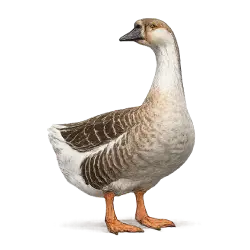
African Goose
The Tireless Grass Grazer. The Tireless Grass Grazer. Steady, modest work can quietly…
Baca panduan spesies
African Grey Parrot
The African grey parrot is a highly intelligent parrot known for gray plumage, red…
Baca panduan spesies
African Jacana
African Jacana is a bird known for extremely long spreading toes, chestnut and black…
Baca panduan spesiesBawa ensiklopedia ke dunia nyata
AnimalDex membantumu memindai hewan nyata, mengidentifikasi spesies, mengoleksi kartu, dan belajar dari alam di mana pun kamu berada.