
Panduan lapangan hewan
Australian Pelican
Identifikasi, habitat, rarity, perilaku, simbolisme, fakta, dan pelajaran praktis dari alam.

Kartu AnimalDex
Buka kartu hewan ini
Pindai atau tangkap hewan ini dengan AnimalDex untuk membuka kartu koleksi dan menambahkannya ke koleksi satwa liarmu.
Dapatkan AnimalDexPanduan lapangan hewan
Australian Pelican
The Long-billed Waiter. It shows us that the right tool makes patience pay.
No captures yet
Native range
Natural range, not this capture location
Native range keys: australia_oceania. Coasts, estuaries, inland lakes and floodwaters across Australia and New Guinea, because Patient Scale needs open water where fish concentrate rather than water that must be searched.
Search near meAnimalDex stats
Dominance
50
Speed
56
Size
50
Intelligence
43
Rarity
55%
Total
254
Size scale
Nama ilmiah
Pelecanus conspicillatus
Kategori
Animal
Habitat
Native range keys: australia_oceania. Coasts, estuaries, inland lakes and floodwaters across Australia and New Guinea, because Patient Scale needs open water where fish concentrate rather than water that must be searched.
Rarity
Uncommon · 55/100
Native range
Native range keys: australia_oceania. Coasts, estuaries, inland lakes and floodwaters across Australia and New Guinea, because Patient Scale needs open water where fish concentrate rather than water that must be searched.
Mengapa Australian Pelican?
Alasan di balik Prinsip Hewan ini dan biologi yang mendukungnya.
Australian Pelican teaches Patient Scale through the longest bill of any bird alive. It does not chase; it arrives where water concentrates fish and lets a pouch that holds more than its stomach do the work.
Cara mengidentifikasi Australian Pelican
- The longest bill of any living bird, up to 50 cm
- Elastic throat pouch that stretches to hold several litres
- Black-and-white wings held flat and steady while soaring
- Groups that swim in a line to herd fish into the shallows
Kenapa Australian Pelican menarik
- Its bill is the longest of any bird species alive today.
- The throat pouch can hold more water than the bird's stomach can hold food, so it drains the catch before swallowing.
- They soar on thermals and can travel enormous distances between inland lakes.
- When rain fills the inland salt lakes they arrive in thousands to breed, then leave as the water dries.
Habitat: Native range keys: australia_oceania. Coasts, estuaries, inland lakes and floodwaters across Australia and New Guinea, because Patient Scale needs open water where fish concentrate rather than water that must be searched.
Native range: Native range keys: australia_oceania. Coasts, estuaries, inland lakes and floodwaters across Australia and New Guinea, because Patient Scale needs open water where fish concentrate rather than water that must be searched.
nativeRangeCardTitle
nativeRangeCardDescription
Native range keys: australia_oceania. Coasts, estuaries, inland lakes and floodwaters across Australia and New Guinea, because Patient Scale needs open water where fish concentrate rather than water that must be searched.
To find Australian Pelican in the wild, focus on the exact habitat patches that match its body design and daily behavior, not just the broad country where it exists. You usually do better by working one good piece of habitat inside native range keys: australia_oceania. Coasts, estuaries, inland lakes and floodwaters across Australia and New Guinea, because Patient Scale needs open water where fish concentrate rather than water that must be searched. than by covering too much ground.
- Quiet marsh edges, reedbeds, river bends, or shallow wetland margins
- Headlands, reef edges, island colonies, tidal channels, or productive coastal water
- Protected habitat blocks within native range keys: australia_oceania. Coasts, estuaries, inland lakes and floodwaters across Australia and New Guinea, because Patient Scale needs open water where fish concentrate rather than water that must be searched.
- Early sun and calm weather usually give the best chance of seeing normal basking, perched, or soaring behavior.
- Watch the transition line between open water and cover, because feeding and movement often happen on that edge.
- Move quietly, stop often, and give the habitat time to settle; many mammals and insects show themselves only after the first pause.
Fish above all, with crustaceans and the occasional bird or scrap. This diet supports Patient Scale because the pouch rewards being in the right shallow water at the right moment rather than out-swimming prey.
Adults have few predators; eggs and chicks are taken by gulls, raptors and foxes. Colonies on islands and remote lake edges are the answer, putting distance between the nest and anything that walks.
Australian Pelicans are diurnal, fishing through the day and loafing in groups on sandbars. Their rhythm is long stretches of rest broken by short bouts of cooperative fishing.
They can live for a couple of decades, so Patient Scale becomes a memory of which waters fill and when. The principle deepens because the bird has to know a continent's rainfall, not just a pond.
Females lay two or three eggs in a shallow scrape on bare ground, and both parents feed the young by regurgitation. Offspring fit the principle because the colony forms only where water has already gathered the food.
Males are larger with a longer bill; otherwise the sexes look alike. The difference matters little because both feed the same way.
- The longest bill of any living bird, up to 50 cm
- Elastic throat pouch that stretches to hold several litres
- Black-and-white wings held flat and steady while soaring
- Groups that swim in a line to herd fish into the shallows
- Observe from a respectful distance and avoid changing the animal's behavior.
- Do not block feeding, shelter, nesting, or travel routes.
- Use a live camera capture without handling or staging wildlife.
Hewan terkait

American White Pelican
The Cooperative Fisher. The Cooperative Fisher. Working together can achieve what is…
Baca panduan spesies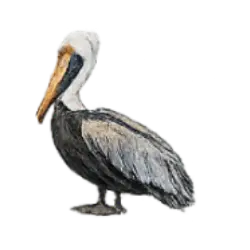
Brown Pelican
The brown pelican is a coastal seabird famous for plunge-diving into water to catch…
Baca panduan spesies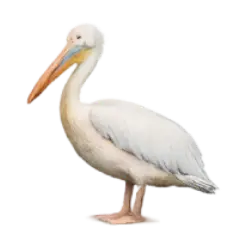
Great White Pelican
The great white pelican is a huge water bird known for broad wings, a giant pouch bill,…
Baca panduan spesiesBawa ensiklopedia ke dunia nyata
AnimalDex membantumu memindai hewan nyata, mengidentifikasi spesies, mengoleksi kartu, dan belajar dari alam di mana pun kamu berada.