
Panduan lapangan hewan
Blueface Angelfish
Identifikasi, habitat, rarity, perilaku, simbolisme, fakta, dan pelajaran praktis dari alam.
Panduan lapangan hewan
Blueface Angelfish
Color Signal Strategy
Signal with color.
The Blueface Angelfish uses its vibrant colors to signal territory and communicate with others, showcasing the power of visual identity in social interactions.
You’re #1 of 1
RECORD ID
B674CAA0-4D4F-46BA-9CE7-97C33C663C03
Native range
Natural range, not this capture location
Native range keys: indian_ocean, south_pacific, coral_triangle. Coral-rich reef slopes and lagoon reefs with caves and overhangs suit Blueface Angelfish because Color Signal Strategy is only affordable next to shelter.
Wild reward hint
First-time wild species earn bonus rewards, including 1 free credit.
0/1 XP toward Level 2
AnimalDex stats
Dominance
32
Speed
41
Size
20
Intelligence
30
Rarity
39%
Total
162
Size scale
Zoo animal · comparisons disabled
Zoo animals stay in your collection, but they can't enter scenario comparisons or the Arena.
✦ Available actions
Compare this public animal when your deck meets the current rules.
Nama ilmiah
Pomacanthus xanthometopon
Kategori
Animal
Habitat
Native range keys: indian_ocean, south_pacific, coral_triangle. Coral-rich reef slopes and lagoon reefs with caves and overhangs suit Blueface Angelfish because Color Signal Strategy is only affordable next to shelter.
Rarity
Relatively common · 39/100
Native range
Native range keys: indian_ocean, south_pacific, coral_triangle. Coral-rich reef slopes and lagoon reefs with caves and overhangs suit Blueface Angelfish because Color Signal Strategy is only affordable next to shelter.
Mengapa Color Signal Strategy?
Alasan di balik Prinsip Hewan ini dan biologi yang mendukungnya.
Blueface Angelfish teaches Color Signal Strategy by wearing one of the most conspicuous faces on the reef while never straying far from the cave it can be inside in a second.
Cara mengidentifikasi Blueface Angelfish
- Brilliant blue face with a yellow forehead mask
- Body scaled in yellow with fine blue scale edges
- A dark false eyespot at the rear of the dorsal fin
- Reaches about 38 cm, large for an angelfish
Kenapa Blueface Angelfish menarik
- The false eyespot on the dorsal fin misdirects a strike away from the real head.
- Juveniles are dark blue with white and pale blue bands, looking nothing like adults.
- It feeds heavily on sponges and tunicates, food few reef fish can process.
- It produces a low drumming sound when alarmed.
- It occurs across the tropical Indo-Pacific, from the Maldives to the western Pacific.
Habitat: Native range keys: indian_ocean, south_pacific, coral_triangle. Coral-rich reef slopes and lagoon reefs with caves and overhangs suit Blueface Angelfish because Color Signal Strategy is only affordable next to shelter.
Native range: Native range keys: indian_ocean, south_pacific, coral_triangle. Coral-rich reef slopes and lagoon reefs with caves and overhangs suit Blueface Angelfish because Color Signal Strategy is only affordable next to shelter.
nativeRangeCardTitle
nativeRangeCardDescription
nativeRangeMissingAssets
Native range keys: indian_ocean, south_pacific, coral_triangle. Coral-rich reef slopes and lagoon reefs with caves and overhangs suit Blueface Angelfish because Color Signal Strategy is only affordable next to shelter.
To find Blueface Angelfish in the wild, focus on the exact habitat patches that match its body design and daily behavior, not just the broad country where it exists. You usually do better by working one good piece of habitat inside native range keys: indian_ocean, south_pacific, coral_triangle. Coral-rich reef slopes and lagoon reefs with caves and overhangs suit Blueface Angelfish because Color Signal Strategy is only affordable next to shelter. than by covering too much ground.
- Quiet marsh edges, reedbeds, river bends, or shallow wetland margins
- Headlands, reef edges, island colonies, tidal channels, or productive coastal water
- Protected habitat blocks within native range keys: indian_ocean, south_pacific, coral_triangle. Coral-rich reef slopes and lagoon reefs with caves and overhangs suit Blueface Angelfish because Color Signal Strategy is only affordable next to shelter.
- Start early, pick one strong patch of habitat, and stay long enough for movement to return after you arrive.
- Watch the transition line between open water and cover, because feeding and movement often happen on that edge.
- Move quietly, stop often, and give the habitat time to settle; many mammals and insects show themselves only after the first pause.
Sponges, tunicates, algae and coral polyps. This diet supports Color Signal Strategy because sponge feeding keeps the fish near structure, exactly where being conspicuous is survivable.
Large groupers and reef sharks. Its answer is a false eyespot, an immediate retreat into a cave, and a body too deep for many mouths.
Blueface Angelfish are diurnal and shelter in caves and under overhangs at night, in the same structures they retreat to by day.
They live for many years, so Color Signal Strategy pairs with a detailed knowledge of every hole on a home range.
They spawn in pairs at dusk, releasing eggs into open water. Offspring fit the principle because juveniles wear a completely different, far less conspicuous pattern until they are large enough to carry the adult signal.
Males and females look alike, with males typically larger. The similarity fits a species where the colour signals identity and occupancy rather than sex.
- Brilliant blue face with a yellow forehead mask
- Body scaled in yellow with fine blue scale edges
- A dark false eyespot at the rear of the dorsal fin
- Reaches about 38 cm, large for an angelfish
Blueface Angelfish most often symbolizes color signal strategy in AnimalDex because its real survival behavior repeatedly shows this pattern.
The Blueface Angelfish uses its vibrant colors to signal territory and communicate with others, showcasing the power of visual identity in social interactions.
The Blueface Angelfish is known for its striking coloration, which plays a crucial role in territorial displays and social communication within coral reefs.
- Observe from a respectful distance and avoid changing the animal's behavior.
- Do not block feeding, shelter, nesting, or travel routes.
- Use a live camera capture without handling or staging wildlife.
Hewan terkait
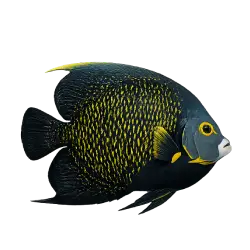
French Angelfish
French Angelfish teaches Reef Pair Patrol through reef fish often seen in pairs,…
Baca panduan spesies
Gray Angelfish
The Graceful Reef Grazer. The Graceful Reef Grazer. Quiet persistence can keep complex…
Baca panduan spesies
Koran Angelfish
The Transforming Reef Sentinel. The Transforming Reef Sentinel. Changing colors over…
Baca panduan spesiesLebih banyak hewan dengan kekuatan Clear Communication
Jelajahi semua hewan Clear Communication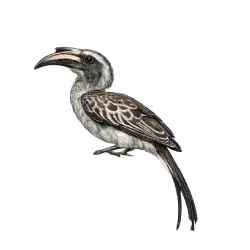
African Grey Hornbill
African Grey Hornbills move through savanna woodland and dry forest edges, feeding on…
Baca panduan spesies
Downy Woodpecker
The Downy Woodpecker teaches Precision Drumming through small-scale focus. Its compact…
Baca panduan spesies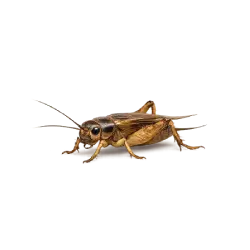
Field Cricket
The Night-Singing Signalers. The Night-Singing Signalers. Clear, persistent signals can…
Baca panduan spesiesBawa ensiklopedia ke dunia nyata
AnimalDex membantumu memindai hewan nyata, mengidentifikasi spesies, mengoleksi kartu, dan belajar dari alam di mana pun kamu berada.