
Panduan lapangan hewan
Chaco Golden Knee Tarantula
Identifikasi, habitat, rarity, perilaku, simbolisme, fakta, dan pelajaran praktis dari alam.
Panduan lapangan hewan
Chaco Golden Knee Tarantula
Slow Temperament
Big, and in no hurry.
Being formidable and being calm are not opposites.
You’re #1 of 1
RECORD ID
D9F6DBBE-7645-4E10-A967-FEBD1A81C06E
Native range
Natural range, not this capture location
Native range keys: south_america. Dry grassland and scrub of the Gran Chaco suits Chaco Golden Knee Tarantula because Slow Temperament works where a burrow, not speed, is the answer to danger.
Wild reward hint
First-time wild species earn bonus rewards, including 1 free credit.
0/1 XP toward Level 2
AnimalDex stats
Dominance
30
Speed
30
Size
25
Intelligence
30
Rarity
20%
Total
135
Size scale
Zoo animal · comparisons disabled
Zoo animals stay in your collection, but they can't enter scenario comparisons or the Arena.
✦ Available actions
Compare this public animal when your deck meets the current rules.
Nama ilmiah
Grammostola pulchripes
Kategori
Animal
Habitat
Native range keys: south_america. Dry grassland and scrub of the Gran Chaco suits Chaco Golden Knee Tarantula because Slow Temperament works where a burrow, not speed, is the answer to danger.
Rarity
Uncommon · 66/100
Native range
Native range keys: south_america. Dry grassland and scrub of the Gran Chaco suits Chaco Golden Knee Tarantula because Slow Temperament works where a burrow, not speed, is the answer to danger.
Mengapa Slow Temperament?
Alasan di balik Prinsip Hewan ini dan biologi yang mendukungnya.
Chaco Golden Knee Tarantula teaches Slow Temperament as a big-bodied burrower from the dry Gran Chaco that answers a threat by walking away or brushing hairs off its abdomen, almost never by biting.
Cara mengidentifikasi Chaco Golden Knee Tarantula
- Dark body with bright golden-yellow stripes on the leg joints
- Leg span reaching around 20 cm in mature females
- Digs and holds a burrow in dry grassland soil
- Flicks urticating hairs from the abdomen as a first line of defence
Kenapa Chaco Golden Knee Tarantula menarik
- It is native to the Gran Chaco of Paraguay and northern Argentina.
- Females can live over twenty years; males rarely survive long after maturing.
- Its first response to a threat is to flick irritating abdominal hairs, not to bite.
- It grows slowly even by tarantula standards, taking years to reach full size.
- It spends much of its life in a burrow it has enlarged itself.
Habitat: Native range keys: south_america. Dry grassland and scrub of the Gran Chaco suits Chaco Golden Knee Tarantula because Slow Temperament works where a burrow, not speed, is the answer to danger.
Native range: Native range keys: south_america. Dry grassland and scrub of the Gran Chaco suits Chaco Golden Knee Tarantula because Slow Temperament works where a burrow, not speed, is the answer to danger.
nativeRangeCardTitle
nativeRangeCardDescription
Native range keys: south_america. Dry grassland and scrub of the Gran Chaco suits Chaco Golden Knee Tarantula because Slow Temperament works where a burrow, not speed, is the answer to danger.
To find Chaco Golden Knee Tarantula in the wild, focus on the exact habitat patches that match its body design and daily behavior, not just the broad country where it exists. You usually do better by working one good piece of habitat inside native range keys: south_america. Dry grassland and scrub of the Gran Chaco suits Chaco Golden Knee Tarantula because Slow Temperament works where a burrow, not speed, is the answer to danger. than by covering too much ground.
- Open grassland edges, lightly wooded plains, or raised ground where you can scan long distances
- Burrow systems, sandy banks, fallen logs, or ground with clear den entrances
- Protected habitat blocks within native range keys: south_america. Dry grassland and scrub of the Gran Chaco suits Chaco Golden Knee Tarantula because Slow Temperament works where a burrow, not speed, is the answer to danger.
- Start early, pick one strong patch of habitat, and stay long enough for movement to return after you arrive.
- Use binoculars from a track, ridge, or vehicle stop and scan far ahead before you move closer.
- Slow down and scan shapes, outlines, and eye-level silhouettes; many good sightings come from noticing what does not move.
Insects, other invertebrates and occasionally very small vertebrates ambushed at the burrow mouth. This diet supports Slow Temperament because prey is taken by waiting at a doorway rather than by hunting it down.
Birds, coatis, and parasitoid wasps including tarantula hawks. Its answer is a burrow, a cloud of urticating hairs, and a threat posture held long before any strike.
Chaco Golden Knees are nocturnal, sitting at the burrow entrance after dark and retreating deep inside through the day.
Females can live more than two decades, so Slow Temperament pays — a spider that avoids fights survives long enough to keep growing.
Females produce an egg sac of hundreds of spiderlings and guard it inside the burrow. Offspring fit the principle because the whole brood begins in the same patient shelter the adult keeps.
Females are far larger and much longer-lived; mature males are leggier, lighter and roam in search of mates. The difference is a difference in life strategy, not display.
- Dark body with bright golden-yellow stripes on the leg joints
- Leg span reaching around 20 cm in mature females
- Digs and holds a burrow in dry grassland soil
- Flicks urticating hairs from the abdomen as a first line of defence
Chaco Golden Knee Tarantula most often symbolizes slow temperament in AnimalDex because its real survival behavior repeatedly shows this pattern.
Being formidable and being calm are not opposites.
Chaco Golden Knee Tarantula is one of the largest and least defensive tarantulas kept, retreating or flicking urticating hairs long before it will consider a bite.
- Observe from a respectful distance and avoid changing the animal's behavior.
- Do not block feeding, shelter, nesting, or travel routes.
- Use a live camera capture without handling or staging wildlife.
Hewan terkait
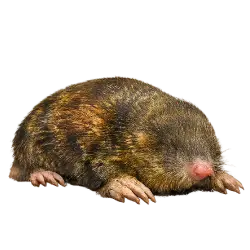
Cape Golden Mole
Golden Mole teaches Gold-Burrow Listening through subterranean mammals with reduced…
Baca panduan spesies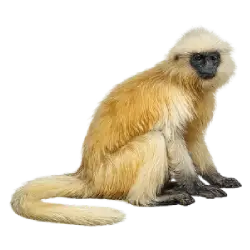
Gee's Golden Langur
Golden Langur explains Goldguard through a body and routine shaped for its exact…
Baca panduan spesies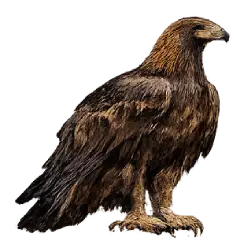
Golden Eagle
Golden Eagle is a bird known for broad mountain-soaring wings, powerful gripping…
Baca panduan spesiesLebih banyak hewan dengan kekuatan Calm
Jelajahi semua hewan Calm

Bawa ensiklopedia ke dunia nyata
AnimalDex membantumu memindai hewan nyata, mengidentifikasi spesies, mengoleksi kartu, dan belajar dari alam di mana pun kamu berada.