
Panduan lapangan hewan
Desert Cottontail
Identifikasi, habitat, rarity, perilaku, simbolisme, fakta, dan pelajaran praktis dari alam.
Panduan lapangan hewan
Desert Cottontail
Adaptive Movement Strategy
Swift and Unpredictable.
Desert Cottontails use erratic and agile movements to escape predators, teaching us to adapt our strategies quickly in changing situations.
You’re #1 of 1
RECORD ID
E7EB4900-A2D2-4B6B-A4D7-A99FF894CDC0
Native range
Natural range, not this capture location
Native range keys: north_america.
Wild reward hint
First-time wild species earn bonus rewards, including 1 free credit.
0/1 XP toward Level 2
AnimalDex stats
Dominance
22
Speed
61
Size
18
Intelligence
34
Rarity
19%
Total
154
Size scale
Zoo animal · comparisons disabled
Zoo animals stay in your collection, but they can't enter scenario comparisons or the Arena.
✦ Available actions
Compare this public animal when your deck meets the current rules.
Nama ilmiah
Sylvilagus audubonii
Kategori
Animal
Habitat
Native range keys: north_america.
Rarity
Relatively common · 19/100
Native range
Native range keys: north_america.
Mengapa Adaptive Movement Strategy?
Alasan di balik Prinsip Hewan ini dan biologi yang mendukungnya.
The Silent Desert Forager. The Silent Desert Forager. Quiet persistence in harsh places can still gather what is needed.
Cara mengidentifikasi Desert Cottontail
- Recognized in AnimalDex as Desert Cottontail
- Indexed profile #1995
Habitat: Native range keys: north_america.
Native range: Native range keys: north_america.
nativeRangeCardTitle
nativeRangeCardDescription
Native range keys: north_america.
To find Desert Cottontail in the wild, focus on the exact habitat patches that match its body design and daily behavior, not just the broad country where it exists. You usually do better by working one good piece of habitat inside native range keys: north_america. than by covering too much ground.
- Native range keys: north_america.
- Protected habitat blocks within native range keys: north_america.
- Start early, pick one strong patch of habitat, and stay long enough for movement to return after you arrive.
- Look for food, cover, and movement routes in the same place, because the best sightings usually happen where those overlap.
- Move quietly, stop often, and give the habitat time to settle; many mammals and insects show themselves only after the first pause.
Desert Cottontail eats the foods its body design and habitat make easiest to access. Diet can shift across seasons, life stages, and local competition.
- The most accessible prey or plant foods in its habitat
- Energy-rich foods that match its size and behavior
- Seasonal resources available in the local environment
A practical answer for Desert Cottontail always depends on what food is actually available in native range keys: north_america..
- Move swiftly and unpredictably to navigate challenges.
Desert Cottontail most often symbolizes adaptive movement strategy in AnimalDex because its real survival behavior repeatedly shows this pattern.
Desert Cottontails use erratic and agile movements to escape predators, teaching us to adapt our strategies quickly in changing situations.
The Desert Cottontail employs quick, zigzagging motions to evade predators, making it difficult for them to predict its path.
- Observe from a respectful distance and avoid changing the animal's behavior.
- Do not block feeding, shelter, nesting, or travel routes.
- Use a live camera capture without handling or staging wildlife.
Hewan terkait
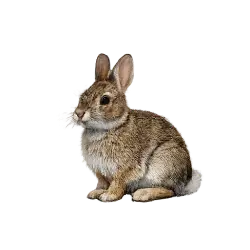
Eastern Cottontail
The Speedy Sprinter. Meet the Eastern Cottontail, a master of zigzagging through…
Baca panduan spesies
Desert Camel Sentinel
Desert Camel Sentinel teaches Reserve March through fat-storing humps, tough feet,…
Baca panduan spesies
Desert Dormouse
Desert Dormouse teaches Torpor through burrow shelter, night activity, and…
Baca panduan spesiesLebih banyak hewan dengan kekuatan Agility
Jelajahi semua hewan Agility
Bawa ensiklopedia ke dunia nyata
AnimalDex membantumu memindai hewan nyata, mengidentifikasi spesies, mengoleksi kartu, dan belajar dari alam di mana pun kamu berada.