
Panduan lapangan hewan
Earwig
Identifikasi, habitat, rarity, perilaku, simbolisme, fakta, dan pelajaran praktis dari alam.
forceps-tailed night forager. Earwigs hide by day in damp crevices and emerge at night — maternal guardians with cerci that look like tiny pliers.
Nama ilmiah
Dermaptera
Kategori
Animal
Habitat
Gardens, leaf litter, compost, under bark and pots, damp crevices, and other sheltered ground-level spaces worldwide.
Rarity
Relatively common · 14/100
Native range
Gardens, leaf litter, compost, under bark and pots, damp crevices, and other sheltered ground-level spaces worldwide.
Quiet Guardianship
Guard quietly.
Protect what you shelter.
Apa yang diajarkannya
Care shows up as steady defense of the vulnerable, not as loud display.
Coba
In human life, this reminds us that safety grows when we show people where the line is.
Bukti alam
Many earwigs tend eggs and young under cover, using forceps-like cerci to deter threats while staying hidden in damp crevices.
Gunakan untuk
Tangkapan Earwig berperingkat
1 tangkapan berperingkat dalam grup ini dari kolektor AnimalDex.
Shane T
@pokédexguy064Wild · Winslow Fish and Wildlife Management Area · Sicklerville, Camden County, NJ, United States
Skor 0
Mengapa Quiet Guardianship?
Alasan di balik Prinsip Hewan ini dan biologi yang mendukungnya.
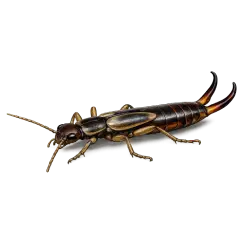
Earwigs are flattened nocturnal insects recognized by forceps-like cerci at the tip of the abdomen and short leathery forewings.
Cara mengidentifikasi Earwig
- Forceps-like cerci (pincers)
- Flattened elongated body
- Short leathery forewings
- Nocturnal crevice sheltering
Kenapa Earwig menarik
- Many species, including the common European earwig, guard eggs and tend nymphs.
- Despite folklore, earwigs do not crawl into human ears as a habit.
- Cerci are used for defense, sensing, and sometimes courtship rather than just pinching.
Habitat: Gardens, leaf litter, compost, under bark and pots, damp crevices, and other sheltered ground-level spaces worldwide.
Native range: Gardens, leaf litter, compost, under bark and pots, damp crevices, and other sheltered ground-level spaces worldwide.
To find Earwig in the wild, focus on the exact habitat patches that match its body design and daily behavior, not just the broad country where it exists. You usually do better by working one good piece of habitat inside gardens, leaf litter, compost, under bark and pots, damp crevices, and other sheltered ground-level spaces worldwide. than by covering too much ground.
- Gardens, leaf litter, compost
- Protected habitat blocks within gardens, leaf litter, compost, under bark and pots, damp crevices, and other sheltered ground-level spaces worldwide.
- Go at dusk or after dark, move slowly, and listen before using a light or stepping into cover.
- Look for food, cover, and movement routes in the same place, because the best sightings usually happen where those overlap.
- Move quietly, stop often, and give the habitat time to settle; many mammals and insects show themselves only after the first pause.
Omnivorous: decaying plant matter, soft plant tissues, aphids and other small invertebrates, depending on species and opportunity.
Birds, amphibians, spiders, larger insects, and small mammals may prey on earwigs.
Mostly nocturnal; hides in dark damp shelters during the day.
Often about one year in temperate common species, with eggs and nymphs spending months under maternal care.
Females of many species brood eggs and stay with early nymphs, cleaning and defending the nest.
Males and females can differ in forceps shape and curvature; males often have more strongly curved cerci.
- Forceps-like cerci (pincers)
- Flattened elongated body
- Short leathery forewings
- Nocturnal crevice sheltering
Earwig most often symbolizes quiet guardianship in AnimalDex because its real survival behavior repeatedly shows this pattern.
Care shows up as steady defense of the vulnerable, not as loud display.
Many earwigs tend eggs and young under cover, using forceps-like cerci to deter threats while staying hidden in damp crevices.
- Observe from a respectful distance and avoid changing the animal's behavior.
- Do not block feeding, shelter, nesting, or travel routes.
- Use a live camera capture without handling or staging wildlife.
0/1 XP toward Level 2
statsTitle
statsDescription
statsSourceLabel: statsSourceSpeciesProfile
dominanceStat
12
speedStat
22
sizeStat
2
intelligenceStat
10
rarityStat
14%
Total
60
Size scale
Microscopic edge
Uses the canonical size stat for consistent placement




US$26 – US$54
Perkiraan rentang nilai
Kepercayaan 69%
Perkiraan nilai AnimalDex dibuat dari stat spesies kanonik.
Not a marketplace listing.
Perkiraan nilai berdasarkan hewan yang teridentifikasi dan konteks harga yang tersedia. Bukan daftar marketplace.
Seberapa langka Earwig?
Rarity: Relatively common (14/100)
AnimalDex canonical rarity score: 14/100, maintained by the live indexed species profile.
Public Animal Power
Explore this Animal Power
This is a public capture, so you can explore its Animal Power here. Personal Apex matches and challenges use your Wild Profile and animals you own.
Own an animal with this power to use it in Growth challenges.
Comparison hearts ready
3 of 3 hearts remaining. Each loss removes 1 heart.
✦ Available actions
Compare this public animal when your deck meets the current rules.
⚡CompareUnavailable›Lebih banyak hewan dengan kekuatan Care
Jelajahi semua hewan Care
Bawa ensiklopedia ke dunia nyata
AnimalDex membantumu memindai hewan nyata, mengidentifikasi spesies, mengoleksi kartu, dan belajar dari alam di mana pun kamu berada.