
Panduan lapangan hewan
May Beetle
Identifikasi, habitat, rarity, perilaku, simbolisme, fakta, dan pelajaran praktis dari alam.
Spring night flyer. A chunky scarab beetle whose larvae live underground before adults emerge in late spring around fields, gardens, hedgerows, and woodland edges.
Nama ilmiah
Melolontha
Kategori
Invertebrate
Habitat
Temperate gardens, fields, hedgerows, grasslands, orchards, and woodland edges across much of Europe and western Asia.
Rarity
Relatively common · 18/100
Native range
Temperate gardens, fields, hedgerows, grasslands, orchards, and woodland edges across much of Europe and western Asia.
Timed Emergence
Move with the season.
Rise when the season opens.
Apa yang diajarkannya
Good timing turns a short active window into enough movement to feed, find mates, and continue the cycle.
Coba
Use May beetle energy when progress depends on waiting through a hidden preparation phase, then acting decisively when the right window finally opens.
Bukti alam
May beetles spend long periods as soil-dwelling larvae feeding on roots, then emerge as adults in late spring to fly, feed on leaves, and reproduce during a brief seasonal window.
Gunakan untuk
Tangkapan May Beetle berperingkat
1 tangkapan berperingkat dalam grup ini dari kolektor AnimalDex.
Garrett8522
@dannimal2285Wild · Reedy Creek Nature Preserve · University City, Charlotte, Mecklenburg County, NC, United States
Skor 0
Mengapa Timed Emergence?
Alasan di balik Prinsip Hewan ini dan biologi yang mendukungnya.
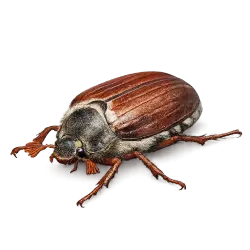
May beetles are robust scarab beetles best recognized by their rounded brown wing covers, fan-like antennae, and seasonal spring flights.
Cara mengidentifikasi May Beetle
- Rounded brown wing covers
- Fan-like antennae
- Stout scarab body
- Late-spring adult flights
Kenapa May Beetle menarik
- Larvae live underground and feed on plant roots.
- Adults often fly at dusk or night and may be attracted to lights.
- Many May beetles spend far longer as larvae than as active adults.
Habitat: Temperate gardens, fields, hedgerows, grasslands, orchards, and woodland edges across much of Europe and western Asia.
Native range: Temperate gardens, fields, hedgerows, grasslands, orchards, and woodland edges across much of Europe and western Asia.
nativeRangeCardTitle
nativeRangeCardDescription
Temperate gardens, fields, hedgerows, grasslands, orchards, and woodland edges across much of Europe and western Asia.
To find May Beetle in the wild, focus on the exact habitat patches that match its body design and daily behavior, not just the broad country where it exists. You usually do better by working one good piece of habitat inside temperate gardens, fields, hedgerows, grasslands, orchards, and woodland edges across much of Europe and western Asia. than by covering too much ground.
- Forest edge, canopy gaps, fruiting trees, or shaded trails where cover and food meet
- Open grassland edges, lightly wooded plains, or raised ground where you can scan long distances
- Protected habitat blocks within temperate gardens, fields, hedgerows, grasslands, orchards, and woodland edges across much of Europe and western Asia.
- Start early, pick one strong patch of habitat, and stay long enough for movement to return after you arrive.
- Work edges, clearings, fruiting trees, and stream crossings rather than walking randomly through dense cover.
- Move quietly, stop often, and give the habitat time to settle; many mammals and insects show themselves only after the first pause.
Larvae feed mainly on roots in soil; adults feed on leaves from trees, shrubs, and other vegetation.
Birds, bats, small mammals, predatory insects, and parasitoids can prey on May beetles or their larvae.
Adults are most noticeable during evening or night flights in the spring emergence season.
Common May beetle development often spans several years underground before a short adult breeding period.
Females lay eggs in soil, where larvae hatch and feed on roots through multiple growth stages.
Males often have larger, more fan-like antennae used to detect female pheromones.
- Rounded brown wing covers
- Fan-like antennae
- Stout scarab body
- Late-spring adult flights
May Beetle most often symbolizes timed emergence in AnimalDex because its real survival behavior repeatedly shows this pattern.
Good timing turns a short active window into enough movement to feed, find mates, and continue the cycle.
May beetles spend long periods as soil-dwelling larvae feeding on roots, then emerge as adults in late spring to fly, feed on leaves, and reproduce during a brief seasonal window.
- Observe from a respectful distance and avoid changing the animal's behavior.
- Do not block feeding, shelter, nesting, or travel routes.
- Use a live camera capture without handling or staging wildlife.
0/1 XP toward Level 2
statsTitle
statsDescription
statsSourceLabel: statsSourceSpeciesProfile
dominanceStat
8
speedStat
28
sizeStat
6
intelligenceStat
8
rarityStat
18%
Total
68
Size scale
Tiny
Uses the canonical size stat for consistent placement






US$33 – US$69
Perkiraan rentang nilai
Kepercayaan 69%
Perkiraan nilai AnimalDex dibuat dari stat spesies kanonik.
Not a marketplace listing.
Perkiraan nilai berdasarkan hewan yang teridentifikasi dan konteks harga yang tersedia. Bukan daftar marketplace.
Seberapa langka May Beetle?
Rarity: Relatively common (18/100)
AnimalDex canonical rarity score: 18/100, maintained by the live indexed species profile.
Public Animal Power
Explore this Animal Power
This is a public capture, so you can explore its Animal Power here. Personal Apex matches and challenges use your Wild Profile and animals you own.
Own an animal with this power to use it in Growth challenges.
Comparison hearts ready
3 of 3 hearts remaining. Each loss removes 1 heart.
✦ Available actions
Compare this public animal when your deck meets the current rules.
⚡CompareUnavailable›Hewan terkait

Golden Jewel Beetle
Jewel Beetle's power is Metallic Warning: hard beetle bodies and metallic color that…
Baca panduan spesies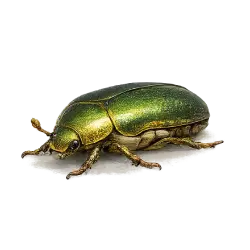
Green June Beetle
The Emerald Excavator. The Green June Beetle, Cotinis nitida, is a master of…
Baca panduan spesies
Harlequin Beetle
The Harlequin Beetle shows how reach becomes advantage. Its long limbs and bold form…
Baca panduan spesiesLebih banyak hewan dengan kekuatan Patience
Jelajahi semua hewan Patience
Adelie Penguin
Adelie Penguin is a bird known for classic black-and-white body, ice-edge breeding…
Baca panduan spesies
African Bullfrog
African Bullfrog is a amphibian known for huge frog body, powerful bite, and burrowing…
Baca panduan spesies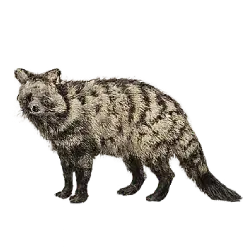
African Civet
African Civet is a mammal known for bold black-and-white pattern, night-active…
Baca panduan spesiesBawa ensiklopedia ke dunia nyata
AnimalDex membantumu memindai hewan nyata, mengidentifikasi spesies, mengoleksi kartu, dan belajar dari alam di mana pun kamu berada.