
Panduan lapangan hewan
Spotted Sharpnose Puffer
Identifikasi, habitat, rarity, perilaku, simbolisme, fakta, dan pelajaran praktis dari alam.
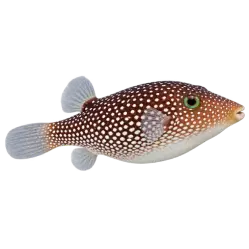
Kartu AnimalDex
Buka kartu hewan ini
Pindai atau tangkap hewan ini dengan AnimalDex untuk membuka kartu koleksi dan menambahkannya ke koleksi satwa liarmu.
Dapatkan AnimalDexPanduan lapangan hewan
Spotted Sharpnose Puffer
Strategic Bluffing Strategy
Bluff to Buffer.
The Spotted Sharpnose Puffer inflates its body to appear larger, deterring predators through visual deception rather than aggression.
No captures yet
Native range
Natural range, not this capture location
Native range keys: indian_ocean, south_pacific, coral_triangle. Coral and rubble reef with plenty of small cover suits Spotted Sharpnose Puffer because Strategic Bluffing Strategy is a last resort, and cover keeps it from being needed often.
Search near meAnimalDex stats
Dominance
19
Speed
41
Size
9
Intelligence
24
Rarity
37%
Total
130
Size scale
Nama ilmiah
Canthigaster solandri
Kategori
Animal
Habitat
Native range keys: indian_ocean, south_pacific, coral_triangle. Coral and rubble reef with plenty of small cover suits Spotted Sharpnose Puffer because Strategic Bluffing Strategy is a last resort, and cover keeps it from being needed often.
Rarity
Relatively common · 37/100
Native range
Native range keys: indian_ocean, south_pacific, coral_triangle. Coral and rubble reef with plenty of small cover suits Spotted Sharpnose Puffer because Strategic Bluffing Strategy is a last resort, and cover keeps it from being needed often.
Mengapa Strategic Bluffing Strategy?
Alasan di balik Prinsip Hewan ini dan biologi yang mendukungnya.
Spotted Sharpnose Puffer teaches Strategic Bluffing Strategy at about 9 cm long, answering anything larger by becoming a hard, spiny ball no reef mouth wants to close on.
Cara mengidentifikasi Spotted Sharpnose Puffer
- Dense pale spots over a dark brown back, with blue lines around the eye
- A pointed, tapering snout, quite unlike the blunt-faced puffers
- Small — usually well under 12 cm
- Inflates rapidly with water into a rigid ball
Kenapa Spotted Sharpnose Puffer menarik
- It swallows water to inflate, becoming several times its resting volume.
- Its tissues carry tetrodotoxin, so a predator that persists is poisoned as well as choked.
- Sharpnose puffers use fin sculling rather than tail beats, giving them fine hovering control.
- It occurs widely across the tropical Indo-Pacific.
- It picks at sponges, algae, corals and small invertebrates rather than specialising.
Habitat: Native range keys: indian_ocean, south_pacific, coral_triangle. Coral and rubble reef with plenty of small cover suits Spotted Sharpnose Puffer because Strategic Bluffing Strategy is a last resort, and cover keeps it from being needed often.
Native range: Native range keys: indian_ocean, south_pacific, coral_triangle. Coral and rubble reef with plenty of small cover suits Spotted Sharpnose Puffer because Strategic Bluffing Strategy is a last resort, and cover keeps it from being needed often.
nativeRangeCardTitle
nativeRangeCardDescription
nativeRangeMissingAssets
Native range keys: indian_ocean, south_pacific, coral_triangle. Coral and rubble reef with plenty of small cover suits Spotted Sharpnose Puffer because Strategic Bluffing Strategy is a last resort, and cover keeps it from being needed often.
To find Spotted Sharpnose Puffer in the wild, focus on the exact habitat patches that match its body design and daily behavior, not just the broad country where it exists. You usually do better by working one good piece of habitat inside native range keys: indian_ocean, south_pacific, coral_triangle. Coral and rubble reef with plenty of small cover suits Spotted Sharpnose Puffer because Strategic Bluffing Strategy is a last resort, and cover keeps it from being needed often. than by covering too much ground.
- Headlands, reef edges, island colonies, tidal channels, or productive coastal water
- Protected habitat blocks within native range keys: indian_ocean, south_pacific, coral_triangle. Coral and rubble reef with plenty of small cover suits Spotted Sharpnose Puffer because Strategic Bluffing Strategy is a last resort, and cover keeps it from being needed often.
- Start early, pick one strong patch of habitat, and stay long enough for movement to return after you arrive.
- Time your search around tide, wind, and visibility, then focus on feeding lines, reef edges, and known haul-out or nesting spots.
- Move quietly, stop often, and give the habitat time to settle; many mammals and insects show themselves only after the first pause.
Sponges, algae, coral polyps, tunicates and small invertebrates. This diet supports Strategic Bluffing Strategy because a slow, picky feeder cannot outrun anything and needs a defence that works while stationary.
Groupers, lizardfish and larger reef fish. Its answer is inflation backed by real toxicity — the bluff is not entirely a bluff.
Spotted Sharpnose Puffers are active by day and settle into reef crevices at night, tucked into cover small enough to be safe.
They live several years, long enough for Strategic Bluffing Strategy to become fine judgement about when inflation is worth the cost.
They spawn on the bottom, with eggs deposited among algae and left to develop. Offspring fit the principle because the young are defended by chemistry from very small sizes.
Males and females look closely similar, with males sometimes showing slightly stronger facial lines. The difference is minimal because the defence is shared.
- Dense pale spots over a dark brown back, with blue lines around the eye
- A pointed, tapering snout, quite unlike the blunt-faced puffers
- Small — usually well under 12 cm
- Inflates rapidly with water into a rigid ball
Spotted Sharpnose Puffer most often symbolizes strategic bluffing strategy in AnimalDex because its real survival behavior repeatedly shows this pattern.
The Spotted Sharpnose Puffer inflates its body to appear larger, deterring predators through visual deception rather than aggression.
This pufferfish can inflate its body as a defense mechanism, making it look more intimidating to potential predators.
- Observe from a respectful distance and avoid changing the animal's behavior.
- Do not block feeding, shelter, nesting, or travel routes.
- Use a live camera capture without handling or staging wildlife.
Hewan terkait

Leopard Toby
The Leopard Toby reminds us that size is not the only measure of seriousness. Small…
Baca panduan spesies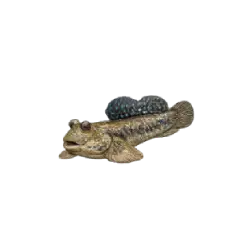
Blue-spotted Mudskipper
Blue-spotted Mudskipper explains Mudline through a body and routine shaped for its…
Baca panduan spesies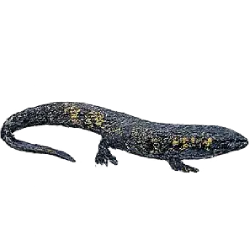
Blue-spotted Salamander
Blue-spotted Salamander is a amphibian known for blue-flecked dark body, secretive log…
Baca panduan spesiesLebih banyak hewan dengan kekuatan Defense
Jelajahi semua hewan Defense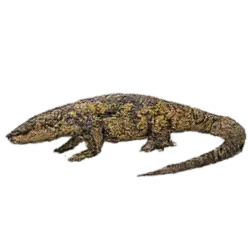
Ackie Monitor
Ackie Monitor is a reptile known for spiny defensive tail, compact muscular monitor…
Baca panduan spesies
African Pygmy Hedgehog
African Pygmy Hedgehog teaches Spined Night Foraging through a small nocturnal body…
Baca panduan spesies
American Badger
American Badger turns Burrow Strategy into muscular problem-solving, using claws,…
Baca panduan spesiesBawa ensiklopedia ke dunia nyata
AnimalDex membantumu memindai hewan nyata, mengidentifikasi spesies, mengoleksi kartu, dan belajar dari alam di mana pun kamu berada.