
Panduan lapangan hewan
Zoanthid
Identifikasi, habitat, rarity, perilaku, simbolisme, fakta, dan pelajaran praktis dari alam.
Panduan lapangan hewan
Zoanthid
Held Ground
Spread, then hold.
Ground is kept by spreading across it, not by standing tallest on it.
You’re #1 of 1
RECORD ID
B3D3911D-E4A9-4283-9999-13473D1C8BED
Native range
Natural range, not this capture location
Native range keys: indian_ocean, south_pacific, coral_triangle, north_atlantic. Shallow, well-lit reef flats, rubble and rock walls with steady water movement suit Zoanthids because Held Ground needs hard surface to spread across and current to feed on.
Wild reward hint
First-time wild species earn bonus rewards, including 1 free credit.
0/1 XP toward Level 2
AnimalDex stats
Dominance
30
Speed
30
Size
25
Intelligence
30
Rarity
20%
Total
135
Size scale
Zoo animal · comparisons disabled
Zoo animals stay in your collection, but they can't enter scenario comparisons or the Arena.
✦ Available actions
Compare this public animal when your deck meets the current rules.
Nama ilmiah
Zoantharia
Kategori
Animal
Habitat
Native range keys: indian_ocean, south_pacific, coral_triangle, north_atlantic. Shallow, well-lit reef flats, rubble and rock walls with steady water movement suit Zoanthids because Held Ground needs hard surface to spread across and current to feed on.
Rarity
Relatively common · 36/100
Native range
Native range keys: indian_ocean, south_pacific, coral_triangle, north_atlantic. Shallow, well-lit reef flats, rubble and rock walls with steady water movement suit Zoanthids because Held Ground needs hard surface to spread across and current to feed on.
Mengapa Held Ground?
Alasan di balik Prinsip Hewan ini dan biologi yang mendukungnya.
Zoanthid teaches Held Ground as a mat rather than a monument. No single polyp is much, but a colony spreads across bare rock, closes ranks when disturbed, and defends its patch with chemistry instead of size.
Cara mengidentifikasi Zoanthid
- Colonies of small polyps, each a disc of tentacles 5-20 mm across
- Polyps joined at the base by a shared mat of tissue
- Whole colony closes at once when disturbed
- Extremely variable colour, often ringed in contrasting bands
Kenapa Zoanthid menarik
- Many zoanthids carry palytoxin, among the most poisonous non-protein substances known, and aquarium keepers have been hospitalised handling colonies in a closed room.
- Polyps in a colony are connected by a shared tissue mat, so the colony behaves as one animal.
- Palythoa and Protopalythoa embed sand grains in their tissue, which makes them tougher than they look.
- Symbiotic algae in the tissue supply much of the colony's energy.
- The colour morphs sold in the aquarium trade are variants, not separate species.
Habitat: Native range keys: indian_ocean, south_pacific, coral_triangle, north_atlantic. Shallow, well-lit reef flats, rubble and rock walls with steady water movement suit Zoanthids because Held Ground needs hard surface to spread across and current to feed on.
Native range: Native range keys: indian_ocean, south_pacific, coral_triangle, north_atlantic. Shallow, well-lit reef flats, rubble and rock walls with steady water movement suit Zoanthids because Held Ground needs hard surface to spread across and current to feed on.
nativeRangeCardTitle
nativeRangeCardDescription
nativeRangeMissingAssets
Native range keys: indian_ocean, south_pacific, coral_triangle, north_atlantic. Shallow, well-lit reef flats, rubble and rock walls with steady water movement suit Zoanthids because Held Ground needs hard surface to spread across and current to feed on.
To find Zoanthid in the wild, focus on the exact habitat patches that match its body design and daily behavior, not just the broad country where it exists. You usually do better by working one good piece of habitat inside native range keys: indian_ocean, south_pacific, coral_triangle, north_atlantic. Shallow, well-lit reef flats, rubble and rock walls with steady water movement suit Zoanthids because Held Ground needs hard surface to spread across and current to feed on. than by covering too much ground.
- Headlands, reef edges, island colonies, tidal channels, or productive coastal water
- Burrow systems, sandy banks, fallen logs, or ground with clear den entrances
- Protected habitat blocks within native range keys: indian_ocean, south_pacific, coral_triangle, north_atlantic. Shallow, well-lit reef flats, rubble and rock walls with steady water movement suit Zoanthids because Held Ground needs hard surface to spread across and current to feed on.
- Start early, pick one strong patch of habitat, and stay long enough for movement to return after you arrive.
- Time your search around tide, wind, and visibility, then focus on feeding lines, reef edges, and known haul-out or nesting spots.
- Move quietly, stop often, and give the habitat time to settle; many mammals and insects show themselves only after the first pause.
Sugars from symbiotic zooxanthellae, plus plankton and particulate matter caught by the polyps. This diet supports Held Ground because a colony fed by light and current does not need to move to eat — it only needs to keep its rock.
Nudibranchs and a few specialised snails and butterflyfish. Its answer is chemical: palytoxin makes a colony a poor meal, and the whole mat closes at once when something touches it.
Zoanthids have no sleep in the animal sense, but polyps open in good light and current and close tight at night or when disturbed, so a colony visibly changes shape through the day.
Colonies persist for many years and keep spreading, so Held Ground compounds — every season adds rock the colony did not hold before.
Colonies grow mainly by budding new polyps off the shared mat, and also spawn into the water column. Offspring fit the principle because most new polyps are simply the colony extending its own edge.
Polyps show no external difference between sexes. Appearance carries no signal because the colony spreads mostly by budding rather than by pairing.
- Colonies of small polyps, each a disc of tentacles 5-20 mm across
- Polyps joined at the base by a shared mat of tissue
- Whole colony closes at once when disturbed
- Extremely variable colour, often ringed in contrasting bands
Zoanthid most often symbolizes held ground in AnimalDex because its real survival behavior repeatedly shows this pattern.
Ground is kept by spreading across it, not by standing tallest on it.
Zoanthid colonies spread as a shared mat of small polyps over bare rock, closing as one when disturbed and deterring neighbours and grazers with palytoxin rather than with size.
- Observe from a respectful distance and avoid changing the animal's behavior.
- Do not block feeding, shelter, nesting, or travel routes.
- Use a live camera capture without handling or staging wildlife.
Lebih banyak hewan dengan kekuatan Anchoring
Jelajahi semua hewan Anchoring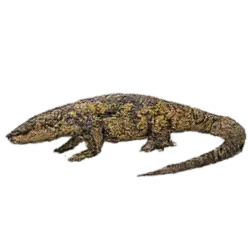
Ackie Monitor
Ackie Monitor is a reptile known for spiny defensive tail, compact muscular monitor…
Baca panduan spesies
Acorn Barnacle
Barnacle's power is Fixed Filter: permanent attachment and filter feeding from waves…
Baca panduan spesies
Chambered Limpet
Chambered Limpet's power is Tide-Grip Routine: strong muscular foot attachment and…
Baca panduan spesiesBawa ensiklopedia ke dunia nyata
AnimalDex membantumu memindai hewan nyata, mengidentifikasi spesies, mengoleksi kartu, dan belajar dari alam di mana pun kamu berada.