
Kembali ke Kekuatan

Kekuatan Hewan

Boundaries

Close the shell.

Hewan di sini menunjukkan kekuatan yang serupa melalui perilakunya di alam. Setiap spesies tetap punya prinsip, pelajaran, makna, dan halaman field guide sendiri.

66 spesies

Eastern Box Turtle animal lesson image on AnimalDex

Eastern Box Turtle

Prinsip spesies: Hinged Shelter

Close the shell.

Boundaries are strongest when protection is built into the rhythm of life.

Box Turtles have hinged plastrons that allow many individuals to close their shells tightly against threats.
Egyptian Goose animal lesson image on AnimalDex

Egyptian Goose

Prinsip spesies: Bold Defense

Hold the ground that matters.

Conviction shows when you defend what you have built, even against stronger opponents.

Egyptian Geese nest in trees and cavities, pair-bond strongly, and aggressively defend territory and young against much larger intruders.

Emperor Scorpion (Pandinus imperator) thumbnail image on AnimalDex

Emperor Scorpion

Prinsip spesies: Pincer Protection

Lead with armor.

A strong outside lets you move with confidence.

Emperor scorpions rely heavily on large pincers, armored bodies, and defensive posture, with venom as a secondary defense.

European Hedgehog (Erinaceus europaeus) thumbnail image on AnimalDex

European Hedgehog

Prinsip spesies: Prickled Courage

Explore with spines.

Protection lets curiosity walk after dark.

European Hedgehogs forage at night and defend themselves by rolling into a spiny ball, using sharp spines to deter predators.

European Lobster animal lesson image on AnimalDex

European Lobster

Prinsip spesies: Claw Tenure

Hold the crevice.

Territory becomes meaningful when strength protects a necessary refuge.

European Lobsters live in rocky seabed crevices, using large claws, nocturnal foraging, and shelter loyalty to survive.

False Water Cobra (Hydrodynastes gigas) thumbnail image on AnimalDex

False Water Cobra

Prinsip spesies: Hood Bluff

Widen the warning.

A well-timed warning can make danger hesitate before force is needed.

False Water Cobras flatten the neck in a cobra-like display and use size, movement, and rear-fanged venom as part of their defensive and predatory strategy.

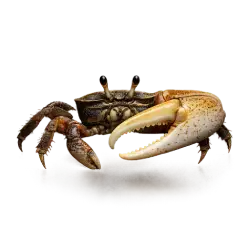
Fiddler Crab animal lesson image on AnimalDex

Fiddler Crab

Prinsip spesies: Signal

Signal clearly.

Clear signals reduce wasted conflict and attract the right attention.

Male fiddler crabs use enlarged claws in waving displays for communication, courtship, and territorial contests.

Flowerhorn Cichlid animal lesson image on AnimalDex

Flowerhorn Cichlid

Prinsip spesies: Nuchal Claim Glow

Own the hump.

Presence becomes unmistakable when you grow a feature that owns the room.

Flowerhorn Cichlids develop a pronounced nuchal hump and bold ornamental markings that make social claim and display unmistakable in confined aquarium space.

Greater Weever animal lesson image on AnimalDex

Greater Weever

Prinsip spesies: Buried Warning

Hide with warning.

Boundaries work best when danger is signaled before contact.

Greater Weevers bury in sand with venomous spines exposed, ambushing small fish while warning careless feet and predators.

Indochinese Box Turtle (Cuora galbinifrons) thumbnail image on AnimalDex

Indochinese Box Turtle

Prinsip spesies: Wise Retreat

Fold the shell shut.

Retreat can be strength when the closing is complete.

Indochinese Box Turtles have hinged plastrons that allow them to close the shell tightly for defense against predators.

Indonesian blue-tongued skink animal lesson image on AnimalDex

Indonesian blue-tongued skink

Prinsip spesies: Tongue Display

Show blue first.

A clear signal can defend space without escalation.

Indonesian Blue-tongued Skinks use a vivid blue tongue display as a defensive warning, along with sturdy bodies and calm movement.

King Cobra (Ophiophagus hannah) thumbnail image on AnimalDex

King Cobra

Prinsip spesies: Crowned Warning

Warn first. Rule second.

The strongest boundary is the one others understand before they cross it.

King cobras can rear high, spread a hood, hiss deeply, hunt other snakes, and guard nests.

Long-spined porcupinefish animal lesson image on AnimalDex

Long-spined porcupinefish

Prinsip spesies: Inflated Defense

Expand the boundary.

A small body can win space by changing the terms of attack.

Long-spined Porcupinefish inflate and use spines as defenses against predators.

Long-spined sea urchin animal lesson image on AnimalDex

Long-spined sea urchin

Prinsip spesies: Spine Radius

Guard all around.

Boundaries can be quiet, constant, and built into the body.

Long-spined Sea Urchins use long spines for defense and shelter while grazing and moving slowly over reef surfaces.

Monocled Cobra (Naja kaouthia) thumbnail image on AnimalDex

Monocled Cobra

Prinsip spesies: Hooded Warning

Show the hood.

A clear warning can end a fight before it begins.

Monocled Cobras raise the body, spread a hood with a monocle-like marking, and use venomous defense when threatened.

Mossy Frog (Theloderma corticale) thumbnail image on AnimalDex

Mossy Frog

Prinsip spesies: Place-Mimicry

Become the moss.

Copy the place so well that danger reads you as landscape.

Mossy Frogs have bumpy green, brown, and black skin that resembles moss and lichen on wet rocks, helping them hide from predators.

Mouflon (Ovis gmelini musimon) thumbnail image on AnimalDex

Mouflon

Prinsip spesies: Horn Boundary

Hold the horn line.

A strong boundary can prevent a contest from becoming chaos.

Mouflon males have large curved horns used in dominance contests, while sure-footed bodies help them move through rocky hills and slopes.

Mountain Tapir (Tapirus pinchaque) thumbnail image on AnimalDex

Mountain Tapir

Prinsip spesies: Cloud Covering

Wear the cloud.

The right covering can turn cold mist into home.

Mountain Tapirs have woolly coats and flexible snouts, browsing in cold Andean cloud forests and high-elevation habitats.

Jelajahi indeks terkait