
Nargun Stone Beast
Prinsip spesies: Scent Trail
Track the clue.
Good judgment often begins with noticing what others step over.
Lace monitors are large Australian lizards that climb well, scavenge, hunt, and use scent to locate food.
Kekuatan Hewan
Track the clue.
Hewan di sini menunjukkan kekuatan yang serupa melalui perilakunya di alam. Setiap spesies tetap punya prinsip, pelajaran, makna, dan halaman field guide sendiri.
61 spesies
Prinsip spesies: Scent Trail
Track the clue.
Good judgment often begins with noticing what others step over.
Lace monitors are large Australian lizards that climb well, scavenge, hunt, and use scent to locate food.
Prinsip spesies: Armoring
Work under armor.
Protection lets the quiet worker keep going under pressure.
Nine-banded Armadillos have bony armor plates and strong claws used for digging burrows and foraging for insects and other small food close to the ground.
Prinsip spesies: Open-Ocean Persistence
Cruise the blue void.
Wide emptiness rewards the one that keeps moving without a shore in sight.
Oceanic Whitetip Sharks have long rounded fins and cruise through open tropical oceans, covering vast areas where food can be sparse and unpredictable.
Prinsip spesies: Adaptability
Adjust early. Stay effective.
In Otter, adaptability creates a repeatable survival edge when conditions are uncertain.
Otter is a mammal known for elongated flexible body, dense water-shedding fur, and playful but efficient swimming. river, lake, wetland, estuary, and coastal kelp edge Otter can still be found in good habitat, but local numbers shift when river, lake, wetland, estuary, and coastal kelp edge changes.
Prinsip spesies: Cling Through Current
Hold when it rushes.
When the world is turbulent, attachment can be more useful than speed.
Spiny lumpsuckers have modified pelvic fins that form a suction disc, helping them cling to rocks and kelp in moving water.
Prinsip spesies: Layered Value
Coat the grit.
What you coat carefully becomes durable beauty.
Pearl oysters secrete nacre around irritants, building layered pearls while their winged shells hold fast in tropical currents.
Prinsip spesies: Excavation
Open the hidden chamber.
Some doors only open for the one willing to carve deep enough.
Pileated Woodpeckers use powerful chisel-like bills to excavate large holes in dead or decaying wood while searching for insects such as carpenter ants. Their cavities can later serve other wildlife.
Prinsip spesies: Nightpassage
Pass through the night.
Quiet migration can turn long distance into a series of safe arrivals.
Redwings migrate at night and feed on berries, worms, and fruit, using flock movement and seasonal timing to survive northern winters.
Prinsip spesies: Breathing Openings
Keep the ice open.
Tiny openings can keep life alive through a frozen world.
Saimaa Ringed Seals live in freshwater Lake Saimaa and maintain breathing holes in ice, also using snow and ice lairs for breeding.

Prinsip spesies: Armor
Forge your armor.
Harsh environments can become the source of your strongest defenses.
The scaly-foot snail is associated with hydrothermal vents and has distinctive sclerites that can incorporate iron sulfides.
Prinsip spesies: Oryx Return
Return through heat.
Resilience sometimes means surviving long enough for return to become possible.
Scimitar-horned Oryx are desert antelopes known for pale coats and curved horns, with conservation reintroduction efforts after extinction in the wild.
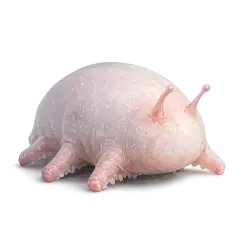
Prinsip spesies: Grounding
Walk the deep floor.
Progress does not need glamour; it needs contact with the ground beneath you.
Sea pigs use tube feet to move across deep soft sediments while feeding on organic material in the mud.
Prinsip spesies: High-Ridge Endurance
Hold the ridge.
Strength becomes practical when it can still move in altitude and scarcity.
Siberian Ibex inhabit rugged mountain regions and rely on climbing, herd awareness, and endurance in harsh terrain.
Prinsip spesies: Patience
Slow is still forward.
Slow progress still counts when you bring what you need with you.
Land snails move on a muscular foot and carry a protective shell, trading speed for moisture control and safety across exposed ground.
Prinsip spesies: Tail Regeneration
Grow Back Stronger.
The Southeastern Five-lined Skink can regenerate its tail after losing it to a predator, showcasing resilience and adaptability in the face of adversity.
When threatened, this skink can detach its tail to escape predators, later regenerating it as part of its survival strategy.
Prinsip spesies: Cloud-forest Resilience
Climb the mist.
Gentle strength can keep climbing where the air gets thin.
Spectacled Bears are the only bears native to South America and are strong climbers in Andean cloud forests, feeding heavily on plants, fruits, and bromeliads.
Prinsip spesies: Useful Power
Clean the night.
Usefulness becomes strength when it clears what others abandon.
Striped Hyenas are nocturnal scavengers and hunters with strong jaws, raised mane displays, and an ecological role in consuming carrion and waste.
Prinsip spesies: Low Search
Sweep low.
The hidden thing is found by the one willing to sweep close to the ground.
Swamp Harriers hunt by flying low over wetlands, reeds, and grasslands, quartering back and forth while searching for small animals and birds.