AnimalDex
id
Kembali ke Kualitas

Kualitas Hewan

foraging

Forage widely.

Hewan di sini menunjukkan kualitas yang serupa melalui perilakunya di alam. Setiap spesies tetap punya prinsip, pelajaran, makna, dan halaman field guide sendiri.

34 spesies

Ancona Duck animal lesson image on AnimalDex

Ancona Duck

Prinsip spesies: Patchwork Foraging

Forage widely.

Adaptability grows when you can work across mixed conditions without losing direction.

Ancona Ducks are domestic ducks known for mottled plumage, foraging ability, and active movement around water and pasture.
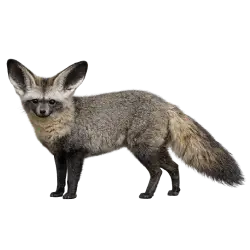
Bat-eared Fox (Otocyon megalotis) thumbnail image on AnimalDex

Bat-eared Fox

Prinsip spesies: Acute Listening

Hear the insects.

A whole life can be fed by hearing what others walk over.

Bat-eared Foxes have oversized ears used for detecting insects such as termites and beetles, and also for heat regulation in open African habitats.

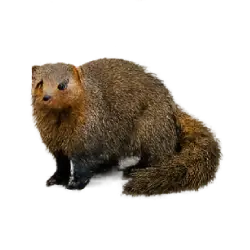
Bushy-tailed Mongoose (Bdeogale crassicauda) thumbnail image on AnimalDex

Bushy-tailed Mongoose

Prinsip spesies: Rough Utility

Use the rough tool.

A tool does not need to look refined to work exactly where it is needed.

Bushy-tailed Mongooses are nocturnal or crepuscular forest foragers that use strong senses, sharp noses, and bushy tails while searching through leaf litter, roots, and ground cover.

Cozumel Coati animal lesson image on AnimalDex

Cozumel Coati

Prinsip spesies: Island Curiosity

Map with the nose.

Curiosity turns a limited world into a living map.

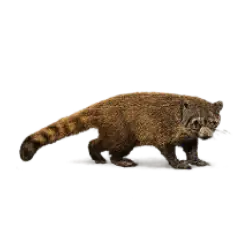
Cozumel Coatis are island coatis that use flexible snouts, claws, and foraging behavior to search forest floor and trees.

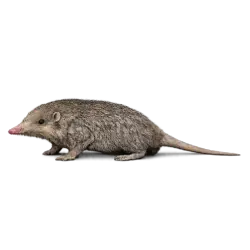
Cuban Solenodon animal lesson image on AnimalDex

Cuban Solenodon

Prinsip spesies: Ancient Cleverness

Snuffle from old time.

Old lineages survive by keeping one strange advantage alive.

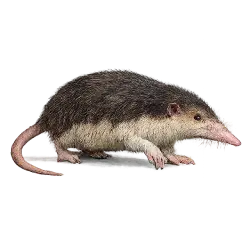
Cuban Solenodons are ancient insectivorous mammals with long flexible snouts and venomous saliva delivered through grooved lower teeth, used while foraging at night.

Eastern Bettong (Bettongia gaimardi) thumbnail image on AnimalDex

Eastern Bettong

Prinsip spesies: Busy Shelter

Nest after dark.

Safety is built by small habits repeated after dark.

Eastern Bettongs are nocturnal marsupials that dig for fungi and other foods and build grassy nests for shelter.

Eastern Quoll (Dasyurus viverrinus) thumbnail image on AnimalDex

Eastern Quoll

Prinsip spesies: Night Skill

Hunt under spots.

Playful pattern can hide a serious hunter.

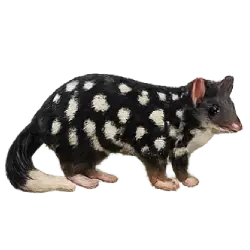
Eastern Quolls are spotted carnivorous marsupials that forage mostly at night for insects, small vertebrates, and carrion in grasslands, forests, and farmland edges.

Fanaloka animal lesson image on AnimalDex

Fanaloka

Prinsip spesies: Light Movement

Step light at night.

Move lightly enough and darkness becomes a path instead of a wall.

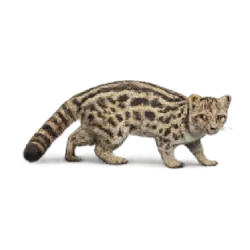
Fanalokas are nocturnal Malagasy carnivores with spotted bodies, slender movement, and forest-floor foraging habits.

Grizzly Bear (Ursus arctos horribilis) thumbnail image on AnimalDex

Grizzly Bear

Prinsip spesies: Versatile Strength

Use every strength.

Real strength is stronger when it can do more than one job.

Grizzly Bears are powerful omnivores that dig, fish, forage, scavenge, and roam across large territories using claws, strength, and keen smell.

Hispaniolan Solenodon animal lesson image on AnimalDex

Hispaniolan Solenodon

Prinsip spesies: Ancient Toolkit

Keep the old tool sharp.

Old lineages survive by keeping strange tools sharp.

Hispaniolan Solenodons are ancient insectivorous mammals with long flexible snouts, digging habits, and venomous saliva delivered through grooved lower incisors.

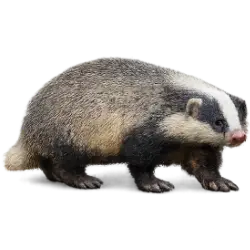
Hog Badger (Arctonyx collaris) thumbnail image on AnimalDex

Hog Badger

Prinsip spesies: Snout Labor

Plow with purpose.

Confidence comes from using the exact tool the body was given.

Hog Badgers use pig-like snouts and strong claws to root and dig for food in soil and leaf litter.

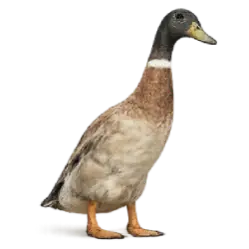
Indian Runner Duck animal lesson image on AnimalDex

Indian Runner Duck

Prinsip spesies: Upright Purpose

Stand and go.

Direction sharpens when posture and purpose align.

Indian Runner Ducks have an upright stance and are active foragers known for distinctive vertical movement.

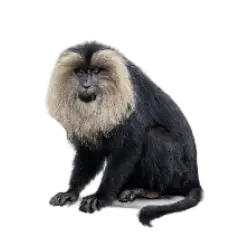
Lion-tailed Macaque (Macaca silenus) thumbnail image on AnimalDex

Lion-tailed Macaque

Prinsip spesies: Canopy Intelligence

Think through the canopy.

A sharp mind climbs best when it stays close to its kin.

Lion-tailed Macaques live in social groups in wet evergreen forests, using clever foraging behavior, vocal communication, and canopy movement.

Long-nosed Potoroo (Potorous tridactylus) thumbnail image on AnimalDex

Long-nosed Potoroo

Prinsip spesies: Quiet Treasure

Dig the quiet treasure.

The hidden feast belongs to the one patient enough to smell below the surface.

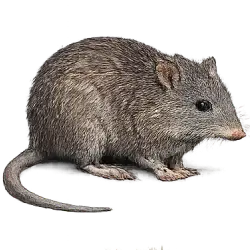
Long-nosed Potoroos use sensitive noses and small forepaws to dig for underground fungi such as truffles, helping disperse fungal spores through forest ecosystems.

Mangrove Monitor (Varanus indicus) thumbnail image on AnimalDex

Mangrove Monitor

Prinsip spesies: Edge Versatility

Work every edge.

Many paths open for the body fluent in mud, water, and bark.

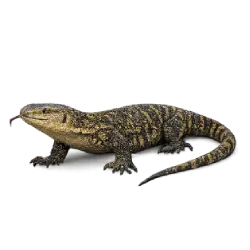
Mangrove Monitors are semi-aquatic monitor lizards that swim, climb, forage along mangroves and shorelines, and eat a wide variety of prey.

Nicobar Pigeon (Caloenas nicobarica) thumbnail image on AnimalDex

Nicobar Pigeon

Prinsip spesies: Practical Beauty

Walk with jewels.

Beauty stays grounded when it still knows how to find its food.

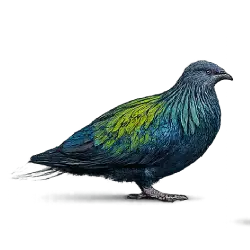
Nicobar Pigeons have iridescent neck feathers and strong ground-foraging habits, moving through island forests and coastal areas for fallen fruit, seeds, and other foods.

Northern Bald Ibis (Geronticus eremita) thumbnail image on AnimalDex

Northern Bald Ibis

Prinsip spesies: Unmistakable Form

Probe with the bare head.

A strange look becomes strength when it fits the work perfectly.

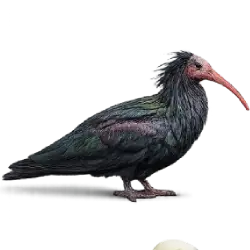
Northern Bald Ibises have bare red heads and long curved bills used for probing dry ground, while nesting on cliffs and rocky ledges.

Northern Tamandua (Tamandua mexicana) thumbnail image on AnimalDex

Northern Tamandua

Prinsip spesies: Tongue Reach

Reach with every part.

Odd tools become elegance when every part reaches the work.

Northern Tamanduas use strong claws to open insect nests, long sticky tongues to feed, and prehensile tails to climb and balance in trees.

Jelajahi indeks terkait