

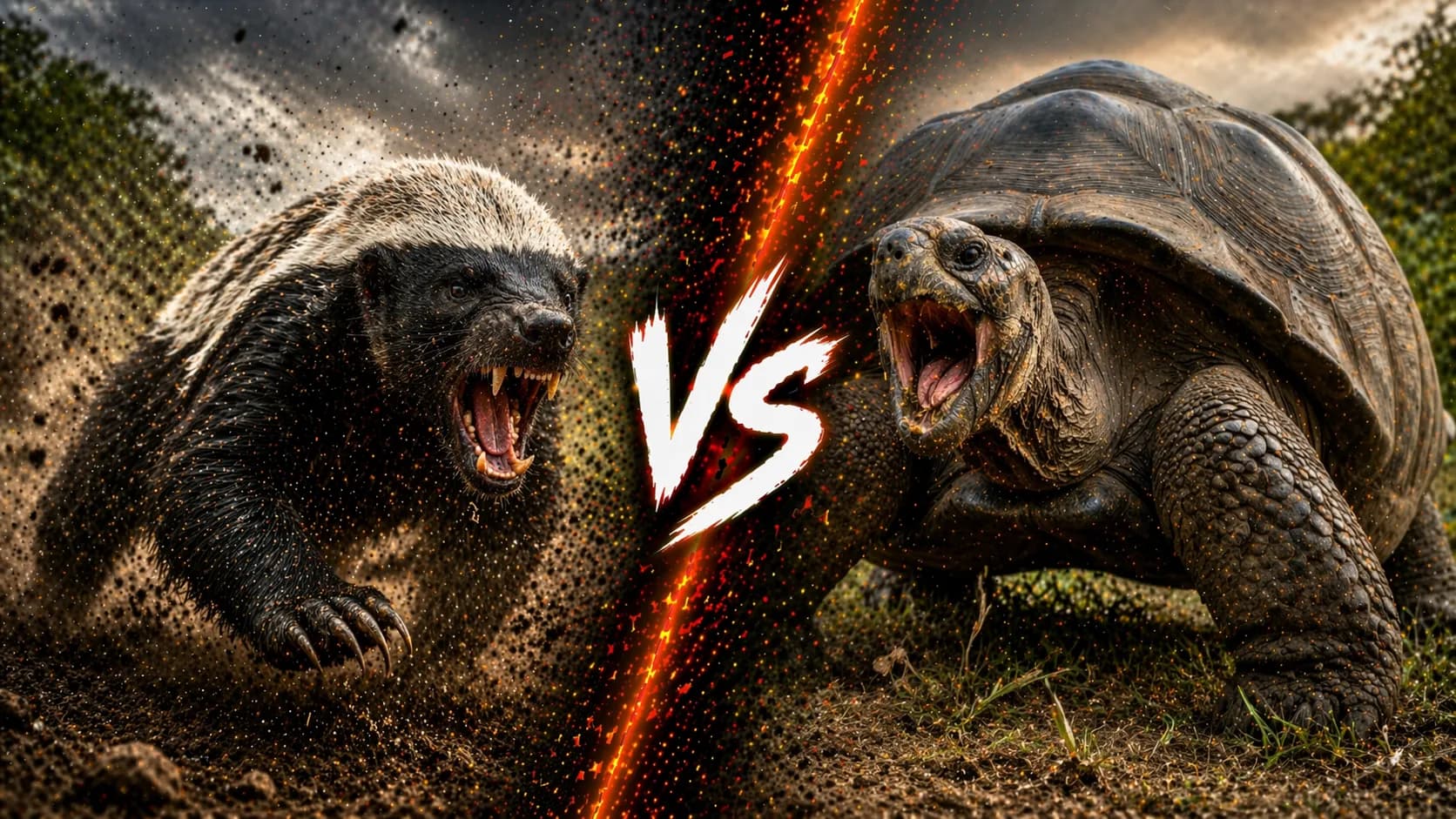
Honey Badger vs Giant Tortoise: Which Animal Has the Edge?
A grounded honey badger vs giant tortoise comparison covering armor, persistence, attack access, and why 'winning' depends on whether the shell can be breached at all.
Meet the animals in this matchup
Go straight to the species guides behind this comparison for identification, habitat, rarity, and deeper AnimalDex context.
Quick verdict
Start with the direct answer, then use the structured comparison below to see what changes the outcome.
Honey badger controls the pace and pressure of the encounter, but giant tortoise can make clean defeat extremely difficult through sheer shell protection and size. If the question is who dictates contact, it leans honey badger. If the question is who is harder to actually finish, the tortoise makes the page much messier.
This is one of those pages where aggression and victory are not the same thing. Honey badger is the active threat. Giant tortoise is the passive fortress.
Why this matchup is interesting
It forces the page to distinguish between pressure, damage, and actual finishing ability.
Head-to-head species stats
These are the same core AnimalDex stat dimensions used on the dedicated animal pages, pulled side by side so the matchup is faster to scan.
Honey Badger
Stats source: Canonical species profile
Giant Tortoise
Stats source: Canonical species profile
Trait-by-trait comparison
Only the categories that matter to this matchup are included. The goal is not filler stats, but the real design differences that change the result.
Protection
Honey Badger
Loose skin and toughness, but no hard shell
Giant Tortoise
Immense shell protection and body coverage
Why it matters
The shell is why the page refuses to become simple.
Initiative and attack pressure
Honey Badger
Aggressive, probing, and hard to discourage
Giant Tortoise
Slow and mostly defensive
Why it matters
Honey badger controls far more of the active engagement.
Ability to finish
Honey Badger
Only improves if soft tissue stays exposed
Giant Tortoise
Low offensive finishing ability
Why it matters
The whole answer turns on access to vulnerable openings.
Scenario breakdown
This is where shallow battle content usually fails. Terrain, spacing, timing, and engagement style can change the answer.
Closed-shell defense
Giant tortoise survives
If the tortoise protects openings well, the badger has a hard time converting pressure into a finish.
Exposed soft tissue
Honey badger improves sharply
The page changes fast if the badger gains access around the shell.
Broad who wins question
Depends on finish criteria
Honey badger dominates activity. Giant tortoise dominates passive survivability.
Explore these animals
Use the full species pages to go deeper on biology, habitat fit, and the real traits behind this verdict.
Honey Badger
The honey badger is a tough mustelid known for digging strength, bold behavior, and a broad diet.
Read species guideGiant Tortoise
Giant Tortoise is a reptile known for immense domed shell, long-lived slow grazing, and heavy columnar island-walking legs.
Read species guideSystems Intelligence & Hidden Purpose
See the animals behind this comparison as engineered biological systems: what each one is built to do, where it gains leverage, and why the matchup changes by scenario.
System Role
The Hard-Access Resource Raider
Honey Badger
Specialized Hardware
Black body with pale back stripe, low muscular body, and strong claws for digging give the Honey Badger a body plan tuned for its niche.
Systems Script
Honey Badgers operate in savannah, scrubland, dry forest edge, and semi-arid country. Their design helps them match food access, shelter, and timing inside that environment.
Strategic Insight
Confidence is strongest when your equipment can actually support it.
Final take
Honey badger is the more dangerous and controlling animal. Giant tortoise is the harder animal to actually beat cleanly. That is why the most honest answer stays conditional.
Collect both animals in AnimalDex
Track the species behind this matchup, compare their real traits, and build the rivalry into your AnimalDex collection.
Comparison FAQ
Short, direct answers to the next questions readers usually ask after the headline verdict.
Who wins, honey badger or giant tortoise?
It depends on what counts as a win: pressure favors honey badger, pure survivability favors giant tortoise.
Why is this matchup so hard to score?
Because shell armor can turn a violent encounter into a very slow, inconclusive problem.
Related comparisons
Continue with nearby matchups to compare more real-world animal traits without dropping into junky who-wins filler.
Honey Badger vs Snake: Which Side Usually Has the Edge?
Honey badger usually has the edge against many snakes because toughness, aggression, and prey-handling skill make it a specialized raid animal. Snake still remains dangerous because one clean venomous strike can flip the outcome fast.
Read comparisonAlligator Snapping Turtle vs Polar Bear: Which Animal Has the Edge?
Polar bear gets the overwhelming overall edge through sheer mass, strength, and the ability to dominate most contact scenarios. Alligator snapping turtle stays dangerous only in a narrow front-facing water-side bite window where its jaws can punish a mistake.
Read comparisonGorilla vs Honey Badger: Which Animal Has the Edge?
Gorilla gets the overwhelming overall edge through immense size, reach, and raw power. Honey badger keeps the page interesting because it is tough, aggressive, and comfortable in ugly contact, but it is still operating from a far smaller frame.
Read comparisonHoney Badger vs Crocodile: Which Dangerous Animal Has the Edge?
Crocodile gets the overall edge because one clean ambush bite or clamp is so punishing. Honey badger only improves if the reptile loses ideal position and the fight becomes a land-based scramble.
Read comparison