

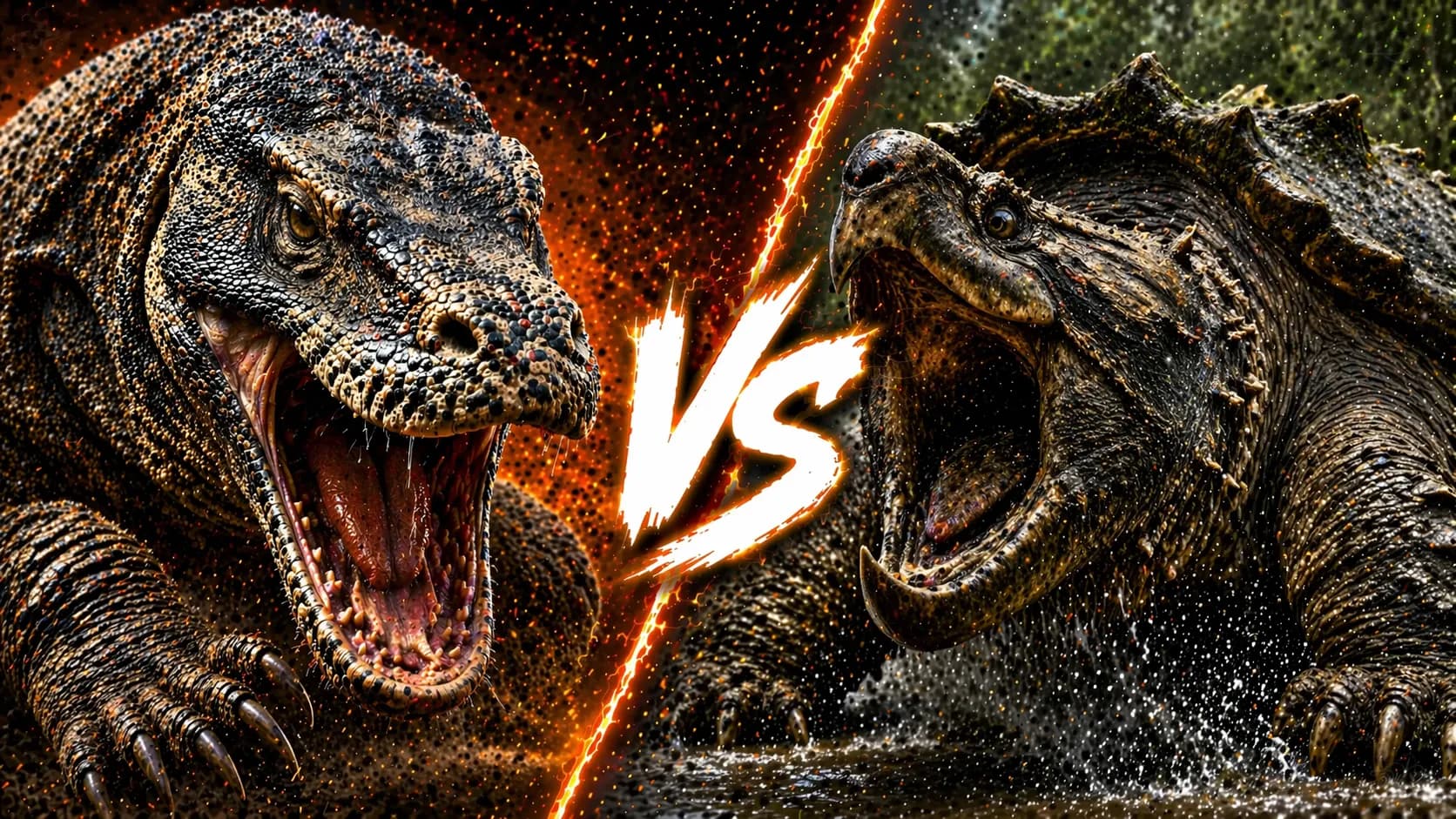
Komodo Dragon vs Alligator Snapping Turtle: Which Reptile Has the Edge?
A grounded Komodo dragon vs alligator snapping turtle comparison covering armor, bite windows, and whether the shell can stall the dragon's overall control.
Meet the animals in this matchup
Go straight to the species guides behind this comparison for identification, habitat, rarity, and deeper AnimalDex context.
Quick verdict
Start with the direct answer, then use the structured comparison below to see what changes the outcome.
Komodo dragon gets the overall edge through size, mobility, and the ability to pressure from more angles. Alligator snapping turtle remains dangerous because the bite zone is severe and the shell makes quick finishing harder than it first looks.
The turtle has the nastier trap mouth. The dragon has more ways to control the rest of the fight.
Why this matchup is interesting
It compares a mobile giant lizard with a heavily fortified ambush turtle in a true shape-versus-shape page.
Head-to-head species stats
These are the same core AnimalDex stat dimensions used on the dedicated animal pages, pulled side by side so the matchup is faster to scan.
Komodo Dragon
Stats source: Canonical species profile
Alligator Snapping Turtle
Stats source: Canonical species profile
Trait-by-trait comparison
Only the categories that matter to this matchup are included. The goal is not filler stats, but the real design differences that change the result.
Mobility
Komodo Dragon
Much more mobile and able to pressure from angles
Alligator Snapping Turtle
Slow and mostly front-loaded
Why it matters
The dragon controls far more of the map.
Front-end bite danger
Komodo Dragon
Powerful bite and body shove
Alligator Snapping Turtle
Extremely dangerous mouth trap if the angle is wrong
Why it matters
The turtle still asks one very serious question.
Finishing path
Komodo Dragon
More complete route to eventually control the fight
Alligator Snapping Turtle
Excellent at punishing mistakes, less excellent at broad finishing
Why it matters
The shell delays the answer but does not reverse it.
Scenario breakdown
This is where shallow battle content usually fails. Terrain, spacing, timing, and engagement style can change the answer.
Open-ground pressure
Komodo dragon edge
The mobile lizard gets to dictate too much.
Front-angle mistake
Turtle improves
The turtle only needs one bad approach to look terrifying.
Broad matchup
Komodo dragon overall
The larger mobile reptile gets the safer verdict.
Explore these animals
Use the full species pages to go deeper on biology, habitat fit, and the real traits behind this verdict.
Komodo Dragon
The Komodo dragon is the largest living lizard, native to a small island range in Indonesia, and famous for its size, power, and apex-predator role.
Read species guideAlligator Snapping Turtle
The alligator snapping turtle is a heavy freshwater turtle known for a spiked shell, strong jaws, and lure-based ambush feeding.
Read species guideSystems Intelligence & Hidden Purpose
See the animals behind this comparison as engineered biological systems: what each one is built to do, where it gains leverage, and why the matchup changes by scenario.
System Role
The Island Apex Regulator
Komodo Dragon
Specialized Hardware
Heavy skeletal architecture, serrated bite mechanics, tongue-based chemical sensing, and heat-efficient reptile metabolism make the Komodo dragon premium hardware for ambush, tracking, and territorial control.
Systems Script
The Komodo dragon operates as apex environmental hardware inside a constrained island system. It removes weak links, regulates prey pressure, and keeps limited ecosystems from drifting into easy imbalance.
Strategic Insight
Premium energy should not be spent on noise. Position well, sense early, and commit hard only when the leverage justifies the burn.
System Role
The Freshwater Lure Ambusher
Alligator Snapping Turtle
Specialized Hardware
Large rough shell with ridges, very powerful hooked beak, and thick head and tail give the Alligator Snapping Turtle a body plan tuned for its niche.
Systems Script
Alligator Snapping Turtles operate in deep rivers, swamps, bayous, and slow freshwater channels. Their design helps them match food access, shelter, and timing inside that environment.
Strategic Insight
Stillness becomes powerful when it invites the target to make the mistake for you.
Final take
Alligator snapping turtle is dangerous enough to keep the page honest. Komodo dragon still gets the total answer because it has more control over the shape of the fight.
Collect both animals in AnimalDex
Track the species behind this matchup, compare their real traits, and build the rivalry into your AnimalDex collection.
Comparison FAQ
Short, direct answers to the next questions readers usually ask after the headline verdict.
Who wins, komodo dragon or alligator snapping turtle?
Komodo dragon gets the overall edge through size, mobility, and the ability to pressure from more angles. Alligator snapping turtle remains dangerous because the bite zone is severe and the shell makes quick finishing harder than it first looks.
Why does this matchup stay interesting?
Alligator snapping turtle is dangerous enough to keep the page honest. Komodo dragon still gets the total answer because it has more control over the shape of the fight.
Related comparisons
Continue with nearby matchups to compare more real-world animal traits without dropping into junky who-wins filler.
Great White Shark vs Alligator Snapping Turtle: Which Predator Has the Edge?
Great white shark gets the overwhelming overall edge in any true open-water contest because it is vastly larger, faster, and built for fully aquatic pursuit. Alligator snapping turtle only becomes dangerous in a narrow front-end bite window where the shark makes a major positioning mistake in confined water.
Read comparisonKomodo Dragon vs Wolverine: Which Dangerous Animal Has the Edge?
Komodo dragon gets the clear overall edge through much larger size, heavy body authority, and brutal close-range power. Wolverine stays interesting because it is relentless, hard to discourage, and comfortable in ugly contact.
Read comparisonAlligator Snapping Turtle vs Polar Bear: Which Animal Has the Edge?
Polar bear gets the overwhelming overall edge through sheer mass, strength, and the ability to dominate most contact scenarios. Alligator snapping turtle stays dangerous only in a narrow front-facing water-side bite window where its jaws can punish a mistake.
Read comparisonBull Shark vs Alligator Snapping Turtle: Which Water Hunter Has the Edge?
Bull shark gets the overall edge through movement, size, and broader aquatic control. Alligator snapping turtle remains dangerous only in a narrow front-end bite trap where the shark enters the wrong angle in confined water.
Read comparison