

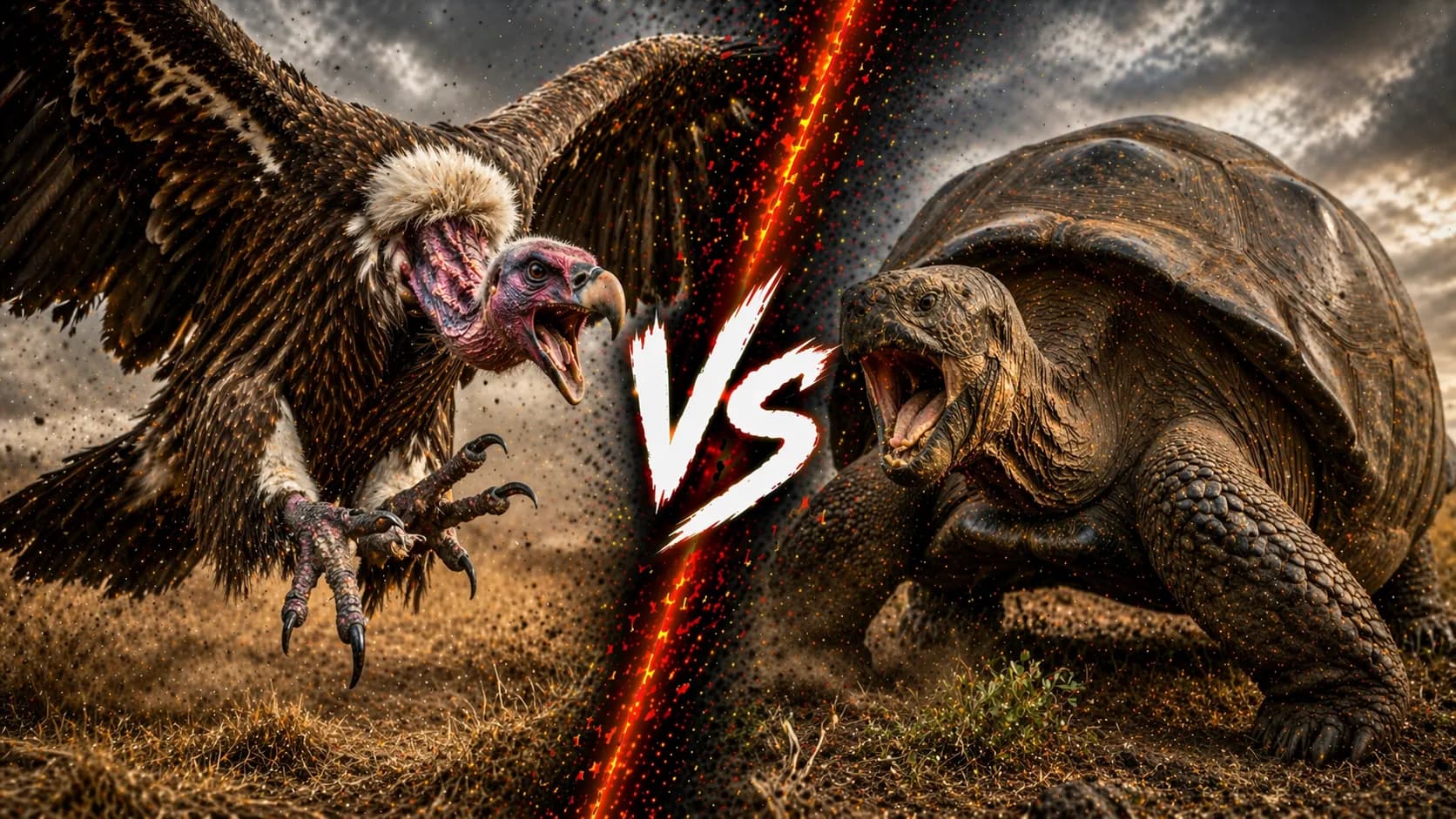
Lappet-faced Vulture vs Giant Tortoise: Which Animal Has the Edge?
A grounded lappet-faced vulture vs giant tortoise comparison covering shell armor, soft-tissue access, and why a scavenger's brutal bill still has limits against a live armored reptile.
Meet the animals in this matchup
Go straight to the species guides behind this comparison for identification, habitat, rarity, and deeper AnimalDex context.
Quick verdict
Start with the direct answer, then use the structured comparison below to see what changes the outcome.
Giant tortoise gets the overall edge because the vulture has no reliable path through the shell. The bird becomes dangerous only if vulnerable tissue stays exposed for too long, which makes this more about opportunity than clean superiority.
Lappet-faced vulture is built to exploit openings in dead tissue, not to overcome a giant armored animal that can withdraw and outlast pressure.
Why this matchup is interesting
It is a strong example of why a terrifying feeding tool does not automatically translate into live-combat dominance.
Head-to-head species stats
These are the same core AnimalDex stat dimensions used on the dedicated animal pages, pulled side by side so the matchup is faster to scan.
Lappet-faced Vulture
Stats source: Canonical species profile
Giant Tortoise
Stats source: Canonical species profile
Trait-by-trait comparison
Only the categories that matter to this matchup are included. The goal is not filler stats, but the real design differences that change the result.
Armor and passive defense
Lappet-faced Vulture
No armor beyond size and wing spacing
Giant Tortoise
Heavy shell with severe access problems for attackers
Why it matters
The shell is the whole center of gravity of the matchup.
Exploiting an opening
Lappet-faced Vulture
Powerful bill if vulnerable tissue is exposed
Giant Tortoise
Can reduce openings by posture and withdrawal
Why it matters
The bird only improves if the tortoise gives it something to work on.
Reliable finishing path
Lappet-faced Vulture
Uncertain against a live giant tortoise
Giant Tortoise
Low offense but strong non-loss profile
Why it matters
The tortoise wins by being extremely difficult to meaningfully defeat.
Scenario breakdown
This is where shallow battle content usually fails. Terrain, spacing, timing, and engagement style can change the answer.
Withdrawn shell defense
Giant tortoise clearly
The vulture has no good answer to a well-protected shell posture.
Exposed neck or limb
Vulture improves
The bird becomes dangerous only when the tortoise leaves soft tissue available.
Broad who wins question
Giant tortoise overall
The side with the reliable non-loss mechanism gets the cleaner verdict.
Explore these animals
Use the full species pages to go deeper on biology, habitat fit, and the real traits behind this verdict.
Lappet-faced Vulture
Lappet-faced Vulture is a bird known for huge bald head, dangling neck lappets, and bone-tough carcass-opening bill.
Read species guideGiant Tortoise
Giant Tortoise is a reptile known for immense domed shell, long-lived slow grazing, and heavy columnar island-walking legs.
Read species guideSystems Intelligence & Hidden Purpose
See the animals behind this comparison as engineered biological systems: what each one is built to do, where it gains leverage, and why the matchup changes by scenario.
System Role
The Lappet-faced Scavenger Giant
Lappet-faced Vulture
Specialized Hardware
huge bald head, dangling neck lappets, and bone-tough carcass-opening bill give the Lappet-faced Vulture a body plan tuned for its niche.
Systems Script
Lappet-faced Vultures operate through savannah, semi-desert, and open dry plain. Their design links movement, feeding, shelter, and timing into one workable survival system.
Strategic Insight
Harsh places reward efficiency, timing, and bodies that waste very little.
Final take
Lappet-faced vulture is a serious bird, but giant tortoise is too well protected for the vulture to own the matchup cleanly.
Collect both animals in AnimalDex
Track the species behind this matchup, compare their real traits, and build the rivalry into your AnimalDex collection.
Comparison FAQ
Short, direct answers to the next questions readers usually ask after the headline verdict.
Who wins, lappet-faced vulture or giant tortoise?
Giant tortoise overall because the shell removes the vulture's easy path to damage.
Can the vulture still hurt the tortoise?
Yes, if the tortoise exposes vulnerable tissue, but that is not the same as a reliable full-matchup advantage.
Related comparisons
Continue with nearby matchups to compare more real-world animal traits without dropping into junky who-wins filler.
Honey Badger vs Giant Tortoise: Which Animal Has the Edge?
Honey badger controls the pace and pressure of the encounter, but giant tortoise can make clean defeat extremely difficult through sheer shell protection and size. If the question is who dictates contact, it leans honey badger. If the question is who is harder to actually finish, the tortoise makes the page much messier.
Read comparisonLappet-faced Vulture vs Honey Badger: Which Animal Has the Edge?
Honey badger gets the clear overall edge in a ground fight. Lappet-faced vulture is a massive, intimidating bird with a brutal bill, but it is still not designed to absorb or win sustained close contact against an aggressive mammal built for chaos.
Read comparisonLappet-faced Vulture vs Black Vulture: Which Bird Has the Edge?
Lappet-faced vulture gets the clear overall edge through much greater size, heavier bill, and a carcass-opening design built for far harsher competition. Black vulture is tough and socially bold, but it is operating from a much smaller frame.
Read comparisonLappet-faced Vulture vs Lion: Which Animal Has the Edge?
Lion gets the overwhelming overall edge. Lappet-faced vulture is massive for a bird and can be bold around carcasses, but it is not designed to stop or survive a committed attack from a top-tier large predator.
Read comparison