

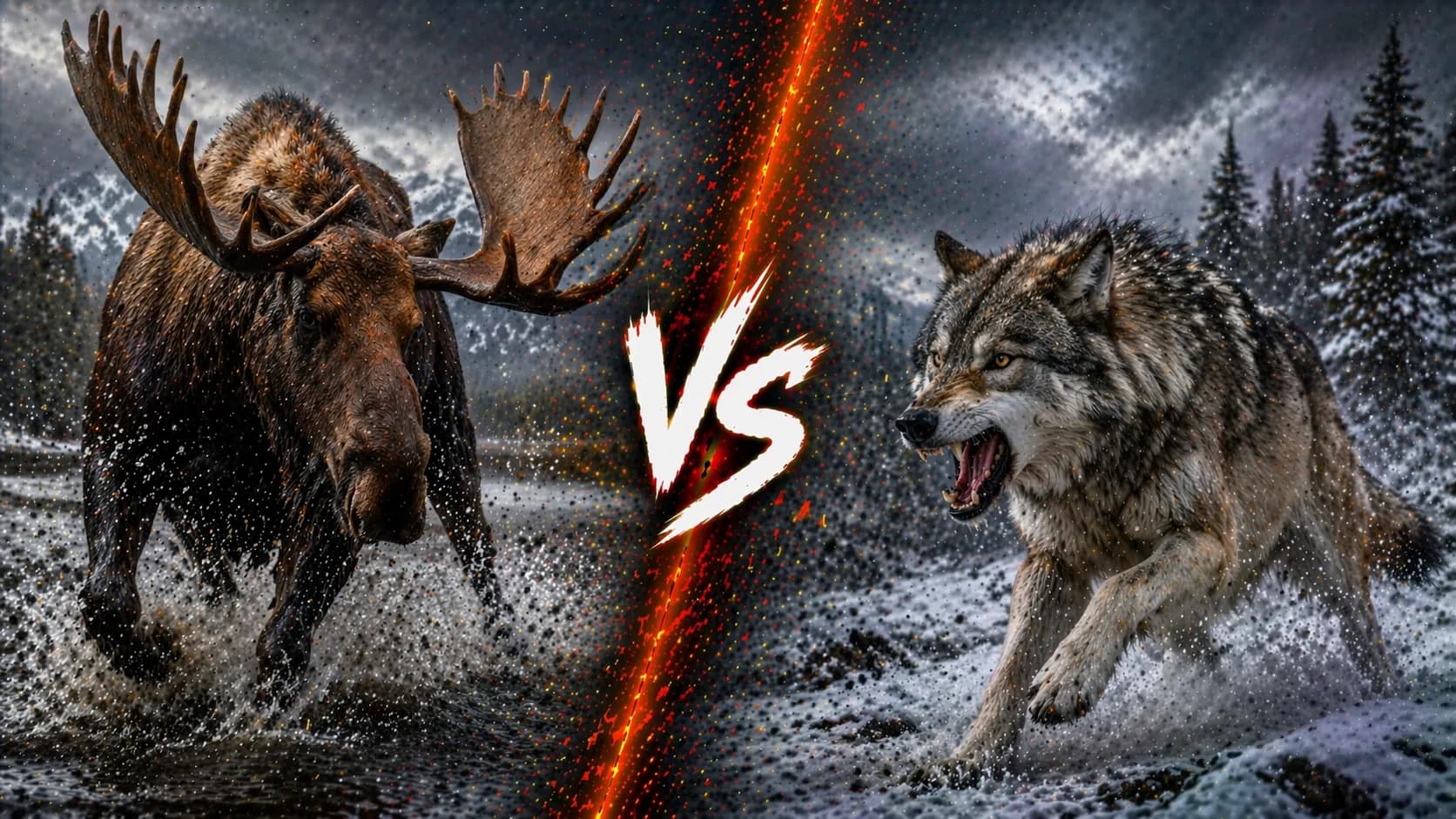
Meet the animals in this matchup
Go straight to the species guides behind this comparison for identification, habitat, rarity, and deeper AnimalDex context.
Quick verdict
Start with the direct answer, then use the structured comparison below to see what changes the outcome.
Adult moose is the stronger one-on-one answer. Wolves become the stronger overall predation answer when the scenario includes a pack, winter pressure, or a target that cannot move cleanly.
This is a classic herbivore-versus-pack-predator page. One wolf is not the same problem as several wolves working a large ungulate over time.
Why this matchup is interesting
It is one of the best pages for showing the difference between duel logic and ecological predation logic.
Head-to-head species stats
These are the same core AnimalDex stat dimensions used on the dedicated animal pages, pulled side by side so the matchup is faster to scan.
Moose
Stats source: Canonical species profile
Wolf
Stats source: Canonical species profile
Trait-by-trait comparison
Only the categories that matter to this matchup are included. The goal is not filler stats, but the real design differences that change the result.
Size and impact
Moose
Massive body and dangerous leg strikes
Wolf
Smaller body optimized for endurance and teamwork
Why it matters
Moose is the stronger solo body.
Social hunting pressure
Moose
Individual defense
Wolf
Pack coordination changes the whole answer
Why it matters
Wolf becomes much stronger as a system than as one body.
Winter fatigue
Moose
Large body can suffer in deep snow and long pressure
Wolf
Excellent at turning endurance into advantage
Why it matters
Season changes the page dramatically.
Scenario breakdown
This is where shallow battle content usually fails. Terrain, spacing, timing, and engagement style can change the answer.
One-on-one
Moose clearly
A single wolf does not want this fight cleanly.
Pack in winter
Wolf side
This is the biologically strongest wolf version of the page.
Healthy adult on firm ground
Moose strong
Strong footing keeps the ungulate answer cleaner.
Explore these animals
Use the full species pages to go deeper on biology, habitat fit, and the real traits behind this verdict.
Moose
The moose is the largest deer species, known for its long legs, hanging snout, and the giant antlers of adult males.
Read species guideWolf
Wolves are endurance-based pack predators known for long-range movement, coordinated hunting, and strong influence on prey behavior across large territories.
Read species guideSystems Intelligence & Hidden Purpose
See the animals behind this comparison as engineered biological systems: what each one is built to do, where it gains leverage, and why the matchup changes by scenario.
System Role
The Wetland Canopy Browser
Moose
Specialized Hardware
Long legs and tall shoulder height, large drooping nose and heavy head, and broad paddle-shaped antlers on adult males give the Moose a body plan tuned for its niche.
Systems Script
Mooses operate in boreal forest, wetlands, willow thickets, and lake edges. Their design helps them match food access, shelter, and timing inside that environment.
Strategic Insight
Height becomes useful when it opens paths and food that smaller bodies cannot reach.
System Role
The Cooperative Territory Governor
Wolf
Specialized Hardware
Long-distance scent detection, endurance locomotion, social signaling, and coordinated pack behavior give wolves durable hardware for tracking, testing, and wearing down prey across large territories.
Systems Script
Wolves apply top-down pressure that changes prey distribution, browsing intensity, and risk behavior. They remind ecosystems that movement patterns matter as much as raw population numbers.
Strategic Insight
Endurance and coordination beat isolated bursts of talent. A disciplined group with shared direction can reshape a landscape over time.
Final take
Moose wins the one-body question. Wolf wins the coordinated predation question once pack logic and season start doing the real work.
Collect both animals in AnimalDex
Track the species behind this matchup, compare their real traits, and build the rivalry into your AnimalDex collection.
Comparison FAQ
Short, direct answers to the next questions readers usually ask after the headline verdict.
Who wins, moose or wolf?
Moose in a one-on-one, wolves in the right pack-and-season context.
Why do wolves still hunt moose?
Because packs can create exhaustion, angle pressure, and selection against weaker targets.
Related comparisons
Continue with nearby matchups to compare more real-world animal traits without dropping into junky who-wins filler.
Elk vs Wolf: Which Side Has the Real Advantage?
A healthy adult elk is the stronger one-body answer, but wolves get the stronger overall predation verdict because pack coordination and winter pressure change the problem.
Read comparisonDeer vs Wolf: Which Side Usually Wins?
Wolf is the stronger overall predation answer, but deer survives plenty of encounters through awareness, escape timing, and terrain. As a one-on-one body contest, the deer is more dangerous than people often assume.
Read comparisonCougar vs Wolf: Which Predator Has the Edge?
Cougar gets the edge in a clean one-on-one because the cat is built for ambush, grappling, and fast finishing contact. Wolf becomes more dangerous the moment the scenario includes pack pressure, pursuit, or repeated harassment.
Read comparisonDhole vs Wolf: Which Wild Canid Has the Better Matchup?
Wolf gets the stronger direct-fight verdict because it is larger and more robust. Dhole stays impressive through pack cohesion, persistence, and coordinated pursuit in rougher terrain.
Read comparison