

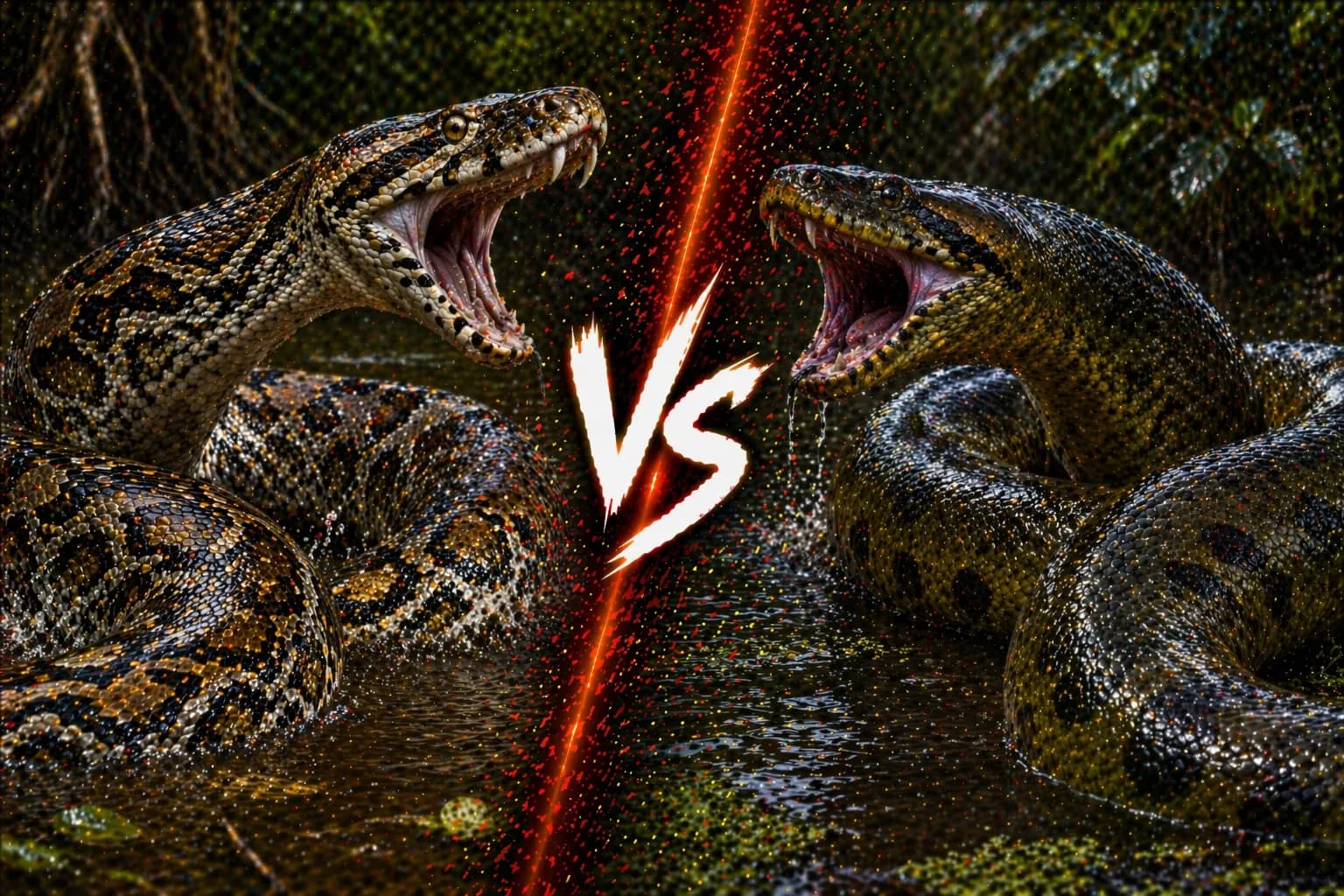
Reticulated Python vs Green Anaconda: Which Giant Snake Has the Edge?
A grounded reticulated python vs green anaconda comparison covering length, bulk, habitat, and why giant snakes still need the right environment.
Meet the animals in this matchup
Go straight to the species guides behind this comparison for identification, habitat, rarity, and deeper AnimalDex context.
Quick verdict
Start with the direct answer, then use the structured comparison below to see what changes the outcome.
Reticulated python gets the length and land-flexibility edge. Green anaconda gets the heavier water-power edge. The real answer depends heavily on whether the fight is mostly terrestrial or mostly aquatic.
This is one of the best reptile pages because both snakes are giants, but they are giant in different formats.
Why this matchup is interesting
It turns a popular internet snake comparison into a cleaner land-versus-water design question.
Head-to-head species stats
These are the same core AnimalDex stat dimensions used on the dedicated animal pages, pulled side by side so the matchup is faster to scan.
Reticulated Python
Stats source: Canonical species profile
Green Anaconda
Stats source: Canonical species profile
Trait-by-trait comparison
Only the categories that matter to this matchup are included. The goal is not filler stats, but the real design differences that change the result.
Length
Reticulated Python
Often longer and more extended in body reach
Green Anaconda
Shorter on average but heavier in water-heavy body use
Why it matters
Python gets the reach narrative.
Bulk in water
Reticulated Python
Powerful constrictor, but less defined by aquatic mass use
Green Anaconda
Heavier and more at home in water-led contact
Why it matters
Anaconda gets the water-weight narrative.
Terrain
Reticulated Python
More flexible on land
Green Anaconda
More dangerous in water-linked environments
Why it matters
The page only becomes honest when terrain is explicit.
Scenario breakdown
This is where shallow battle content usually fails. Terrain, spacing, timing, and engagement style can change the answer.
Mostly land
Python edge
The longer more land-flexible body looks better here.
Mostly water
Anaconda edge
This is the strongest version of the anaconda case.
Mixed wet ground
Very close
This is where the comparison becomes least comfortable.
Explore these animals
Use the full species pages to go deeper on biology, habitat fit, and the real traits behind this verdict.
Reticulated Python
The reticulated python is one of the world’s longest snakes, built for stealth, constriction, and flexible hunting across forests, wetlands, and edge habitats in Southeast Asia.
Read species guideGreen Anaconda
The green anaconda is a giant semi-aquatic constrictor built for ambush from dark water, with heavy body mass and cryptic olive coloration.
Read species guideSystems Intelligence & Hidden Purpose
See the animals behind this comparison as engineered biological systems: what each one is built to do, where it gains leverage, and why the matchup changes by scenario.
System Role
The Long-Range Constrictor
Reticulated Python
Specialized Hardware
Thermal sensing pits, immense muscular length, and camouflage patterning make reticulated pythons flexible ambush hardware for dense tropical cover.
Systems Script
They apply pressure across river margins, forests, and edge habitats while converting body length into access to many prey sizes. Their strength is range plus concealment, not just size.
Strategic Insight
Flexibility scales when one system can operate across water, ground, and canopy edges without redesign.
System Role
The Swamp Coil Anchor
Green Anaconda
Specialized Hardware
Heavy aquatic body mass, low-profile head placement, and constriction strength make anacondas ambush hardware for slow dark wetlands.
Systems Script
Anacondas own the murky zone where visibility collapses and surface confidence gets punished. They keep wetland prey from treating shallow cover as safety by default.
Strategic Insight
If the environment hides you for free, let the environment subsidize your advantage.
Final take
Python is the better land answer. Anaconda is the better water answer.
Collect both animals in AnimalDex
Track the species behind this matchup, compare their real traits, and build the rivalry into your AnimalDex collection.
Comparison FAQ
Short, direct answers to the next questions readers usually ask after the headline verdict.
Who wins, reticulated python or green anaconda?
Python on land, anaconda in water-heavy conditions.
Which snake is bigger?
Reticulated python is often longer, while green anaconda is often heavier in bulk.
Related comparisons
Continue with nearby matchups to compare more real-world animal traits without dropping into junky who-wins filler.
Python vs Cobra: Which Snake Has the Better Real-World Edge?
King cobra has the edge if it lands the first clean venom strike at range. Python has the edge once it turns the fight into body contact and constriction.
Read comparisonGreen Anaconda vs Crocodile: Which Reptile Has the Edge?
Crocodile gets the safer overall edge because armor, bite, and water ambush control make it the more complete direct predator. Green anaconda remains dangerous in tight aquatic contact where its body can wrap before the crocodile gets full leverage.
Read comparisonGreen Anaconda vs Jaguar: Which Amazon Predator Has the Edge?
Jaguar gets the overall edge because it is more complete on land and carries a crushing close-range finish. Green anaconda becomes much more dangerous in water-heavy surprise contact where constriction and body control can start first.
Read comparisonGreen Anaconda vs Polar Bear: Which Dangerous Animal Has the Edge?
Polar bear gets the overwhelming overall edge because the size, power, and contact authority gap are too large. Green anaconda only becomes serious if it somehow secures ideal wrap geometry before the bear can fully engage.
Read comparison