
Panduan lapangan hewan
Australian Funnel-web Spider
Identifikasi, habitat, rarity, perilaku, simbolisme, fakta, dan pelajaran praktis dari alam.
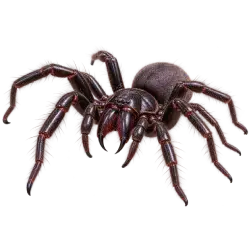
Kartu AnimalDex
Buka kartu hewan ini
Pindai atau tangkap hewan ini dengan AnimalDex untuk membuka kartu koleksi dan menambahkannya ke koleksi satwa liarmu.
Dapatkan AnimalDexPanduan lapangan hewan
Australian Funnel-web Spider
The Australian Funnel-web waits in a silk-lined burrow strung with trip-lines, striking outward the moment one is touched. It shows us that holding one place well can beat covering much more ground.
No captures yet
Native range
Natural range, not this capture location
Native range keys: australia_oceania. Moist, sheltered ground in eastern Australia — leaf litter, log piles, rockeries and shaded gardens — suits funnel-webs because Held Ground needs damp soil that will hold an open tunnel and silk that stays taut.
Search near meAnimalDex stats
Dominance
71
Speed
14
Size
6
Intelligence
20
Rarity
74%
Total
185
Size scale
Nama ilmiah
Atracidae
Kategori
Arachnid
Habitat
Native range keys: australia_oceania. Moist, sheltered ground in eastern Australia — leaf litter, log piles, rockeries and shaded gardens — suits funnel-webs because Held Ground needs damp soil that will hold an open tunnel and silk that stays taut.
Rarity
Rare · 74/100
Native range
Native range keys: australia_oceania. Moist, sheltered ground in eastern Australia — leaf litter, log piles, rockeries and shaded gardens — suits funnel-webs because Held Ground needs damp soil that will hold an open tunnel and silk that stays taut.
Mengapa Australian Funnel-web Spider?
Alasan di balik Prinsip Hewan ini dan biologi yang mendukungnya.
Australian Funnel-web Spider teaches Held Ground through a burrow it almost never leaves. Silk trip-lines radiating from a silk-lined tunnel turn a small patch of soil into territory that reports every footstep.
Cara mengidentifikasi Australian Funnel-web Spider
- Silk-lined burrow with trip-lines fanning out from the entrance
- Glossy dark body with a hard, almost hairless carapace
- Rears high with fangs raised when threatened
- Downward-striking fangs, unusual among spiders
Kenapa Australian Funnel-web Spider menarik
- Its fangs strike downward rather than pinching inward, so it can bite through surprisingly tough surfaces.
- Males wander in warm, humid weather looking for females, which is when people most often meet one.
- Antivenom has been available since 1981, and no death has been recorded in Australia since.
- The venom that is dangerous to humans and other primates is much less potent to most other mammals.
- Females may live for many years in the same burrow, while males die within months of maturing.
Habitat: Native range keys: australia_oceania. Moist, sheltered ground in eastern Australia — leaf litter, log piles, rockeries and shaded gardens — suits funnel-webs because Held Ground needs damp soil that will hold an open tunnel and silk that stays taut.
Native range: Native range keys: australia_oceania. Moist, sheltered ground in eastern Australia — leaf litter, log piles, rockeries and shaded gardens — suits funnel-webs because Held Ground needs damp soil that will hold an open tunnel and silk that stays taut.
nativeRangeCardTitle
nativeRangeCardDescription
Native range keys: australia_oceania. Moist, sheltered ground in eastern Australia — leaf litter, log piles, rockeries and shaded gardens — suits funnel-webs because Held Ground needs damp soil that will hold an open tunnel and silk that stays taut.
To find Australian Funnel-web Spider in the wild, focus on the exact habitat patches that match its body design and daily behavior, not just the broad country where it exists. You usually do better by working one good piece of habitat inside native range keys: australia_oceania. Moist, sheltered ground in eastern Australia — leaf litter, log piles, rockeries and shaded gardens — suits funnel-webs because Held Ground needs damp soil that will hold an open tunnel and silk that stays taut. than by covering too much ground.
- Headlands, reef edges, island colonies, tidal channels, or productive coastal water
- Burrow systems, sandy banks, fallen logs, or ground with clear den entrances
- Protected habitat blocks within native range keys: australia_oceania. Moist, sheltered ground in eastern Australia — leaf litter, log piles, rockeries and shaded gardens — suits funnel-webs because Held Ground needs damp soil that will hold an open tunnel and silk that stays taut.
- Start early, pick one strong patch of habitat, and stay long enough for movement to return after you arrive.
- Time your search around tide, wind, and visibility, then focus on feeding lines, reef edges, and known haul-out or nesting spots.
- Move quietly, stop often, and give the habitat time to settle; many mammals and insects show themselves only after the first pause.
Beetles, cockroaches, snails, other spiders and occasionally small lizards or frogs. This diet supports Held Ground because everything on it is prey that walked into the trip-lines rather than prey the spider went looking for.
Centipedes, scorpions, parasitic wasps and birds take funnel-webs, and wandering males are the most exposed of all. The burrow is the defence: inside it, the spider faces one narrow approach at a time.
Funnel-webs are nocturnal, sitting at the burrow mouth after dark and retreating deep during the day. Their rhythm keeps them in humid darkness, because they lose water quickly in the open.
Females can live fifteen years or more in one burrow, while males mature at three or four years and then die within months. Held Ground deepens with time, because the same tunnel is extended and repaired across a whole life.
Females stay with an egg sac inside the burrow and guard the spiderlings until they disperse. Offspring fit the principle because they begin life inside the held ground itself, and leave only to dig their own.
Males are smaller and longer-legged with a mating spur on each second leg, and they are the ones that wander. The difference matters because the dangerous encounters almost always involve the roaming male.
- Silk-lined burrow with trip-lines fanning out from the entrance
- Glossy dark body with a hard, almost hairless carapace
- Rears high with fangs raised when threatened
- Downward-striking fangs, unusual among spiders
- Observe from a respectful distance and avoid changing the animal's behavior.
- Do not block feeding, shelter, nesting, or travel routes.
- Use a live camera capture without handling or staging wildlife.
Hewan terkait
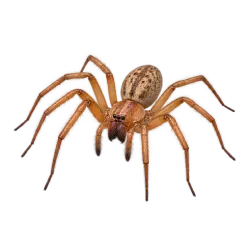
Agrarian Sac Spider
The Night-Hunting Crop Guardian. The Night-Hunting Crop Guardian. Quiet, unseen work…
Baca panduan spesies
Ant-mimicking Spider
The Ant-mimicking Spider shows that identity can be protective. By resembling ants, it…
Baca panduan spesies
Assassin Spider
The Assassin Spider is a lesson in specialized strategy. It does not win by being…
Baca panduan spesiesBawa ensiklopedia ke dunia nyata
AnimalDex membantumu memindai hewan nyata, mengidentifikasi spesies, mengoleksi kartu, dan belajar dari alam di mana pun kamu berada.