
Panduan lapangan hewan
Carpenter Ant
Identifikasi, habitat, rarity, perilaku, simbolisme, fakta, dan pelajaran praktis dari alam.
Panduan lapangan hewan
Carpenter Ant
Carpenter ants, belonging to the genus Camponotus, are nature's skilled carpenters. By creating these hidden passageways, they protect their colony and secure resources efficiently.
You’re #1 of 1
Native range
Natural range, not this capture location
Native range keys: north_america, south_america, europe, sub_saharan_africa, south_asia, southeast_asia, east_asia, australia_oceania.
Search near me0/1 XP toward Level 2
AnimalDex stats
Dominance
9
Speed
28
Size
3
Intelligence
19
Rarity
6%
Total
65
Size scale
✦ Available actions
Compare this public animal when your deck meets the current rules.
Nama ilmiah
Camponotus
Kategori
Invertebrate
Habitat
Native range keys: north_america, south_america, europe, sub_saharan_africa, south_asia, southeast_asia, east_asia, australia_oceania.
Rarity
Relatively common · 6/100
Native range
Native range keys: north_america, south_america, europe, sub_saharan_africa, south_asia, southeast_asia, east_asia, australia_oceania.
Mengapa Carpenter Ant?
Alasan di balik Prinsip Hewan ini dan biologi yang mendukungnya.
The Woodworker. Carpenter ants, belonging to the genus Camponotus, are nature's skilled carpenters. Unlike termites, they don't eat wood but carve intricate tunnels and galleries within it to create their nests. This precise engineering allows them to build expansive colonies while maintaining the structural integrity of the tree or wood they inhabit. In some cultures, their industrious nature is admired as a symbol of hard work and community spirit. Carpenter ants are experts at using their powerful mandibles to excavate wood, which they then discard outside their nest. This strategic approach not only keeps their living quarters clean but also ensures that their presence remains undetected by predators. By creating these hidden passageways, they protect their colony and secure resources efficiently.
Cara mengidentifikasi Carpenter Ant
- Recognized in AnimalDex as Carpenter Ant
- Indexed profile #1994
Habitat: Native range keys: north_america, south_america, europe, sub_saharan_africa, south_asia, southeast_asia, east_asia, australia_oceania.
Native range: Native range keys: north_america, south_america, europe, sub_saharan_africa, south_asia, southeast_asia, east_asia, australia_oceania.
nativeRangeCardTitle
nativeRangeCardDescription
Native range keys: north_america, south_america, europe, sub_saharan_africa, south_asia, southeast_asia, east_asia, australia_oceania.
To find Carpenter Ant in the wild, focus on the exact habitat patches that match its body design and daily behavior, not just the broad country where it exists. You usually do better by working one good piece of habitat inside native range keys: north_america, south_america, europe, sub_saharan_africa, south_asia, southeast_asia, east_asia, australia_oceania. than by covering too much ground.
- Headlands, reef edges, island colonies, tidal channels, or productive coastal water
- Burrow systems, sandy banks, fallen logs, or ground with clear den entrances
- Protected habitat blocks within native range keys: north_america, south_america, europe, sub_saharan_africa, south_asia, southeast_asia, east_asia, australia_oceania.
- Start early, pick one strong patch of habitat, and stay long enough for movement to return after you arrive.
- Time your search around tide, wind, and visibility, then focus on feeding lines, reef edges, and known haul-out or nesting spots.
- Slow down and scan shapes, outlines, and eye-level silhouettes; many good sightings come from noticing what does not move.
Carpenter Ant eats the foods its body design and habitat make easiest to access. Diet can shift across seasons, life stages, and local competition.
- The most accessible prey or plant foods in its habitat
- Energy-rich foods that match its size and behavior
- Seasonal resources available in the local environment
A practical answer for Carpenter Ant always depends on what food is actually available in native range keys: north_america, south_america, europe, sub_saharan_africa, south_asia, southeast_asia, east_asia, australia_oceania..
- The Woodworker. Carpenter ants, belonging to the genus Camponotus, are nature's skilled carpenters. Unlike termites, they don't eat wood but carve intricate tunnels and galleries within it to create their nests. This precise engineering allows them to build expansive colonies while maintaining the structural integrity of the tree or wood they inhabit. In some cultures, their industrious nature is admired as a symbol of hard work and community spirit. Carpenter ants are experts at using their powerful mandibles to excavate wood, which they then discard outside their nest. This strategic approach not only keeps their living quarters clean but also ensures that their presence remains undetected by predators. By creating these hidden passageways, they protect their colony and secure resources efficiently.
- Observe from a respectful distance and avoid changing the animal's behavior.
- Do not block feeding, shelter, nesting, or travel routes.
- Use a live camera capture without handling or staging wildlife.
Hewan terkait
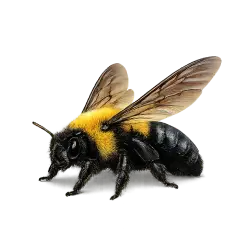
Carpenter Bee
The Solitary Woodworker. The Solitary Woodworker. Persistent, careful effort can…
Baca panduan spesies
Tropical Carpenter Bee
Tropical Carpenter Bee teaches Independent Craft because its real biology turns large…
Baca panduan spesies
Violet Carpenter Bee
The Vibrant Timber Tunneler. The Vibrant Timber Tunneler. True strength can look gentle…
Baca panduan spesiesBawa ensiklopedia ke dunia nyata
AnimalDex membantumu memindai hewan nyata, mengidentifikasi spesies, mengoleksi kartu, dan belajar dari alam di mana pun kamu berada.