
Panduan lapangan hewan
Banded Humbug Damselfish
Identifikasi, habitat, rarity, perilaku, simbolisme, fakta, dan pelajaran praktis dari alam.
Panduan lapangan hewan
Banded Humbug Damselfish
Group Protection
Strength in numbers.
Banded Humbug Damselfish thrive by sticking together in groups, which helps them deter predators and increase their chances of survival.
You’re #1 of 1
RECORD ID
ED03581F-A009-4437-A5BF-23F0736CB3A1
Native range
Natural range, not this capture location
Native range keys: indian_ocean, south_pacific, coral_triangle. Shallow lagoon and reef-flat stands of branching coral suit Banded Humbug Damselfish because Group Protection needs one shared structure the whole group can occupy.
Wild reward hint
First-time wild species earn bonus rewards, including 1 free credit.
0/1 XP toward Level 2
AnimalDex stats
Dominance
26
Speed
54
Size
9
Intelligence
21
Rarity
39%
Total
149
Size scale
Zoo animal · comparisons disabled
Zoo animals stay in your collection, but they can't enter scenario comparisons or the Arena.
✦ Available actions
Compare this public animal when your deck meets the current rules.
Nama ilmiah
Dascyllus aruanus
Kategori
Animal
Habitat
Native range keys: indian_ocean, south_pacific, coral_triangle. Shallow lagoon and reef-flat stands of branching coral suit Banded Humbug Damselfish because Group Protection needs one shared structure the whole group can occupy.
Rarity
Relatively common · 39/100
Native range
Native range keys: indian_ocean, south_pacific, coral_triangle. Shallow lagoon and reef-flat stands of branching coral suit Banded Humbug Damselfish because Group Protection needs one shared structure the whole group can occupy.
Mengapa Group Protection?
Alasan di balik Prinsip Hewan ini dan biologi yang mendukungnya.
Banded Humbug Damselfish teaches Group Protection above a single coral head, where a dozen small black-and-white fish together hold ground none of them could hold alone.
Cara mengidentifikasi Banded Humbug Damselfish
- Sharp black and white vertical bands, like a humbug sweet
- Small and deep-bodied, reaching about 10 cm
- Lives in tight groups over one branching coral head
- Drops into the coral branches as a group when threatened
Kenapa Banded Humbug Damselfish menarik
- A whole group lives above and inside a single coral colony, and rarely leaves it.
- They will chase fish many times their size away from their coral.
- Groups are size-structured, with the largest fish dominant.
- Males clear a patch of substrate for eggs and guard them until hatching.
- The banded pattern breaks up their outline against branching coral.
Habitat: Native range keys: indian_ocean, south_pacific, coral_triangle. Shallow lagoon and reef-flat stands of branching coral suit Banded Humbug Damselfish because Group Protection needs one shared structure the whole group can occupy.
Native range: Native range keys: indian_ocean, south_pacific, coral_triangle. Shallow lagoon and reef-flat stands of branching coral suit Banded Humbug Damselfish because Group Protection needs one shared structure the whole group can occupy.
nativeRangeCardTitle
nativeRangeCardDescription
nativeRangeMissingAssets
Native range keys: indian_ocean, south_pacific, coral_triangle. Shallow lagoon and reef-flat stands of branching coral suit Banded Humbug Damselfish because Group Protection needs one shared structure the whole group can occupy.
To find Banded Humbug Damselfish in the wild, focus on the exact habitat patches that match its body design and daily behavior, not just the broad country where it exists. You usually do better by working one good piece of habitat inside native range keys: indian_ocean, south_pacific, coral_triangle. Shallow lagoon and reef-flat stands of branching coral suit Banded Humbug Damselfish because Group Protection needs one shared structure the whole group can occupy. than by covering too much ground.
- Quiet marsh edges, reedbeds, river bends, or shallow wetland margins
- Headlands, reef edges, island colonies, tidal channels, or productive coastal water
- Sunlit logs, exposed branches, warm rocks, or regular perch sites used for scanning
- Start early, pick one strong patch of habitat, and stay long enough for movement to return after you arrive.
- Watch the transition line between open water and cover, because feeding and movement often happen on that edge.
- Move quietly, stop often, and give the habitat time to settle; many mammals and insects show themselves only after the first pause.
Zooplankton taken from the water just above the coral, plus algae and small invertebrates. This diet supports Group Protection because everyone feeds in the same small column of water and can be defended together.
Groupers, lizardfish, trumpetfish and larger wrasse. Its answer is collective: many pairs of eyes, and a coral head every fish can reach in a moment.
Banded Humbugs are active by day and settle deep among coral branches at night, packed into the structure they defend by day.
They live for several years in the same coral, so Group Protection compounds — the group knows its own colony intimately.
Females lay adhesive eggs on cleared substrate near the coral base and males guard and fan them. Offspring fit the principle because the nest sits inside the group's shared fortress.
Males and females look alike, with males identified mainly by nest-guarding. The similarity fits a species whose defence is collective rather than individual.
- Sharp black and white vertical bands, like a humbug sweet
- Small and deep-bodied, reaching about 10 cm
- Lives in tight groups over one branching coral head
- Drops into the coral branches as a group when threatened
Banded Humbug Damselfish most often symbolizes group protection in AnimalDex because its real survival behavior repeatedly shows this pattern.
Banded Humbug Damselfish thrive by sticking together in groups, which helps them deter predators and increase their chances of survival.
These fish are known for their social behavior, often forming schools that provide protection against predators.
- Observe from a respectful distance and avoid changing the animal's behavior.
- Do not block feeding, shelter, nesting, or travel routes.
- Use a live camera capture without handling or staging wildlife.
Hewan terkait
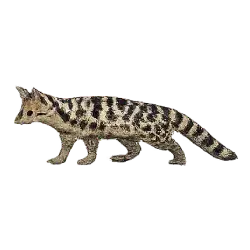
Banded Linsang
Banded Linsang is a mammal known for long ribbon-striped body, short catlike legs, and…
Baca panduan spesies
Banded Mongoose
Banded Mongoose expresses Teamwatch through banded back, cooperative troop life, group…
Baca panduan spesies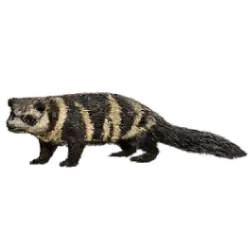
Banded Palm Civet
Banded Palm Civet is a mammal known for dark coat with pale bands, large night-adapted…
Baca panduan spesiesLebih banyak hewan dengan kekuatan Protective Strength
Jelajahi semua hewan Protective Strength

Bawa ensiklopedia ke dunia nyata
AnimalDex membantumu memindai hewan nyata, mengidentifikasi spesies, mengoleksi kartu, dan belajar dari alam di mana pun kamu berada.