
Panduan lapangan hewan
Greater Flamingo
Identifikasi, habitat, rarity, perilaku, simbolisme, fakta, dan pelajaran praktis dari alam.
The Pink Lake Strainer. The Greater Flamingo uses long legs and a bent filter bill to sweep tiny food from shallow water. It reminds us that graceful work can still be very practical.
Nama ilmiah
Phoenicopterus roseus
Kategori
Bird
Habitat
Salt pans, lagoons, estuaries, alkaline lakes, and shallow coastal wetlands.
Rarity
Relatively common · 48/100
Native range
Parts of Africa, southern Europe, the Middle East, and South Asia.
Lake Filtration
Filter the lake.
Bent-Bill Lake Straining
Apa yang diajarkannya
Grace becomes practical when it knows exactly what to filter.
Coba
Your day is full of noise, so you filter out what does not nourish you.
Bukti alam
Greater Flamingos use specialized filter-feeding bills and long legs to feed on small organisms in shallow saline and alkaline waters.
Gunakan untuk
Tangkapan Greater Flamingo berperingkat
1 tangkapan berperingkat dalam grup ini dari kolektor AnimalDex.
Mengapa Lake Filtration?
Alasan di balik Prinsip Hewan ini dan biologi yang mendukungnya.
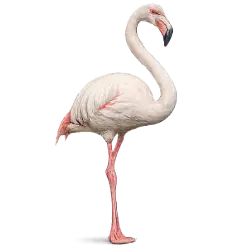
The greater flamingo is a tall filter-feeding wader recognized for pink-white plumage, long legs, and dense social flocks in saline wetlands.
Cara mengidentifikasi Greater Flamingo
- Very long pink legs and long S-curved neck
- Pale body with deeper pink wing coverts and black flight feathers
- Heavy downturned bill adapted for filter feeding
Kenapa Greater Flamingo menarik
- Flamingos show how specialized feeding hardware can shape an entire body plan.
- Their flocks create highly visible links between water chemistry and bird abundance.
Habitat: Salt pans, lagoons, estuaries, alkaline lakes, and shallow coastal wetlands.
Native range: Parts of Africa, southern Europe, the Middle East, and South Asia.
nativeRangeCardTitle
nativeRangeCardDescription
Salt pans, lagoons, estuaries, alkaline lakes, and shallow coastal wetlands.
To find Greater Flamingo in the wild, focus on the exact habitat patches that match its body design and daily behavior, not just the broad country where it exists. You usually do better by working one good piece of habitat inside parts of Africa, southern Europe, the Middle East, and South Asia. than by covering too much ground.
- Quiet marsh edges, reedbeds, river bends, or shallow wetland margins
- Headlands, reef edges, island colonies, tidal channels, or productive coastal water
- Protected habitat blocks within parts of Africa, southern Europe, the Middle East, and South Asia.
- First light and late afternoon are often best, when animals come out to feed along the edge of water.
- Watch the transition line between open water and cover, because feeding and movement often happen on that edge.
- Use sound, flight lines, and perch trees as clues; birds often reveal themselves before they sit in the open.
Algae, brine shrimp, small crustaceans, mollusks, and aquatic microorganisms support Lake Filtration because the bird survives by separating nourishment from water and mud. The diet is the principle.
Greater Flamingos are active by day and night depending on food, disturbance, and climate. Their rhythm is stand, sweep, filter, rest, and move with the flock.
Greater Flamingos can live for decades. Lake Filtration becomes a long practice of finding the right waters and filtering what truly sustains life.
Females lay a single egg on a mud mound, and both parents feed the chick with crop milk. Offspring fit the principle because filtered lake life becomes parental nourishment.
Males and females look similar, though males are often larger. The shared bill and flock behavior carry the main lesson.
- Feeds with head inverted while filtering small prey and algae
- Moves in dense coordinated flocks that shift with water depth and food
- Uses visible group display behavior during breeding periods
Greater Flamingo most often symbolizes lake filtration in AnimalDex because its real survival behavior repeatedly shows this pattern.
Grace becomes practical when it knows exactly what to filter.
Greater Flamingos use specialized filter-feeding bills and long legs to feed on small organisms in shallow saline and alkaline waters.
- Keep far back from shallow feeding lines because flock flushes waste a lot of energy.
- Use long lenses at wetland hides rather than walking onto exposed flats.
- Lesser flamingo
- Stork at distance
- Heron silhouette in heat haze
0/1 XP toward Level 2
statsTitle
statsDescription
statsSourceLabel: statsSourceSpeciesProfile
dominanceStat
42
speedStat
55
sizeStat
38
intelligenceStat
42
rarityStat
48%
Total
225
Size scale
Medium
Uses the canonical size stat for consistent placement




US$164 – US$340
Perkiraan rentang nilai
Kepercayaan 69%
Perkiraan nilai AnimalDex dibuat dari stat spesies kanonik.
Not a marketplace listing.
Perkiraan nilai berdasarkan hewan yang teridentifikasi dan konteks harga yang tersedia. Bukan daftar marketplace.
Seberapa langka Greater Flamingo?
Rarity: Relatively common (48/100)
Flamingos can be abundant at strong wetland sites but rely on a limited set of shallow nutrient-rich feeding systems.
Systems Intelligence & Hidden Purpose
Sudut pandang systems biology untuk melihat bagaimana spesies ini dibangun, peran apa yang dijalankannya di ekosistem, dan pelajaran praktis apa yang bisa dipetik manusia.
System Role
The Saline Filter Processor
Greater Flamingo
Specialized Hardware
Long legs, downturned filter-feeding bill, and flock-scale movement make flamingos wetland processing hardware for shallow nutrient-rich water.
Systems Script
Flamingos convert microscopic productivity into visible biomass and signal whether a saline wetland is still functioning at scale. Their abundance is often a readout of the whole water chemistry story.
Strategic Insight
Do not ignore low-level input streams. Tiny resources, processed well, can support very large systems.
Public Animal Power
Explore this Animal Power
This is a public capture, so you can explore its Animal Power here. Personal Apex matches and challenges use your Wild Profile and animals you own.
Own an animal with this power to use it in Growth challenges.
Comparison hearts ready
3 of 3 hearts remaining. Each loss removes 1 heart.
✦ Available actions
Compare this public animal when your deck meets the current rules.
⚡CompareUnavailable›Hewan terkait
Aardvark
The aardvark is a nocturnal African mammal known for its long snout, strong digging…
Baca panduan spesies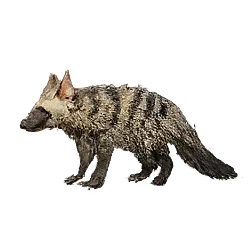
Aardwolf
The aardwolf is a small striped relative of hyenas that feeds mainly on termites rather…
Baca panduan spesies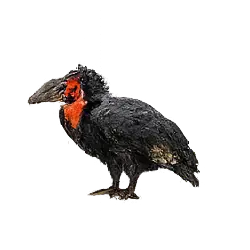
Abyssinian Ground Hornbill
Abyssinian Ground Hornbill is a bird known for bare red facial skin, huge…
Baca panduan spesiesLebih banyak hewan dengan kekuatan Discernment
Jelajahi semua hewan Discernment

Bawa ensiklopedia ke dunia nyata
AnimalDex membantumu memindai hewan nyata, mengidentifikasi spesies, mengoleksi kartu, dan belajar dari alam di mana pun kamu berada.