
Panduan lapangan hewan
Green Stink Bug
Identifikasi, habitat, rarity, perilaku, simbolisme, fakta, dan pelajaran praktis dari alam.

Kartu AnimalDex
Buka kartu hewan ini
Pindai atau tangkap hewan ini dengan AnimalDex untuk membuka kartu koleksi dan menambahkannya ke koleksi satwa liarmu.
Dapatkan AnimalDexPanduan lapangan hewan
Green Stink Bug
Strategic Camouflage
Blend and Thrive.
The Green Stink Bug uses its green coloration to blend into foliage, effectively avoiding predators and reducing conflict.
No captures yet
Native range
Natural range, not this capture location
Native range keys: north_america. Gardens, field margins, orchards and woodland edge across North America, because Chemical Refusal works best where an insect can sit still on foliage in plain view.
Search near meAnimalDex stats
Dominance
6
Speed
26
Size
2
Intelligence
5
Rarity
7%
Total
46
Size scale
Nama ilmiah
Chinavia hilaris
Kategori
Animal
Habitat
Native range keys: north_america. Gardens, field margins, orchards and woodland edge across North America, because Chemical Refusal works best where an insect can sit still on foliage in plain view.
Rarity
Relatively common · 7/100
Native range
Native range keys: north_america. Gardens, field margins, orchards and woodland edge across North America, because Chemical Refusal works best where an insect can sit still on foliage in plain view.
Mengapa Strategic Camouflage?
Alasan di balik Prinsip Hewan ini dan biologi yang mendukungnya.
Green Stink Bug teaches Chemical Refusal. It is slow, soft and conspicuous, and it survives by making itself not worth eating rather than by escaping.
Cara mengidentifikasi Green Stink Bug
- Broad shield-shaped bright green body
- Defensive glands producing a strong, lasting smell
- Piercing mouthparts folded beneath the head
- Clusters of barrel-shaped eggs laid on leaf undersides
Kenapa Green Stink Bug menarik
- The smell comes from glands on the thorax and can linger on skin for hours.
- It feeds by piercing plant tissue and sucking sap, which damages fruit and seed pods.
- Adults overwinter under bark and leaf litter, emerging in spring.
- Nymphs look nothing like adults, often boldly marked in black, red and cream.
Habitat: Native range keys: north_america. Gardens, field margins, orchards and woodland edge across North America, because Chemical Refusal works best where an insect can sit still on foliage in plain view.
Native range: Native range keys: north_america. Gardens, field margins, orchards and woodland edge across North America, because Chemical Refusal works best where an insect can sit still on foliage in plain view.
nativeRangeCardTitle
nativeRangeCardDescription
Native range keys: north_america. Gardens, field margins, orchards and woodland edge across North America, because Chemical Refusal works best where an insect can sit still on foliage in plain view.
To find Green Stink Bug in the wild, focus on the exact habitat patches that match its body design and daily behavior, not just the broad country where it exists. You usually do better by working one good piece of habitat inside native range keys: north_america. Gardens, field margins, orchards and woodland edge across North America, because Chemical Refusal works best where an insect can sit still on foliage in plain view. than by covering too much ground.
- Forest edge, canopy gaps, fruiting trees, or shaded trails where cover and food meet
- Open grassland edges, lightly wooded plains, or raised ground where you can scan long distances
- Protected habitat blocks within native range keys: north_america. Gardens, field margins, orchards and woodland edge across North America, because Chemical Refusal works best where an insect can sit still on foliage in plain view.
- Start early, pick one strong patch of habitat, and stay long enough for movement to return after you arrive.
- Work edges, clearings, fruiting trees, and stream crossings rather than walking randomly through dense cover.
- Move quietly, stop often, and give the habitat time to settle; many mammals and insects show themselves only after the first pause.
Sap from developing fruit, seeds and pods. This diet supports Chemical Refusal because a sap-feeder must stay put on an exposed plant for long stretches, with no option to flee.
Birds, predatory bugs, spiders and parasitic wasps that lay in its eggs. The spray deters vertebrates; against parasitoids it offers no defence at all, which is why egg clusters are heavily attacked.
Green Stink Bugs are active by day on foliage and settle at night. Their rhythm is slow throughout, matching a life spent feeding in one place.
Most live a single year with adults overwintering. The principle stays constant because the chemistry works from the moment the adult hardens.
Females lay tight clusters of eggs on leaf undersides and leave them. Offspring fit the principle because nymphs carry the same glands and use them from the first instar.
Males and females look closely alike, with females slightly larger. The defence does not differ between them.
- Broad shield-shaped bright green body
- Defensive glands producing a strong, lasting smell
- Piercing mouthparts folded beneath the head
- Clusters of barrel-shaped eggs laid on leaf undersides
Green Stink Bug most often symbolizes strategic camouflage in AnimalDex because its real survival behavior repeatedly shows this pattern.
The Green Stink Bug uses its green coloration to blend into foliage, effectively avoiding predators and reducing conflict.
Green Stink Bugs are adept at using their color to camouflage within green leaves, making them less visible to predators.
- Observe from a respectful distance and avoid changing the animal's behavior.
- Do not block feeding, shelter, nesting, or travel routes.
- Use a live camera capture without handling or staging wildlife.
Hewan terkait

Australian Green Tree Frog
Australian Green Tree Frog is a amphibian known for plump wet-season body,…
Baca panduan spesies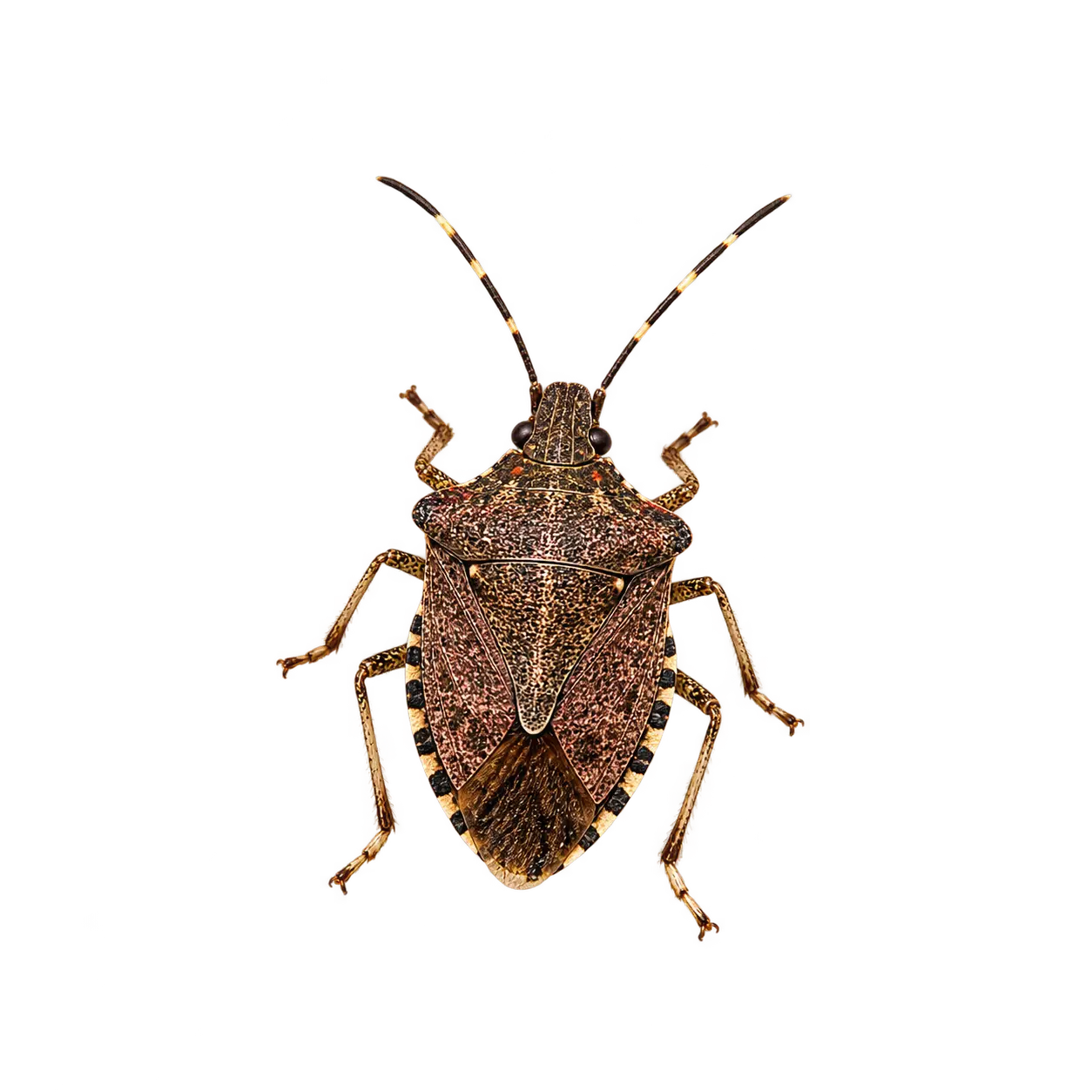
Brown Marmorated Stink Bug
The Shielded Signal Scent. The Shielded Signal Scent. Even small, overlooked creatures…
Baca panduan spesies
Common Green Darner
Common Green Darner turns Migrating Precision into a line of flight, linking aquatic…
Baca panduan spesiesLebih banyak hewan dengan kekuatan Strategic Camouflage
Jelajahi semua hewan Strategic Camouflage
American Badger
American Badger turns Burrow Strategy into muscular problem-solving, using claws,…
Baca panduan spesies
Band-eyed Drone Fly
The Striped Hoverer. Eristalinus taeniops, known for its strikingly striped eyes, is a…
Baca panduan spesies
Goldenrod Crab Spider
Goldenrod Crab Spider expresses Flower-Edge Ambush through real survival details, not a…
Baca panduan spesiesBawa ensiklopedia ke dunia nyata
AnimalDex membantumu memindai hewan nyata, mengidentifikasi spesies, mengoleksi kartu, dan belajar dari alam di mana pun kamu berada.