
Panduan lapangan hewan
Manta Ray
Identifikasi, habitat, rarity, perilaku, simbolisme, fakta, dan pelajaran praktis dari alam.
The Ocean's Graceful Glider. The Manta Ray glides through the ocean with wings that seem to fly underwater. Its gentle dance teaches us that even the biggest creatures can move with grace and elegance.
Nama ilmiah
Mobula birostris
Kategori
Marine fish
Habitat
Coastal cleaning stations, offshore fronts, reef drop-offs, and plankton-rich ocean zones.
Rarity
Uncommon · 68/100
Native range
Tropical and subtropical oceans worldwide.
Open Grace
Glide wide.
Winged Filter Gliding
Apa yang diajarkannya
Great width can move gently when it trusts the water.
Coba
You host friends without overplanning, leaving enough space for the best conversations to happen naturally.
Bukti alam
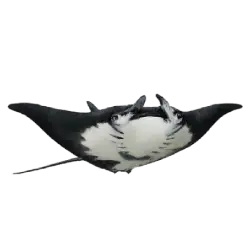
Manta Rays are large filter-feeding rays that glide through ocean water with wing-like pectoral fins and use cephalic lobes to help guide plankton-rich water into the mouth.
Gunakan untuk
Tangkapan Manta Ray berperingkat
1 tangkapan berperingkat dalam grup ini dari kolektor AnimalDex.
Lenny
@lendawgZoo · Puffy Cotton Candy Jakarta Aquarium · Near SoHo Podomoro City, West Jakarta, Indonesia
Skor 0
Mengapa Open Grace?
Alasan di balik Prinsip Hewan ini dan biologi yang mendukungnya.
Manta rays are giant plankton-feeding rays known for broad wing-like pectoral fins, cephalic lobes, and efficient cruising through productive ocean water.
Cara mengidentifikasi Manta Ray
- Very wide diamond-shaped body with long wing-like fins
- Forward cephalic lobes flanking the mouth
- Graceful looping or gliding movement through open water
Kenapa Manta Ray menarik
- Mantas combine giant size with filter feeding in a way that reads instantly to divers.
- Their cleaning-station behavior is one of the most rewarding marine observation patterns.
Habitat: Coastal cleaning stations, offshore fronts, reef drop-offs, and plankton-rich ocean zones.
Native range: Tropical and subtropical oceans worldwide.
To find Manta Ray in the wild, focus on the exact habitat patches that match its body design and daily behavior, not just the broad country where it exists. You usually do better by working one good piece of habitat inside tropical and subtropical oceans worldwide. than by covering too much ground.
- Headlands, reef edges, island colonies, tidal channels, or productive coastal water
- Protected habitat blocks within tropical and subtropical oceans worldwide.
- First light and late afternoon are often best, when animals come out to feed along the edge of water.
- Time your search around tide, wind, and visibility, then focus on feeding lines, reef edges, and known haul-out or nesting spots.
- Choose a viewing point with clean light and water visibility, then watch for repeated surfacing, feeding, or current lines.
Manta Ray feeds on plankton and small drifting animals guided into the mouth with cephalic lobes. The diet supports Open Grace because the animal is not just eating available food; it is using the food source that makes its principle practical in its own world.
Active by day and night, gliding continuously through open water, conserving force by making motion smooth instead of frantic.
Often several decades; Open Grace becomes a long trust in current, width, and gentle movement through vast water.
Females give birth to usually one large live pup after a long reproductive cycle, making each new life a major investment rather than a swarm.
Females are generally larger; males have claspers used in mating, while both sexes share the winged calm that defines the lesson.
- Filters plankton and small prey while cruising or barrel rolling
- Visits cleaning stations repeatedly where reef fish remove parasites
- Uses large-scale movement between seasonal feeding areas
Manta Ray most often symbolizes open grace in AnimalDex because its real survival behavior repeatedly shows this pattern.
Great width can move gently when it trusts the water.
Manta Rays are large filter-feeding rays that glide through ocean water with wing-like pectoral fins and use cephalic lobes to help guide plankton-rich water into the mouth.
- Stay low and out of the swimming line at cleaning stations.
- Do not chase or block circling feeding behavior from above.
- Mobula ray
- Eagle ray
- Large shadow under surface chop
0/1 XP toward Level 2
statsTitle
statsDescription
statsSourceLabel: statsSourceSpeciesProfile
dominanceStat
55
speedStat
48
sizeStat
72
intelligenceStat
55
rarityStat
68%
Total
298
Size scale
Huge
Uses the canonical size stat for consistent placement


US$278 – US$576
Perkiraan rentang nilai
Kepercayaan 69%
Perkiraan nilai AnimalDex dibuat dari stat spesies kanonik.
Not a marketplace listing.
Perkiraan nilai berdasarkan hewan yang teridentifikasi dan konteks harga yang tersedia. Bukan daftar marketplace.
Seberapa langka Manta Ray?
Rarity: Uncommon (68/100)
Mantas range widely but reproduce slowly and are sensitive to fishing pressure and disturbance at aggregation sites.
Systems Intelligence & Hidden Purpose
Sudut pandang systems biology untuk melihat bagaimana spesies ini dibangun, peran apa yang dijalankannya di ekosistem, dan pelajaran praktis apa yang bisa dipetik manusia.
System Role
The Plankton Flight Wing
Manta Ray
Specialized Hardware
Enormous pectoral fins, cephalic lobes, and filter-feeding architecture make manta rays open-water hardware for efficient suspended feeding.
Systems Script
Mantas convert plankton blooms into large graceful biomass while linking reef cleaning stations, migration routes, and productivity pulses. They ride resource patterns instead of trying to manufacture them.
Strategic Insight
Efficiency increases when you learn the flow of abundance and enter it at the right scale.
Public Animal Power
Explore this Animal Power
This is a public capture, so you can explore its Animal Power here. Personal Apex matches and challenges use your Wild Profile and animals you own.
Own an animal with this power to use it in Growth challenges.
Comparison hearts ready
3 of 3 hearts remaining. Each loss removes 1 heart.
✦ Available actions
Compare this public animal when your deck meets the current rules.
⚡CompareUnavailable›Hewan terkait
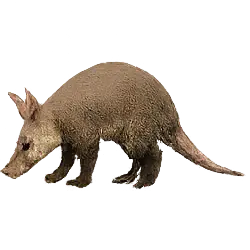
Aardvark
The aardvark is a nocturnal African mammal known for its long snout, strong digging…
Baca panduan spesies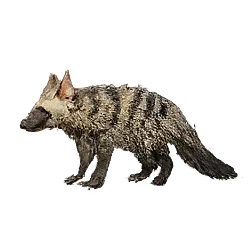
Aardwolf
The aardwolf is a small striped relative of hyenas that feeds mainly on termites rather…
Baca panduan spesies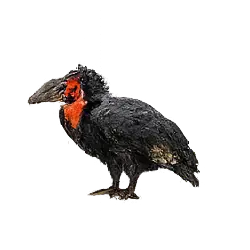
Abyssinian Ground Hornbill
Abyssinian Ground Hornbill is a bird known for bare red facial skin, huge…
Baca panduan spesiesLebih banyak hewan dengan kekuatan Calm
Jelajahi semua hewan Calm
Bawa ensiklopedia ke dunia nyata
AnimalDex membantumu memindai hewan nyata, mengidentifikasi spesies, mengoleksi kartu, dan belajar dari alam di mana pun kamu berada.