
Panduan lapangan hewan
Ornate Spiny-tailed Lizard
Identifikasi, habitat, rarity, perilaku, simbolisme, fakta, dan pelajaran praktis dari alam.

Kartu AnimalDex
Buka kartu hewan ini
Pindai atau tangkap hewan ini dengan AnimalDex untuk membuka kartu koleksi dan menambahkannya ke koleksi satwa liarmu.
Dapatkan AnimalDexPanduan lapangan hewan
Ornate Spiny-tailed Lizard
Sun Budget
Bask, spend, return.
Energy you collect on purpose is worth more than energy you happen to have.
No captures yet
Native range
Natural range, not this capture location
Native range keys: north_africa_middle_east. Rocky desert hills, wadis and boulder fields around the Red Sea suit Ornate Spiny-tailed Lizard because Sun Budget needs both an exposed basking surface and a crack to retreat into a few steps away.
Search near meAnimalDex stats
Dominance
30
Speed
26
Size
16
Intelligence
28
Rarity
68%
Total
168
Size scale
Nama ilmiah
Uromastyx ornata
Kategori
Reptile
Habitat
Native range keys: north_africa_middle_east. Rocky desert hills, wadis and boulder fields around the Red Sea suit Ornate Spiny-tailed Lizard because Sun Budget needs both an exposed basking surface and a crack to retreat into a few steps away.
Rarity
Uncommon · 68/100
Native range
Native range keys: north_africa_middle_east. Rocky desert hills, wadis and boulder fields around the Red Sea suit Ornate Spiny-tailed Lizard because Sun Budget needs both an exposed basking surface and a crack to retreat into a few steps away.
Mengapa Sun Budget?
Alasan di balik Prinsip Hewan ini dan biologi yang mendukungnya.
Ornate Spiny-tailed Lizard teaches Sun Budget on bare rock in the Red Sea mountains, where every move it makes is paid for by time already spent in the sun.
Cara mengidentifikasi Ornate Spiny-tailed Lizard
- Males in blue-green and yellow, among the most vividly coloured of all Uromastyx
- A short, thick tail ringed with hard spines
- Blunt head and heavy body built for wedging into rock cracks
- Almost entirely plant-eating, unusual among lizards of its size
Kenapa Ornate Spiny-tailed Lizard menarik
- It blocks the entrance of its crevice with its spiny tail, leaving a predator nothing soft to grip.
- Adult males turn far brighter than females, especially in the breeding season.
- It is a herbivore, living mostly on leaves, flowers and seeds.
- Body colour changes with temperature, going darker when cold to absorb heat faster.
- It lives on rocky hills and wadis around the Red Sea, in Egypt, Sinai and northwest Saudi Arabia.
Habitat: Native range keys: north_africa_middle_east. Rocky desert hills, wadis and boulder fields around the Red Sea suit Ornate Spiny-tailed Lizard because Sun Budget needs both an exposed basking surface and a crack to retreat into a few steps away.
Native range: Native range keys: north_africa_middle_east. Rocky desert hills, wadis and boulder fields around the Red Sea suit Ornate Spiny-tailed Lizard because Sun Budget needs both an exposed basking surface and a crack to retreat into a few steps away.
nativeRangeCardTitle
nativeRangeCardDescription
Native range keys: north_africa_middle_east. Rocky desert hills, wadis and boulder fields around the Red Sea suit Ornate Spiny-tailed Lizard because Sun Budget needs both an exposed basking surface and a crack to retreat into a few steps away.
To find Ornate Spiny-tailed Lizard in the wild, focus on the exact habitat patches that match its body design and daily behavior, not just the broad country where it exists. You usually do better by working one good piece of habitat inside native range keys: north_africa_middle_east. Rocky desert hills, wadis and boulder fields around the Red Sea suit Ornate Spiny-tailed Lizard because Sun Budget needs both an exposed basking surface and a crack to retreat into a few steps away. than by covering too much ground.
- Water sources, dune bases, rocky wadis, or shaded scrub at first and last light
- Headlands, reef edges, island colonies, tidal channels, or productive coastal water
- Sunlit logs, exposed branches, warm rocks, or regular perch sites used for scanning
- Early sun and calm weather usually give the best chance of seeing normal basking, perched, or soaring behavior.
- Check shaded cover, water points, and cooler hours, because many dry-country animals avoid peak heat.
- Warm rocks, trail edges, fallen timber, and quiet water margins are usually better than heavily disturbed ground.
Leaves, flowers, seeds and shoots of desert plants, with occasional insects. This diet supports Sun Budget because plant food is stationary — it can be reached in a short, pre-warmed trip rather than a chase.
Ornate Spiny-tailed Lizards are strictly diurnal, retreating into rock crevices or burrows overnight and through the hottest part of the afternoon.
They can live for twenty years or more, so Sun Budget becomes practised routine — a lizard knows its basking rock, its retreat, and the timing between them.
Females lay a clutch of eggs in a burrow in late spring, and hatchlings emerge already able to bask and forage. Offspring fit the principle because a hatchling must learn the basking-and-retreat rhythm before anything else.
Males are far more brightly coloured than the duller brown and cream females. The difference is a display, and it is affordable precisely because the lizard is warm and visible on rock anyway.
- Males in blue-green and yellow, among the most vividly coloured of all Uromastyx
- A short, thick tail ringed with hard spines
- Blunt head and heavy body built for wedging into rock cracks
- Almost entirely plant-eating, unusual among lizards of its size
Ornate Spiny-tailed Lizard most often symbolizes sun budget in AnimalDex because its real survival behavior repeatedly shows this pattern.
Energy you collect on purpose is worth more than energy you happen to have.
Ornate Spiny-tailed Lizard basks until its body reaches working temperature, spends that heat on a short foraging run, then returns to the rock or burrow before it overheats.
- Observe from a respectful distance and avoid changing the animal's behavior.
- Do not block feeding, shelter, nesting, or travel routes.
- Use a live camera capture without handling or staging wildlife.
Hewan terkait
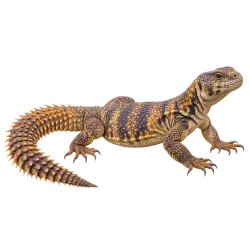
Sahara Spiny-tailed Lizard
The Sun-Basking Desert Grazer. The Sun-Basking Desert Grazer. Steady routines in harsh…
Baca panduan spesies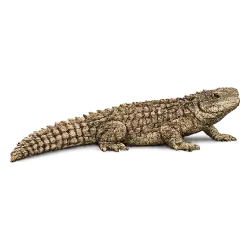
Spiny-tailed Lizard
Spiny-tailed Lizard is a reptile known for clubby spined tail, stocky desert body, and…
Baca panduan spesies
Sinai Dragon
Sinai Dragon teaches Heat Stillness through desert endurance, burrow safety, armored…
Baca panduan spesiesBawa ensiklopedia ke dunia nyata
AnimalDex membantumu memindai hewan nyata, mengidentifikasi spesies, mengoleksi kartu, dan belajar dari alam di mana pun kamu berada.