
Panduan lapangan hewan
Polyphemus Moth
Identifikasi, habitat, rarity, perilaku, simbolisme, fakta, dan pelajaran praktis dari alam.
Panduan lapangan hewan
Polyphemus Moth
Eyespot Warning
Unfold the giant eyes.
A single bold signal can interrupt danger long enough to live.
You’re #1 of 2
Native range
Natural range, not this capture location
forest, orchard, and suburban woodland
Search near me0/3 XP toward Level 3
+1 XP from endorsement
AnimalDex stats
Dominance
18
Speed
28
Size
6
Intelligence
18
Rarity
43%
+1Total
113
+1Size scale
✦ Available actions
Compare this public animal when your deck meets the current rules.
Nama ilmiah
Antheraea polyphemus
Kategori
Insect
Habitat
forest, orchard, and suburban woodland
Rarity
Relatively common · 42/100
Native range
North America
Mengapa Eyespot Warning?
Alasan di balik Prinsip Hewan ini dan biologi yang mendukungnya.
Polyphemus Moth is a insect known for huge eye-spot wings, thick silken body, and short-lived adult emergence.
Cara mengidentifikasi Polyphemus Moth
- huge eye-spot wings
- thick silken body
- short-lived adult emergence
- Often associated with forest, orchard, and suburban woodland
Kenapa Polyphemus Moth menarik
- Polyphemus Moth is a useful example of how anatomy and habitat fit together as one survival system.
- Its shape, movement style, and food strategy make it easy to compare with related animals.
- This species turns one page into a lesson about adaptation, ecosystem role, and identification.
Habitat: forest, orchard, and suburban woodland
Native range: North America
nativeRangeCardTitle
nativeRangeCardDescription
forest, orchard, and suburban woodland
To find Polyphemus Moth in the wild, focus on the exact habitat patches that match its body design and daily behavior, not just the broad country where it exists. You usually do better by working one good piece of habitat inside north America than by covering too much ground.
- Forest edge, canopy gaps, fruiting trees, or shaded trails where cover and food meet
- Protected habitat blocks within north America
- Start early, pick one strong patch of habitat, and stay long enough for movement to return after you arrive.
- Work edges, clearings, fruiting trees, and stream crossings rather than walking randomly through dense cover.
- Move quietly, stop often, and give the habitat time to settle; many mammals and insects show themselves only after the first pause.
Caterpillars eat leaves of many trees, while adults do not feed. This supports Eyespot Warning because the adult’s brief beauty and defense are funded by earlier growth; the moth spends stored life in one urgent winged chapter.
Birds, bats, spiders, wasps, and parasitoids threaten moths across life stages. The eyespots matter because the adult cannot fight for long; it needs a visual interruption strong enough to create escape time.
Adults are nocturnal, flying by night after a long larval build-up. Their rhythm fits the principle because the warning is carried through darkness, hidden until a predator forces the reveal.
Adult Polyphemus Moths usually live only about a week or two, but the full life cycle includes egg, caterpillar, cocoon, and adult stages. Eyespot Warning feels urgent because the final stage is brief and must be used well.
Females release pheromones to attract males, then lay eggs on host plants where caterpillars can feed. Offspring fit the principle because survival is prepared before the dramatic adult warning ever appears.
Males usually have larger, featherier antennae for detecting female pheromones. That sex difference sharpens the lesson because the male’s search depends on sensing, while the shared wings carry the visual warning.
- Polyphemus Moth adjusts movement and feeding to match light, temperature, and food access in its habitat.
- Body design, timing, and shelter choices all help this species stay effective in the wild.
- Patient observation usually reveals more behavior than close approach or fast movement.
Polyphemus Moth most often symbolizes eyespot warning in AnimalDex because its real survival behavior repeatedly shows this pattern.
A single bold signal can interrupt danger long enough to live.
Polyphemus Moths have large eyespots on the hindwings that are revealed when wings open, startling or distracting predators.
- Keep distance and let the animal choose the space.
- Avoid blocking movement routes, nesting areas, or feeding behavior.
- Use optics, patience, and quiet observation instead of crowding for a closer view.
- Regional relatives may look similar at a distance.
- Juveniles, adults, and seasonal forms can differ in color or size.
- Light, angle, and habitat context can change how field marks appear.
Hewan terkait
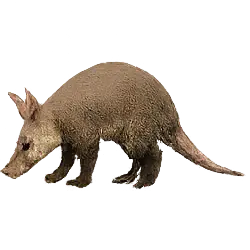
Aardvark
The aardvark is a nocturnal African mammal known for its long snout, strong digging…
Baca panduan spesies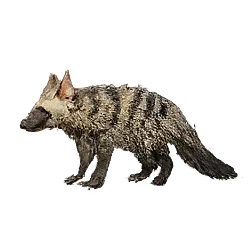
Aardwolf
The aardwolf is a small striped relative of hyenas that feeds mainly on termites rather…
Baca panduan spesies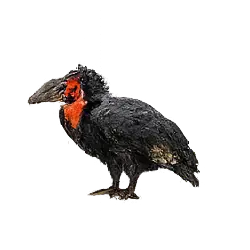
Abyssinian Ground Hornbill
Abyssinian Ground Hornbill is a bird known for bare red facial skin, huge…
Baca panduan spesiesLebih banyak hewan dengan kekuatan Escape
Jelajahi semua hewan Escape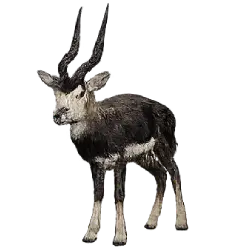
Black Lechwe
Black Lechwe is a mammal known for dark marsh-adapted coat, elongated wet-ground…
Baca panduan spesies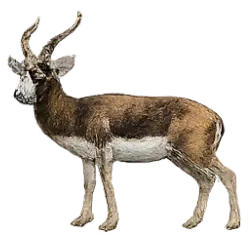
Blackbuck
Blackbuck is a mammal known for spiraled horns on males, fast bounding movement, and…
Baca panduan spesies
Brown Shrimp
Brown Shrimp matches the sand, surviving in shallow water by blending, flicking away,…
Baca panduan spesiesBawa ensiklopedia ke dunia nyata
AnimalDex membantumu memindai hewan nyata, mengidentifikasi spesies, mengoleksi kartu, dan belajar dari alam di mana pun kamu berada.
Comparisons terkait
Lihat bagaimana spesies ini tampil di halaman perbandingan AnimalDex yang terstruktur.
Water Monitor vs Polyphemus Moth: Who Actually Wins?
In the contest between the Water Monitor and the Polyphemus Moth, the Water Monitor decisively takes the lead due to its superior size, dominance, and predatory skills. While the Polyphemus Moth has its own unique adaptations, it simply cannot match the Water Monitor's physical prowess and ecological role as an apex predator.
Baca halaman comparison