
Panduan lapangan hewan
Pot-bellied Seahorse
Identifikasi, habitat, rarity, perilaku, simbolisme, fakta, dan pelajaran praktis dari alam.

Kartu AnimalDex
Buka kartu hewan ini
Pindai atau tangkap hewan ini dengan AnimalDex untuk membuka kartu koleksi dan menambahkannya ke koleksi satwa liarmu.
Dapatkan AnimalDexPanduan lapangan hewan
Pot-bellied Seahorse
Carried Brood
Carry it yourself.
Responsibility taken physically is harder to put down and easier to trust.
No captures yet
Native range
Natural range, not this capture location
Native range keys: australia_coastal, south_pacific. Temperate weed beds, sponge gardens, jetty piles and estuaries suit Pot-bellied Seahorse because Carried Brood depends on a holdfast the animal can grip through a whole pregnancy.
Search near meAnimalDex stats
Dominance
28
Speed
11
Size
14
Intelligence
33
Rarity
70%
Total
156
Size scale
Nama ilmiah
Hippocampus abdominalis
Kategori
Fish
Habitat
Native range keys: australia_coastal, south_pacific. Temperate weed beds, sponge gardens, jetty piles and estuaries suit Pot-bellied Seahorse because Carried Brood depends on a holdfast the animal can grip through a whole pregnancy.
Rarity
Rare · 70/100
Native range
Native range keys: australia_coastal, south_pacific. Temperate weed beds, sponge gardens, jetty piles and estuaries suit Pot-bellied Seahorse because Carried Brood depends on a holdfast the animal can grip through a whole pregnancy.
Mengapa Carried Brood?
Alasan di balik Prinsip Hewan ini dan biologi yang mendukungnya.
Pot-bellied Seahorse teaches Carried Brood through the largest brood pouch of any seahorse — a male may carry over a thousand young at once, and does the whole pregnancy himself.
Cara mengidentifikasi Pot-bellied Seahorse
- The largest seahorse species, reaching around 35 cm
- A deep, distinctly rounded belly that gives the species its name
- A prehensile tail used to grip weed, sponge and jetty piles
- Males carry a large sealed brood pouch on the front of the abdomen
Kenapa Pot-bellied Seahorse menarik
- The male, not the female, becomes pregnant — the female deposits eggs into his pouch.
- A single brood can number several hundred to over a thousand young.
- It is one of the largest seahorses in the world.
- It anchors with its tail rather than swimming, and can hold position in current all day.
- It lives around southeastern Australia and New Zealand, including on jetty piles and sponge gardens.
Habitat: Native range keys: australia_coastal, south_pacific. Temperate weed beds, sponge gardens, jetty piles and estuaries suit Pot-bellied Seahorse because Carried Brood depends on a holdfast the animal can grip through a whole pregnancy.
Native range: Native range keys: australia_coastal, south_pacific. Temperate weed beds, sponge gardens, jetty piles and estuaries suit Pot-bellied Seahorse because Carried Brood depends on a holdfast the animal can grip through a whole pregnancy.
nativeRangeCardTitle
nativeRangeCardDescription
nativeRangeMissingAssets
Native range keys: australia_coastal, south_pacific. Temperate weed beds, sponge gardens, jetty piles and estuaries suit Pot-bellied Seahorse because Carried Brood depends on a holdfast the animal can grip through a whole pregnancy.
To find Pot-bellied Seahorse in the wild, focus on the exact habitat patches that match its body design and daily behavior, not just the broad country where it exists. You usually do better by working one good piece of habitat inside native range keys: australia_coastal, south_pacific. Temperate weed beds, sponge gardens, jetty piles and estuaries suit Pot-bellied Seahorse because Carried Brood depends on a holdfast the animal can grip through a whole pregnancy. than by covering too much ground.
- Headlands, reef edges, island colonies, tidal channels, or productive coastal water
- Burrow systems, sandy banks, fallen logs, or ground with clear den entrances
- Protected habitat blocks within native range keys: australia_coastal, south_pacific. Temperate weed beds, sponge gardens, jetty piles and estuaries suit Pot-bellied Seahorse because Carried Brood depends on a holdfast the animal can grip through a whole pregnancy.
- First light and late afternoon are often best, when animals come out to feed along the edge of water.
- Time your search around tide, wind, and visibility, then focus on feeding lines, reef edges, and known haul-out or nesting spots.
- Choose a viewing point with clean light and water visibility, then watch for repeated surfacing, feeding, or current lines.
Small crustaceans, mysid shrimp and other tiny prey drawn in by a fast snap of the snout. This diet supports Carried Brood because feeding happens from a fixed anchor point, without the male ever having to leave his hold.
Larger fish, rays and crabs. Its answer is stillness and camouflage — held motionless against weed or sponge, it reads as part of the holdfast.
Pot-bellied Seahorses stay anchored to a holdfast day and night, feeding through the day and remaining gripped in place after dark.
They can live several years, and males may carry multiple broods in a season, so Carried Brood is a repeated commitment rather than a single event.
The male carries the brood for around a month and then expels hundreds of miniature, independent seahorses. Offspring fit the principle completely — the young are carried inside the parent until they are ready.
Males are larger, have a longer tail relative to the trunk, and carry the brood pouch females lack. The difference exists because the carrying is the male's job.
- The largest seahorse species, reaching around 35 cm
- A deep, distinctly rounded belly that gives the species its name
- A prehensile tail used to grip weed, sponge and jetty piles
- Males carry a large sealed brood pouch on the front of the abdomen
Pot-bellied Seahorse most often symbolizes carried brood in AnimalDex because its real survival behavior repeatedly shows this pattern.
Responsibility taken physically is harder to put down and easier to trust.
Male Pot-bellied Seahorses receive the female's eggs into a sealed belly pouch, carry the developing young for weeks, and give birth to hundreds of fully formed juveniles.
- Observe from a respectful distance and avoid changing the animal's behavior.
- Do not block feeding, shelter, nesting, or travel routes.
- Use a live camera capture without handling or staging wildlife.
Hewan terkait
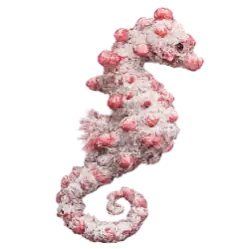
Pygmy Seahorse
Pygmy Seahorse is a fish known for coral-matching body bumps, upright drifting posture,…
Baca panduan spesies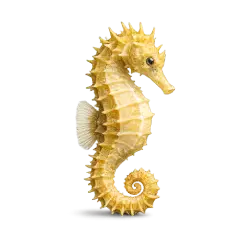
Yellow Seahorse
Yellow Seahorse teaches Anchoring because its real biology turns delicate seagrass fish…
Baca panduan spesies
Seahorse
Seahorses are upright marine fish with grasping tails, tube-like snouts, and unusually…
Baca panduan spesiesLebih banyak hewan dengan kekuatan Care
Jelajahi semua hewan Care
Bawa ensiklopedia ke dunia nyata
AnimalDex membantumu memindai hewan nyata, mengidentifikasi spesies, mengoleksi kartu, dan belajar dari alam di mana pun kamu berada.