
Panduan lapangan hewan
Red Kangaroo
Identifikasi, habitat, rarity, perilaku, simbolisme, fakta, dan pelajaran praktis dari alam.
The Outback Bounce Champion. The Red Kangaroo uses huge back legs and a heavy tail to cross hot open ground in giant leaps. It reminds us that good rhythm can carry us farther than rushing ever will.
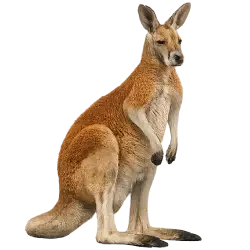
Kartu AnimalDex
Buka kartu hewan ini
Pindai atau tangkap hewan ini dengan AnimalDex untuk membuka kartu koleksi dan menambahkannya ke koleksi satwa liarmu.
Dapatkan AnimalDexNama ilmiah
Osphranter rufus
Kategori
Mammal
Habitat
Arid grassland, desert scrub, and open semi-arid plains with scattered cover.
Rarity
Relatively common · 35/100
Native range
Widespread across inland Australia.
Rhythm
Find the bounce.
Tail-Balanced Hopping
Apa yang diajarkannya
Distance becomes easier when effort finds its natural beat.
Coba
Learning a language sticks when five new words happen after breakfast daily.
Bukti alam
Red Kangaroos travel across open Australian habitats using powerful hind legs, elastic hopping, and a large tail that helps balance and support movement.
Gunakan untuk
Tangkapan Red Kangaroo berperingkat
Belum ada tangkapan komunitas berperingkat untuk spesies ini.
Mengapa Rhythm?
Alasan di balik Prinsip Hewan ini dan biologi yang mendukungnya.
The red kangaroo is Australia’s largest marsupial, built for efficient hopping, heat management, and long-distance movement across dry open country.
Cara mengidentifikasi Red Kangaroo
- Tall upright body with huge hind legs and thick balancing tail
- Reddish coat in many males and greyer tones in females
- Long bounding travel with forelimbs held close to the chest
Kenapa Red Kangaroo menarik
- The species is a strong example of locomotion built around energy savings rather than constant speed.
- Its body plan is instantly recognizable and highly regional.
Habitat: Arid grassland, desert scrub, and open semi-arid plains with scattered cover.
Native range: Widespread across inland Australia.
nativeRangeCardTitle
nativeRangeCardDescription
Arid grassland, desert scrub, and open semi-arid plains with scattered cover.
To find Red Kangaroo in the wild, focus on the exact habitat patches that match its body design and daily behavior, not just the broad country where it exists. You usually do better by working one good piece of habitat inside widespread across inland Australia. than by covering too much ground.
- Open grassland edges, lightly wooded plains, or raised ground where you can scan long distances
- Water sources, dune bases, rocky wadis, or shaded scrub at first and last light
- Protected habitat blocks within widespread across inland Australia.
- Start early, pick one strong patch of habitat, and stay long enough for movement to return after you arrive.
- Use binoculars from a track, ridge, or vehicle stop and scan far ahead before you move closer.
- Move quietly, stop often, and give the habitat time to settle; many mammals and insects show themselves only after the first pause.
Grasses, herbs, and shrubs support the Rhythm lesson because the kangaroo must keep moving between patchy foods without wasting water or energy.
Dingoes, wedge-tailed eagles, humans, drought, and heat create pressure. The kangaroo survives through group awareness, strong kicks, speed, and energy-efficient movement across open ground.
Red Kangaroos are often most active in cooler parts of the day, including dawn, dusk, and night. Their rhythm follows heat, conserving strength until movement makes sense.
Red Kangaroos can live many years in the wild and longer in protected settings. Their lifespan supports the lesson because survival depends on repeating the right pace across dry seasons.
Females give birth to tiny young that continue developing in the pouch. Reproduction supports Rhythm because growth happens in stages, moving from hidden dependence to hopping independence.
Males are much larger and often redder, while females are smaller and more bluish-gray in many regions. The difference matters because rhythm serves both dominance contests and careful maternal movement.
- Uses elastic tendons to travel efficiently over long distances
- Feeds mostly at cooler times of day and night
- Groups loosely around water and fresh grazing after rain
Red Kangaroo most often symbolizes rhythm in AnimalDex because its real survival behavior repeatedly shows this pattern.
Distance becomes easier when effort finds its natural beat.
Red Kangaroos travel across open Australian habitats using powerful hind legs, elastic hopping, and a large tail that helps balance and support movement.
- Watch from roadsides or tracks without pushing animals into repeated crossings.
- Give extra space in heat when kangaroos are conserving energy.
- Eastern grey kangaroo
- Wallaroo
- Large wallaby at distance
statsTitle
statsDescription
statsSourceLabel: statsSourceSpeciesProfile
dominanceStat
66
speedStat
74
sizeStat
58
intelligenceStat
42
rarityStat
35%
Total
275
Size scale
Large
Uses the canonical size stat for consistent placement
US$194 – US$402
Perkiraan rentang nilai
Kepercayaan 69%
Perkiraan nilai AnimalDex dibuat dari stat spesies kanonik.
Not a marketplace listing.
Perkiraan nilai berdasarkan hewan yang teridentifikasi dan konteks harga yang tersedia. Bukan daftar marketplace.
Seberapa langka Red Kangaroo?
Rarity: Relatively common (35/100)
Red kangaroos remain common over large areas where open rangeland and seasonal forage persist.
Systems Intelligence & Hidden Purpose
Sudut pandang systems biology untuk melihat bagaimana spesies ini dibangun, peran apa yang dijalankannya di ekosistem, dan pelajaran praktis apa yang bisa dipetik manusia.
System Role
The Desert Elastic Runner
Red Kangaroo
Specialized Hardware
Massive hind limbs, spring-loaded tendons, and a balancing tail make the red kangaroo low-cost locomotion hardware for sparse arid landscapes.
Systems Script
Red kangaroos track rain-driven productivity across desert systems and turn brief green windows into usable population gain. They are built to exploit pulses, not pretend the desert is stable.
Strategic Insight
In volatile systems, efficiency beats bravado. Save energy until the good window opens.
Public Animal Power
Explore this Animal Power
This is a public capture, so you can explore its Animal Power here. Personal Apex matches and challenges use your Wild Profile and animals you own.
Own an animal with this power to use it in Growth challenges.
Hewan terkait
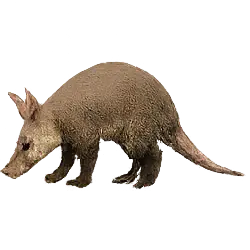
Aardvark
The aardvark is a nocturnal African mammal known for its long snout, strong digging…
Baca panduan spesies
Aardwolf
The aardwolf is a small striped relative of hyenas that feeds mainly on termites rather…
Baca panduan spesies
Abyssinian Ground Hornbill
Abyssinian Ground Hornbill is a bird known for bare red facial skin, huge…
Baca panduan spesiesLebih banyak hewan dengan kekuatan Endurance
Jelajahi semua hewan Endurance
Addax
Addax is a mammal known for pale desert coat, wide spreading hooves, and slow-energy…
Baca panduan spesies
Adelie Penguin
Adelie Penguin is a bird known for classic black-and-white body, ice-edge breeding…
Baca panduan spesies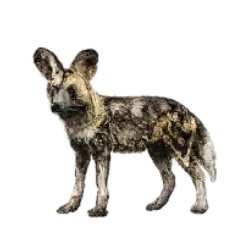
African Wild Dog
The African wild dog is a highly social carnivore with distinctive patchy coat patterns…
Baca panduan spesiesBawa ensiklopedia ke dunia nyata
AnimalDex membantumu memindai hewan nyata, mengidentifikasi spesies, mengoleksi kartu, dan belajar dari alam di mana pun kamu berada.
Muncul di tier list
Lihat posisi spesies ini di halaman tier list AnimalDex yang dibangun dengan perbandingan terstruktur dan metodologi yang jelas.
#2 · Strike
Animals with the Strongest Kick or Strike: Top 100 Tier List
Red kangaroo remains one of the most credible large-animal kick answers because the whole body is built around leg power.
Baca tier list#5 · Reproduction
Animals with the Highest Mating Drive: Top 100 Tier List
Red kangaroo belongs here because reproductive timing stays unusually flexible in response to environmental opportunity.
Baca tier list#5 · Resilience
Most Resilient Animals in the World: Top 100 Tier List
Red kangaroo belongs because desert life rewards water economy, movement efficiency, and heat tolerance.
Baca tier list