
Panduan lapangan hewan
Sailfin Tang
Identifikasi, habitat, rarity, perilaku, simbolisme, fakta, dan pelajaran praktis dari alam.

Kartu AnimalDex
Buka kartu hewan ini
Pindai atau tangkap hewan ini dengan AnimalDex untuk membuka kartu koleksi dan menambahkannya ke koleksi satwa liarmu.
Dapatkan AnimalDexPanduan lapangan hewan
Sailfin Tang
Unfolded Size
Fold it away, raise it fast.
Reserve is only useful if it can be deployed the moment it is needed.
No captures yet
Native range
Natural range, not this capture location
Native range keys: indian_ocean, south_pacific, coral_triangle. Reef flats, lagoons and outer reef slopes with plenty of algae-covered hard surface suit Sailfin Tang because Unfolded Size is a display that needs open water to be seen in.
Search near meAnimalDex stats
Dominance
30
Speed
50
Size
20
Intelligence
28
Rarity
42%
Total
170
Size scale
Nama ilmiah
Zebrasoma veliferum
Kategori
Animal
Habitat
Native range keys: indian_ocean, south_pacific, coral_triangle. Reef flats, lagoons and outer reef slopes with plenty of algae-covered hard surface suit Sailfin Tang because Unfolded Size is a display that needs open water to be seen in.
Rarity
Relatively common · 42/100
Native range
Native range keys: indian_ocean, south_pacific, coral_triangle. Reef flats, lagoons and outer reef slopes with plenty of algae-covered hard surface suit Sailfin Tang because Unfolded Size is a display that needs open water to be seen in.
Mengapa Unfolded Size?
Alasan di balik Prinsip Hewan ini dan biologi yang mendukungnya.
Sailfin Tang teaches Unfolded Size through a body that carries a second, larger version of itself folded along its back — raised only when a rival or a predator needs to be answered.
Cara mengidentifikasi Sailfin Tang
- Enormous dorsal and anal fins that unfold to roughly double body height
- Vertical bands of pale and dark brown, sharply broken by a yellow-speckled face
- A scalpel-sharp spine on each side of the tail base
- Reaches about 40 cm, large for a tang
Kenapa Sailfin Tang menarik
- Raised fins make it look far bigger than it is, which settles most disputes without contact.
- Like all surgeonfishes it carries a hinged blade at the tail base and slashes sideways with it.
- Juveniles look almost nothing like adults, with far bolder banding and proportionally huge fins.
- It grazes filamentous algae, which keeps fast-growing algae from smothering coral.
- It is among the largest of the Zebrasoma tangs.
Habitat: Native range keys: indian_ocean, south_pacific, coral_triangle. Reef flats, lagoons and outer reef slopes with plenty of algae-covered hard surface suit Sailfin Tang because Unfolded Size is a display that needs open water to be seen in.
Native range: Native range keys: indian_ocean, south_pacific, coral_triangle. Reef flats, lagoons and outer reef slopes with plenty of algae-covered hard surface suit Sailfin Tang because Unfolded Size is a display that needs open water to be seen in.
nativeRangeCardTitle
nativeRangeCardDescription
nativeRangeMissingAssets
Native range keys: indian_ocean, south_pacific, coral_triangle. Reef flats, lagoons and outer reef slopes with plenty of algae-covered hard surface suit Sailfin Tang because Unfolded Size is a display that needs open water to be seen in.
To find Sailfin Tang in the wild, focus on the exact habitat patches that match its body design and daily behavior, not just the broad country where it exists. You usually do better by working one good piece of habitat inside native range keys: indian_ocean, south_pacific, coral_triangle. Reef flats, lagoons and outer reef slopes with plenty of algae-covered hard surface suit Sailfin Tang because Unfolded Size is a display that needs open water to be seen in. than by covering too much ground.
- Quiet marsh edges, reedbeds, river bends, or shallow wetland margins
- Headlands, reef edges, island colonies, tidal channels, or productive coastal water
- Protected habitat blocks within native range keys: indian_ocean, south_pacific, coral_triangle. Reef flats, lagoons and outer reef slopes with plenty of algae-covered hard surface suit Sailfin Tang because Unfolded Size is a display that needs open water to be seen in.
- Start early, pick one strong patch of habitat, and stay long enough for movement to return after you arrive.
- Watch the transition line between open water and cover, because feeding and movement often happen on that edge.
- Move quietly, stop often, and give the habitat time to settle; many mammals and insects show themselves only after the first pause.
Filamentous and fleshy algae scraped from reef surfaces, with some detritus. This diet supports Unfolded Size because grazing puts it in the open where a bluff is more useful than a chase.
Groupers, jacks and reef sharks. Its answer is a sudden change of apparent size, backed by a tail blade that makes it genuinely awkward to swallow.
Sailfin Tangs are diurnal grazers and wedge into a reef crevice at night, where the fins fold flat and the fish becomes very hard to pull out.
Sailfin Tangs can live well over a decade, so Unfolded Size becomes learned judgement — an older fish knows which contests are worth raising its fins for.
They spawn in pairs or groups, releasing eggs into open water, and the larvae drift for weeks before settling on a reef. Offspring fit the principle because juveniles already carry oversized fins long before they have the body to back them.
Males and females look alike, with males often slightly larger. The lack of difference fits a species where the display is raised by anyone who needs it, not by one sex.
- Enormous dorsal and anal fins that unfold to roughly double body height
- Vertical bands of pale and dark brown, sharply broken by a yellow-speckled face
- A scalpel-sharp spine on each side of the tail base
- Reaches about 40 cm, large for a tang
Sailfin Tang most often symbolizes unfolded size in AnimalDex because its real survival behavior repeatedly shows this pattern.
Reserve is only useful if it can be deployed the moment it is needed.
Sailfin Tang swims with its dorsal and anal fins folded, then raises both to more than double its apparent height in a threat or a dispute.
- Observe from a respectful distance and avoid changing the animal's behavior.
- Do not block feeding, shelter, nesting, or travel routes.
- Use a live camera capture without handling or staging wildlife.
Hewan terkait
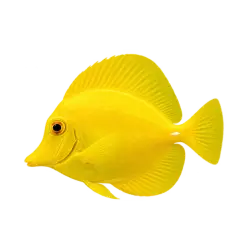
Yellow Tang
Yellow Tang teaches Reef Current Flow across Hawaiian reef, gliding with the surge…
Baca panduan spesies
Amboina Sailfin Lizard
Amboina Sailfin Lizard teaches Crested Display because its real biology turns…
Baca panduan spesies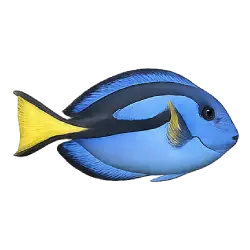
Blue Tang
Blue Tang teaches Adaptive Flow Strategy on current-swept outer reef, where it feeds in…
Baca panduan spesiesLebih banyak hewan dengan kekuatan Confident Display
Jelajahi semua hewan Confident Display
Bawa ensiklopedia ke dunia nyata
AnimalDex membantumu memindai hewan nyata, mengidentifikasi spesies, mengoleksi kartu, dan belajar dari alam di mana pun kamu berada.