
Panduan lapangan hewan
Cobweb Spider
Identifikasi, habitat, rarity, perilaku, simbolisme, fakta, dan pelajaran praktis dari alam.
Panduan lapangan hewan
Cobweb Spider
Field Focus
Look closer.
Specific field marks reveal identity and behavior when you look closely.
You’re #1 of 1
RECORD ID
A2EFE58B-B2C9-497D-B655-DF40F3B88652
Native range
Natural range, not this capture location
Native range keys: north_america, south_america, europe, sub_saharan_africa, south_asia, southeast_asia, east_asia, australia_oceania. Ceiling corners, windows, sheds, basements, furniture gaps, and sheltered walls fit because Field Focus needs quiet spaces where tangled silk can remain undisturbed.
Search near me0/1 XP toward Level 2
AnimalDex stats
Dominance
22
Speed
42
Size
8
Intelligence
18
Rarity
38%
Total
128
Size scale
✦ Available actions
Compare this public animal when your deck meets the current rules.
Nama ilmiah
Theridiidae
Kategori
Arachnid
Habitat
Native range keys: north_america, south_america, europe, sub_saharan_africa, south_asia, southeast_asia, east_asia, australia_oceania. Ceiling corners, windows, sheds, basements, furniture gaps, and sheltered walls fit because Field Focus needs quiet spaces where tangled silk can remain undisturbed.
Rarity
Relatively common · 38/100
Native range
Native range keys: north_america, south_america, europe, sub_saharan_africa, south_asia, southeast_asia, east_asia, australia_oceania. Ceiling corners, windows, sheds, basements, furniture gaps, and sheltered walls fit because Field Focus needs quiet spaces where tangled silk can remain undisturbed.
Mengapa Field Focus?
Alasan di balik Prinsip Hewan ini dan biologi yang mendukungnya.
Small cobweb-weaving house spider turns Field Focus into corner patience, showing how tangled silk, stillness, and trapped insects reveal a hidden household hunter.
Cara mengidentifikasi Cobweb Spider
- Irregular cobwebs work differently from neat orb webs
- Small body size allows hunting in corners, gaps, and ceilings
- Stillness keeps the spider hidden until web vibrations signal prey
- Household insects turn neglected corners into feeding sites
Kenapa Cobweb Spider menarik
- Cobweb spiders often build messy three-dimensional webs instead of circles
- Some use sticky gumfoot lines to catch walking insects
- Females may guard egg sacs within the web structure
Habitat: Native range keys: north_america, south_america, europe, sub_saharan_africa, south_asia, southeast_asia, east_asia, australia_oceania. Ceiling corners, windows, sheds, basements, furniture gaps, and sheltered walls fit because Field Focus needs quiet spaces where tangled silk can remain undisturbed.
Native range: Native range keys: north_america, south_america, europe, sub_saharan_africa, south_asia, southeast_asia, east_asia, australia_oceania. Ceiling corners, windows, sheds, basements, furniture gaps, and sheltered walls fit because Field Focus needs quiet spaces where tangled silk can remain undisturbed.
nativeRangeCardTitle
nativeRangeCardDescription
Native range keys: north_america, south_america, europe, sub_saharan_africa, south_asia, southeast_asia, east_asia, australia_oceania. Ceiling corners, windows, sheds, basements, furniture gaps, and sheltered walls fit because Field Focus needs quiet spaces where tangled silk can remain undisturbed.
To find Cobweb Spider in the wild, focus on the exact habitat patches that match its body design and daily behavior, not just the broad country where it exists. You usually do better by working one good piece of habitat inside native range keys: north_america, south_america, europe, sub_saharan_africa, south_asia, southeast_asia, east_asia, australia_oceania. Ceiling corners, windows, sheds, basements, furniture gaps, and sheltered walls fit because Field Focus needs quiet spaces where tangled silk can remain undisturbed. than by covering too much ground.
- Headlands, reef edges, island colonies, tidal channels, or productive coastal water
- Protected habitat blocks within native range keys: north_america, south_america, europe, sub_saharan_africa, south_asia, southeast_asia, east_asia, australia_oceania. Ceiling corners, windows, sheds, basements, furniture gaps, and sheltered walls fit because Field Focus needs quiet spaces where tangled silk can remain undisturbed.
- Start early, pick one strong patch of habitat, and stay long enough for movement to return after you arrive.
- Time your search around tide, wind, and visibility, then focus on feeding lines, reef edges, and known haul-out or nesting spots.
- Move quietly, stop often, and give the habitat time to settle; many mammals and insects show themselves only after the first pause.
Small flies, mosquitoes, gnats, ants, moths, and other household insects support the principle because the web turns indoor traffic into food.
Larger spiders, wasps, birds, lizards, cleaning, and web destruction threaten them. Hidden corners and rebuilding keep the strategy alive.
They are often most active in low light or when prey vibrations arrive, resting in or near the web at other times. The rhythm is patient and signal-based.
Many small house spiders live for months or longer depending on species, food, and disturbance. The lesson depends on outlasting quiet periods.
Females make egg sacs in protected web areas, where spiderlings hatch near the same corner system. Offspring inherit a world of silk and vibration.
Females are often larger, while males may wander to find mates. The difference changes whether the spider stays with the web or searches.
- Irregular cobwebs work differently from neat orb webs
- Small body size allows hunting in corners, gaps, and ceilings
- Stillness keeps the spider hidden until web vibrations signal prey
- Household insects turn neglected corners into feeding sites
Cobweb Spider most often symbolizes field focus in AnimalDex because its real survival behavior repeatedly shows this pattern.
Specific field marks reveal identity and behavior when you look closely.
Small cobweb-weaving house spider rewards careful observation in the field.
- Observe from a respectful distance and avoid changing the animal's behavior.
- Do not block feeding, shelter, nesting, or travel routes.
- Use a live camera capture without handling or staging wildlife.
Hewan terkait
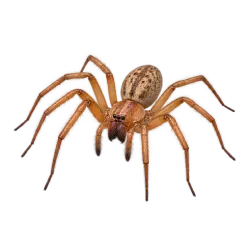
Agrarian Sac Spider
The Night-Hunting Crop Guardian. The Night-Hunting Crop Guardian. Quiet, unseen work…
Baca panduan spesies
Ant-mimicking Spider
The Ant-mimicking Spider shows that identity can be protective. By resembling ants, it…
Baca panduan spesies
Assassin Spider
The Assassin Spider is a lesson in specialized strategy. It does not win by being…
Baca panduan spesiesLebih banyak hewan dengan kekuatan Observation
Jelajahi semua hewan Observation
Amazon Milk Frog
Amazon Milk Frog is a amphibian known for big silver-rimmed eyes, banded brown-and-blue…
Baca panduan spesies
American Toad
American Toad carries Warty through specific body design and repeated survival…
Baca panduan spesies
Barred Eagle-Owl
Barred Eagle-Owl teaches Barred Eagle Owl · Canopy Vigilance through its real biology:…
Baca panduan spesiesBawa ensiklopedia ke dunia nyata
AnimalDex membantumu memindai hewan nyata, mengidentifikasi spesies, mengoleksi kartu, dan belajar dari alam di mana pun kamu berada.