
Panduan lapangan hewan
Spotted Hyena
Identifikasi, habitat, rarity, perilaku, simbolisme, fakta, dan pelajaran praktis dari alam.
The Laughing Bone Crusher. The Spotted Hyena uses powerful jaws and a strong running body to hunt, scavenge, and crack bones other animals leave behind. It shows us that being resourceful can turn leftovers into treasure.
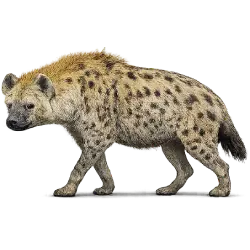
Kartu AnimalDex
Buka kartu hewan ini
Pindai atau tangkap hewan ini dengan AnimalDex untuk membuka kartu koleksi dan menambahkannya ke koleksi satwa liarmu.
Dapatkan AnimalDexNama ilmiah
Crocuta crocuta
Kategori
Mammal
Habitat
Savannah, grassland, scrub, and open woodland with prey access and den sites.
Rarity
Uncommon · 52/100
Native range
Sub-Saharan Africa in regional strongholds and scattered populations.
Bone Economy
Crack the leftovers.
Bone-Crushing Resource Use
Apa yang diajarkannya
Resourcefulness turns what remains into real nourishment.
Coba
Leftovers become soup instead of waste.
Bukti alam
Spotted Hyenas have powerful jaws and digestive systems capable of processing bone, and they hunt and scavenge in complex social clans.
Gunakan untuk
Tangkapan Spotted Hyena berperingkat
Belum ada tangkapan komunitas berperingkat untuk spesies ini.
Mengapa Bone Economy?
Alasan di balik Prinsip Hewan ini dan biologi yang mendukungnya.
Spotted hyenas are powerful social carnivores with strong jaws, efficient endurance, and complex clan behavior that extends far beyond simple scavenging.
Cara mengidentifikasi Spotted Hyena
- Sloping back with high shoulders and shorter hindquarters
- Rounded ears and heavy neck on a strong front end
- Spotted sandy coat with ground-covering trot
Kenapa Spotted Hyena menarik
- Hyenas are often misunderstood despite being some of the most capable carnivores in African systems.
- Their societies offer strong contrasts with canids and big cats.
Habitat: Savannah, grassland, scrub, and open woodland with prey access and den sites.
Native range: Sub-Saharan Africa in regional strongholds and scattered populations.
nativeRangeCardTitle
nativeRangeCardDescription
Savannah, grassland, scrub, and open woodland with prey access and den sites.
To find Spotted Hyena in the wild, focus on the exact habitat patches that match its body design and daily behavior, not just the broad country where it exists. You usually do better by working one good piece of habitat inside sub-Saharan Africa in regional strongholds and scattered populations. than by covering too much ground.
- Forest edge, canopy gaps, fruiting trees, or shaded trails where cover and food meet
- Open grassland edges, lightly wooded plains, or raised ground where you can scan long distances
- Protected habitat blocks within sub-Saharan Africa in regional strongholds and scattered populations.
- Start early, pick one strong patch of habitat, and stay long enough for movement to return after you arrive.
- Work edges, clearings, fruiting trees, and stream crossings rather than walking randomly through dense cover.
- Move quietly, stop often, and give the habitat time to settle; many mammals and insects show themselves only after the first pause.
Antelope, zebra, wildebeest, small animals, carrion, and bones support Bone Economy because the hyena can use almost the whole resource. The diet proves that value remains after others stop.
Lions, humans, disease, and clan conflict threaten them, while cubs face additional risk. Social structure and dens protect, but the clan must keep negotiating power.
Spotted Hyenas are mostly nocturnal or crepuscular, though active by day in some areas. Their rhythm is listen, travel, hunt, call, feed, and return to the den.
Spotted Hyenas can live for many years, and Bone Economy strengthens through social learning, rank, territory, and knowledge of food routes.
Females give birth in dens, nurse cubs for a long time, and raise them within clan politics. Offspring fit the principle because survival depends on both nourishment and social rank.
Females are usually larger and socially dominant, with unusual reproductive anatomy. The sex difference is central because power and care are strongly organized through females.
- Hunts actively as well as scavenging carcasses
- Communicates through whoops, scent, and rank-driven interactions
- Cracks large bones using exceptional bite force
Spotted Hyena most often symbolizes bone economy in AnimalDex because its real survival behavior repeatedly shows this pattern.
Resourcefulness turns what remains into real nourishment.
Spotted Hyenas have powerful jaws and digestive systems capable of processing bone, and they hunt and scavenge in complex social clans.
- Watch den areas from distance and avoid blocking paths after dark.
- Observe group interactions quietly because vocal exchanges carry a lot of information.
- African wild dog
- Striped hyena
- Large jackal in poor light
statsTitle
statsDescription
statsSourceLabel: statsSourceSpeciesProfile
dominanceStat
82
speedStat
58
sizeStat
48
intelligenceStat
72
rarityStat
52%
Total
312
Size scale
Large
Uses the canonical size stat for consistent placement



US$233 – US$485
Perkiraan rentang nilai
Kepercayaan 69%
Perkiraan nilai AnimalDex dibuat dari stat spesies kanonik.
Not a marketplace listing.
Perkiraan nilai berdasarkan hewan yang teridentifikasi dan konteks harga yang tersedia. Bukan daftar marketplace.
Seberapa langka Spotted Hyena?
Rarity: Uncommon (52/100)
Spotted hyenas are still secure in some ecosystems, but conflict and habitat pressure reduce density elsewhere.
Systems Intelligence & Hidden Purpose
Sudut pandang systems biology untuk melihat bagaimana spesies ini dibangun, peran apa yang dijalankannya di ekosistem, dan pelajaran praktis apa yang bisa dipetik manusia.
System Role
The Bone-Crushing Network Manager
Spotted Hyena
Specialized Hardware
Crushing jaws, powerful forequarters, stamina, and clan-level coordination make spotted hyenas high-efficiency carnivore hardware across long feeding windows.
Systems Script
Hyenas reduce waste, compete directly for prey, and keep carcass nutrients moving through the system fast. They are part predator, part cleanup crew, and fully structural to savannah ecology.
Strategic Insight
Do not ignore the value of finishing what others leave behind. Efficiency often hides inside the leftovers.
Public Animal Power
Explore this Animal Power
This is a public capture, so you can explore its Animal Power here. Personal Apex matches and challenges use your Wild Profile and animals you own.
Own an animal with this power to use it in Growth challenges.
Hewan terkait
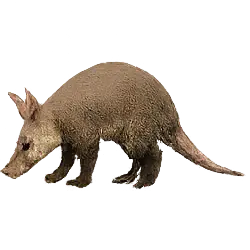
Aardvark
The aardvark is a nocturnal African mammal known for its long snout, strong digging…
Baca panduan spesies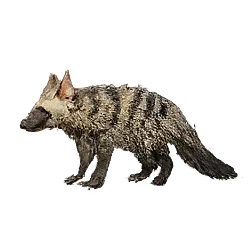
Aardwolf
The aardwolf is a small striped relative of hyenas that feeds mainly on termites rather…
Baca panduan spesies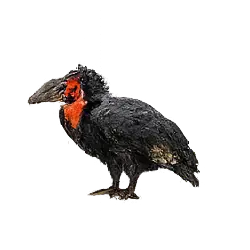
Abyssinian Ground Hornbill
Abyssinian Ground Hornbill is a bird known for bare red facial skin, huge…
Baca panduan spesiesLebih banyak hewan dengan kekuatan Efficiency
Jelajahi semua hewan Efficiency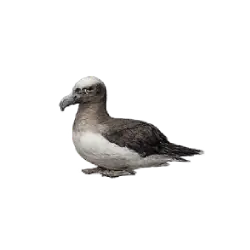
Black-footed Albatross
Black-footed Albatross is a bird known for immense ocean-going wings, wave-skimming…
Baca panduan spesies
Common Minke Whale
Minke Whale expresses Streamline through streamlined baleen body, quick lunges,…
Baca panduan spesies
Desert Kangaroo Rat
Desert Kangaroo Rat explains Drycraft through a body and routine shaped for its exact…
Baca panduan spesiesBawa ensiklopedia ke dunia nyata
AnimalDex membantumu memindai hewan nyata, mengidentifikasi spesies, mengoleksi kartu, dan belajar dari alam di mana pun kamu berada.
Comparisons terkait
Lihat bagaimana spesies ini tampil di halaman perbandingan AnimalDex yang terstruktur.
African Wild Dog vs Hyena: Which Hunter Has the Edge?
Spotted hyena gets the edge in direct physical conflict because it is tougher and more built for brutal contact. African wild dog stays exceptional in pure pack-hunt coordination and endurance pursuit.
Baca halaman comparisonLion vs Hyena: Who Really Has the Edge?
Lion usually has the edge in a direct one-on-one clash. Spotted hyenas stay dangerous because they are durable, persistent, and far more formidable once the matchup involves clan pressure rather than a solo contest.
Baca halaman comparisonWolf vs Hyena: Which Predator Has the Real Fighting Edge?
In a one-on-one clash, spotted hyena usually gets the edge through heavier bite mechanics and stronger close-range durability. Wolves improve when the question shifts to coordinated pack pursuit rather than a single violent contest.
Baca halaman comparisonMuncul di tier list
Lihat posisi spesies ini di halaman tier list AnimalDex yang dibangun dengan perbandingan terstruktur dan metodologi yang jelas.
#5 · Reputation
Most Reviled Animals in the World: Top 100 Tier List
Spotted hyena is one of the clearest examples of an animal whose real intelligence is overshadowed by centuries of negative human storytelling.
Baca tier list#6 · Teamwork
Animals with the Best Teamwork: Top 100 Tier List
Spotted hyenas show that highly effective teamwork does not need polished optics to be real.
Baca tier list#8 · Bite Force
Animals With the Strongest Bite Force: Top 100 Tier List
Hyena is a classic bite-force animal because the jaws are central to how it processes carcass and dominance.
Baca tier list