
Panduan lapangan hewan
Honey Bee
Identifikasi, habitat, rarity, perilaku, simbolisme, fakta, dan pelajaran praktis dari alam.
Western honey bee teaches Collective Industry through a hive that turns information into work. Waggle dances, pollen baskets, wax comb, division of labor, and colony defense show power moving through many small bodies at once.
Nama ilmiah
Apis mellifera
Kategori
Invertebrate
Habitat
Native range keys: domestic_global. Meadows, orchards, gardens, forests, farms, hollow trees, managed hives, and flower-rich edges fit Honey Bees because colony life depends on many scattered blooms and a central home.
Rarity
Relatively common · 39/100
Native range
Native range keys: domestic_global. Meadows, orchards, gardens, forests, farms, hollow trees, managed hives, and flower-rich edges fit Honey Bees because colony life depends on many scattered blooms and a central home.
Collective Industry
Dance the map.
Waggle-Dance Coordination
Apa yang diajarkannya
A hive becomes powerful when good information moves through every body.
Coba
Your group is confused, so you share the information everyone needs.
Bukti alam
Honey Bees gather nectar and pollen, live in highly organized colonies, divide labor, and use waggle dances to communicate the direction and distance of rich food sources.
Gunakan untuk
Tangkapan Honey Bee berperingkat
3 tangkapan berperingkat dalam grup ini dari kolektor AnimalDex.
Garrett8522
@dannimal2285Wild · West Branch Nature Preserve · Concord, Cabarrus County, United States
Skor 0
Mengapa Collective Industry?
Alasan di balik Prinsip Hewan ini dan biologi yang mendukungnya.
Western honey bee teaches Collective Industry through a hive that turns information into work. Waggle dances, pollen baskets, wax comb, division of labor, and colony defense show power moving through many small bodies at once.
Cara mengidentifikasi Honey Bee
- Waggle dance: workers communicate direction and distance to food.
- Pollen baskets: hind legs carry protein-rich pollen back to the hive.
- Division of labor: queen, workers, and drones serve different colony functions.
Kenapa Honey Bee menarik
- Western honey bees make honey by processing nectar inside the colony.
- A worker’s barbed sting is mainly a colony-defense weapon.
- Honey bee pollination supports many crops and wild plants.
Habitat: Native range keys: domestic_global. Meadows, orchards, gardens, forests, farms, hollow trees, managed hives, and flower-rich edges fit Honey Bees because colony life depends on many scattered blooms and a central home.
Native range: Native range keys: domestic_global. Meadows, orchards, gardens, forests, farms, hollow trees, managed hives, and flower-rich edges fit Honey Bees because colony life depends on many scattered blooms and a central home.
To find Honey Bee in the wild, focus on the exact habitat patches that match its body design and daily behavior, not just the broad country where it exists. You usually do better by working one good piece of habitat inside native range keys: domestic_global. Meadows, orchards, gardens, forests, farms, hollow trees, managed hives, and flower-rich edges fit Honey Bees because colony life depends on many scattered blooms and a central home. than by covering too much ground.
- Forest edge, canopy gaps, fruiting trees, or shaded trails where cover and food meet
- Open grassland edges, lightly wooded plains, or raised ground where you can scan long distances
- Sunlit logs, exposed branches, warm rocks, or regular perch sites used for scanning
- Early sun and calm weather usually give the best chance of seeing normal basking, perched, or soaring behavior.
- Work edges, clearings, fruiting trees, and stream crossings rather than walking randomly through dense cover.
- Slow down and scan shapes, outlines, and eye-level silhouettes; many good sightings come from noticing what does not move.
Nectar and pollen support Collective Industry because nectar becomes honey energy while pollen feeds developing brood. Every forager’s trip becomes part of the hive’s system.
Wasps, hornets, birds, spiders, bears, skunks, mites, diseases, pesticides, and harsh weather pressure honey bees. Colony defense and communication keep individual weakness from ending the group.
Honey Bees are diurnal, foraging in daylight and adjusting work to weather, bloom, and hive need. Their rhythm makes information useful only when it moves quickly through the colony.
Worker lifespan changes with season and workload: summer workers may live only weeks, while overwintering workers can live months; queens can live for years. The lifespan pattern supports Collective Industry because each body serves the colony’s timing.
The queen is the main egg-layer, while worker females feed larvae, build wax comb, guard, clean, and forage. Offspring are not raised by one mother alone; the hive becomes the nursery.
Sex differences are major: workers and queens are female, while drones are male and exist mainly for mating. The principle depends on specialized roles, not identical bodies.
- Waggle dance: workers communicate direction and distance to food.
- Pollen baskets: hind legs carry protein-rich pollen back to the hive.
- Division of labor: queen, workers, and drones serve different colony functions.
Honey Bee most often symbolizes collective industry in AnimalDex because its real survival behavior repeatedly shows this pattern.
A hive becomes powerful when good information moves through every body.
Honey Bees gather nectar and pollen, live in highly organized colonies, divide labor, and use waggle dances to communicate the direction and distance of rich food sources.
- Observe from a respectful distance and avoid changing the animal's behavior.
- Do not block feeding, shelter, nesting, or travel routes.
- Use a live camera capture without handling or staging wildlife.
0/1 XP toward Level 2
statsTitle
statsDescription
statsSourceLabel: statsSourceSpeciesProfile
dominanceStat
26
speedStat
45
sizeStat
1
intelligenceStat
48
rarityStat
39%
Total
159
Size scale
Microscopic edge
Uses the canonical size stat for consistent placement







US$81 – US$169
Perkiraan rentang nilai
Kepercayaan 69%
Perkiraan nilai AnimalDex dibuat dari stat spesies kanonik.
Not a marketplace listing.
Perkiraan nilai berdasarkan hewan yang teridentifikasi dan konteks harga yang tersedia. Bukan daftar marketplace.
Seberapa langka Honey Bee?
Rarity: Relatively common (39/100)
AnimalDex canonical rarity score: 39/100, maintained by the live indexed species profile.
Public Animal Power
Explore this Animal Power
This is a public capture, so you can explore its Animal Power here. Personal Apex matches and challenges use your Wild Profile and animals you own.
Own an animal with this power to use it in Growth challenges.
Comparison hearts ready
3 of 3 hearts remaining. Each loss removes 1 heart.
✦ Available actions
Compare this public animal when your deck meets the current rules.
⚡CompareUnavailable›Hewan terkait

Asian honey bee
Asian honey bee is an indexed AnimalDex species with a field profile connected to live…
Baca panduan spesies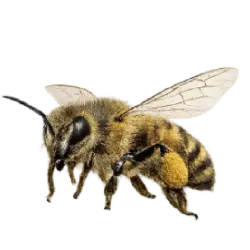
Honey Bee
Honey bees are social pollinators that collect nectar and pollen, coordinate foraging…
Baca panduan spesies
Honey Badger
The honey badger is a tough mustelid known for digging strength, bold behavior, and a…
Baca panduan spesiesLebih banyak hewan dengan kekuatan Communication
Jelajahi semua hewan Communication
Alpaca
The alpaca is a small camelid bred for soft fiber, gentle herd behavior, and cool…
Baca panduan spesies
Beluga Whale
The beluga whale is a small Arctic whale known for its white body, flexible neck, and…
Baca panduan spesies
Blue-and-yellow Macaw
Blue-and-yellow Macaw teaches Vocal Bonding because its real biology turns large social…
Baca panduan spesiesBawa ensiklopedia ke dunia nyata
AnimalDex membantumu memindai hewan nyata, mengidentifikasi spesies, mengoleksi kartu, dan belajar dari alam di mana pun kamu berada.