
Panduan lapangan hewan
Honey Bee
Identifikasi, habitat, rarity, perilaku, simbolisme, fakta, dan pelajaran praktis dari alam.
Panduan lapangan hewan
Honey Bee
Collective Industry
Dance the map.
A hive becomes powerful when good information moves through every body.
You’re #1 of 3
RECORD ID
122B3717-A026-447D-8F06-593DF4712E27
Native range
Natural range, not this capture location
Woodland edges, farmland, gardens, orchards, and meadows with dense flowering resources and nest cavities or hives.
Search near me0/1 XP toward Level 2
AnimalDex stats
Dominance
26
Speed
45
Size
1
Intelligence
48
Rarity
39%
Total
159
Size scale
✦ Available actions
Compare this public animal when your deck meets the current rules.
Nama ilmiah
Apis mellifera
Kategori
Insect
Habitat
Woodland edges, farmland, gardens, orchards, and meadows with dense flowering resources and nest cavities or hives.
Rarity
Relatively common · 39/100
Native range
Originally from Africa, Europe, and western Asia, now widely managed and naturalized around the world.
Mengapa Collective Industry?
Alasan di balik Prinsip Hewan ini dan biologi yang mendukungnya.
Honey bees are social pollinators that collect nectar and pollen, coordinate foraging through shared signals, and help connect flowering plants to wider food systems.
Cara mengidentifikasi Honey Bee
- Compact fuzzy body with striped amber and dark abdomen
- Pollen baskets on hind legs in working females
- Fast direct flower-to-hive flight paths in productive weather
Kenapa Honey Bee menarik
- Honey bees make pollination logistics visible at a scale people can understand quickly.
- Their colonies demonstrate how group-level coordination can outperform strong individual units.
Habitat: Woodland edges, farmland, gardens, orchards, and meadows with dense flowering resources and nest cavities or hives.
Native range: Originally from Africa, Europe, and western Asia, now widely managed and naturalized around the world.
nativeRangeCardTitle
nativeRangeCardDescription
Woodland edges, farmland, gardens, orchards, and meadows with dense flowering resources and nest cavities or hives.
To find Honey Bee in the wild, focus on the exact habitat patches that match its body design and daily behavior, not just the broad country where it exists. You usually do better by working one good piece of habitat inside originally from Africa, Europe, and western Asia, now widely managed and naturalized around the world. than by covering too much ground.
- Forest edge, canopy gaps, fruiting trees, or shaded trails where cover and food meet
- Open grassland edges, lightly wooded plains, or raised ground where you can scan long distances
- Sunlit logs, exposed branches, warm rocks, or regular perch sites used for scanning
- Early sun and calm weather usually give the best chance of seeing normal basking, perched, or soaring behavior.
- Work edges, clearings, fruiting trees, and stream crossings rather than walking randomly through dense cover.
- Move quietly, stop often, and give the habitat time to settle; many mammals and insects show themselves only after the first pause.
Honey Bee eats the foods its body design and habitat make easiest to access. Diet can shift across seasons, life stages, and local competition.
- The most accessible prey or plant foods in its habitat
- Energy-rich foods that match its size and behavior
- Seasonal resources available in the local environment
A practical answer for Honey Bee always depends on what food is actually available in woodland edges, farmland, gardens, orchards, and meadows with dense flowering resources and nest cavities or hives..
- Shares foraging direction through waggle dance communication
- Regulates hive temperature through clustered movement and wing fanning
- Collects different floral resources depending on colony demand
Honey Bee most often symbolizes collective industry in AnimalDex because its real survival behavior repeatedly shows this pattern.
A hive becomes powerful when good information moves through every body.
Honey Bees gather nectar and pollen, live in highly organized colonies, divide labor, and use waggle dances to communicate the direction and distance of rich food sources.
- Watch flowering patches calmly instead of standing in active flight lines.
- Do not block hive entrances or disturb managed boxes in hot weather.
- Bumblebee
- Hoverfly
- Solitary bee species
Hewan terkait
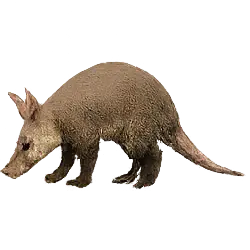
Aardvark
The aardvark is a nocturnal African mammal known for its long snout, strong digging…
Baca panduan spesies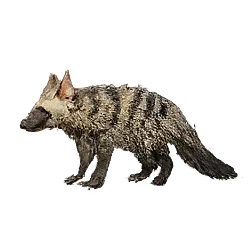
Aardwolf
The aardwolf is a small striped relative of hyenas that feeds mainly on termites rather…
Baca panduan spesies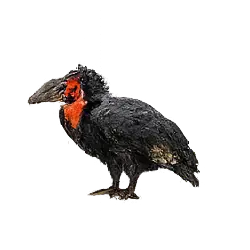
Abyssinian Ground Hornbill
Abyssinian Ground Hornbill is a bird known for bare red facial skin, huge…
Baca panduan spesiesLebih banyak hewan dengan kekuatan Communication
Jelajahi semua hewan Communication

Bawa ensiklopedia ke dunia nyata
AnimalDex membantumu memindai hewan nyata, mengidentifikasi spesies, mengoleksi kartu, dan belajar dari alam di mana pun kamu berada.
Panduan blog terkait
Lanjutkan belajar lewat artikel praktis yang terhubung dengan spesies ini.
Capture Animals App: Identify, Collect, and Learn About Real Animals
Looking for a capture animals app? AnimalDex lets you scan real animals, identify species, collect discoveries, and build your own real-world animal collection.
Baca artikel blogBiomimicry in Animals: 35 Examples of Nature-Inspired Design
Discover 35 examples of biomimicry in animals, from shark skin and gecko feet to owl wings, elephant trunks, whale fins, spider silk, dolphins, ants, bees, and more.
Baca artikel blogWhat If Every Animal Is a Lesson?
Biomimicry, animal intelligence, symbolism, reincarnation, conservation, and why AnimalDex treats every animal as a living lesson.
Baca artikel blogMuncul di tier list
Lihat posisi spesies ini di halaman tier list AnimalDex yang dibangun dengan perbandingan terstruktur dan metodologi yang jelas.
#8 · Invasive
Most Invasive Species in the World: Top 100 Tier List
Honey bee is not a classic shock-value invader, but introduced populations can still reshape pollination competition in sensitive environments.
Baca tier list#9 · Communication
Most Communicative Animals in the Wild: Top 100 Tier List
Honey bee deserves a high slot because it translates spatial resource information into one of the most famous nonhuman communication systems.
Baca tier list#10 · Teamwork
Animals with the Best Teamwork: Top 100 Tier List
Honey bees deserve a place because communication and colony coordination are central to how they function.
Baca tier list