
Panduan lapangan hewan
Winter White Dwarf Hamster
Identifikasi, habitat, rarity, perilaku, simbolisme, fakta, dan pelajaran praktis dari alam.
Panduan lapangan hewan
Winter White Dwarf Hamster
Adaptive Camouflage Strategy
Change to Thrive.
The Winter White Dwarf Hamster changes its fur color from brown to white as seasons shift, showcasing the power of adaptability for survival.
You’re #1 of 1
Native range
Natural range, not this capture location
Native range keys: central_asia, east_asia. Dry steppe, meadow and semi-desert with hard winters, because Seasonal Change is only worth the cost where the ground genuinely turns white.
Search near me0/1 XP toward Level 2
AnimalDex stats
Dominance
9
Speed
31
Size
5
Intelligence
22
Rarity
14%
Total
81
Size scale
✦ Available actions
Compare this public animal when your deck meets the current rules.
Nama ilmiah
Phodopus sungorus
Kategori
Animal
Habitat
Native range keys: central_asia, east_asia. Dry steppe, meadow and semi-desert with hard winters, because Seasonal Change is only worth the cost where the ground genuinely turns white.
Rarity
Relatively common · 14/100
Native range
Native range keys: central_asia, east_asia. Dry steppe, meadow and semi-desert with hard winters, because Seasonal Change is only worth the cost where the ground genuinely turns white.
Mengapa Adaptive Camouflage Strategy?
Alasan di balik Prinsip Hewan ini dan biologi yang mendukungnya.
Winter White Dwarf Hamster teaches Seasonal Change. Where most animals endure winter, this one rewrites itself for it, moulting to white as the daylight shortens.
Cara mengidentifikasi Winter White Dwarf Hamster
- Moults to a much paler, often near-white coat in winter
- Dark dorsal stripe running down the spine
- Furred feet and a very short tail
- Compact rounded body under 10 cm long
Kenapa Winter White Dwarf Hamster menarik
- The winter moult is triggered by shortening daylight, not by cold.
- In captivity the change often does not happen, because indoor lighting never gives the signal.
- They can enter short bouts of torpor to save energy in hard conditions.
- They come from the steppe and semi-desert of Siberia, Kazakhstan and Mongolia, where winters are severe.
Habitat: Native range keys: central_asia, east_asia. Dry steppe, meadow and semi-desert with hard winters, because Seasonal Change is only worth the cost where the ground genuinely turns white.
Native range: Native range keys: central_asia, east_asia. Dry steppe, meadow and semi-desert with hard winters, because Seasonal Change is only worth the cost where the ground genuinely turns white.
nativeRangeCardTitle
nativeRangeCardDescription
Native range keys: central_asia, east_asia. Dry steppe, meadow and semi-desert with hard winters, because Seasonal Change is only worth the cost where the ground genuinely turns white.
To find Winter White Dwarf Hamster in the wild, focus on the exact habitat patches that match its body design and daily behavior, not just the broad country where it exists. You usually do better by working one good piece of habitat inside native range keys: central_asia, east_asia. Dry steppe, meadow and semi-desert with hard winters, because Seasonal Change is only worth the cost where the ground genuinely turns white. than by covering too much ground.
- Open grassland edges, lightly wooded plains, or raised ground where you can scan long distances
- Water sources, dune bases, rocky wadis, or shaded scrub at first and last light
- Headlands, reef edges, island colonies, tidal channels, or productive coastal water
- Start early, pick one strong patch of habitat, and stay long enough for movement to return after you arrive.
- Use binoculars from a track, ridge, or vehicle stop and scan far ahead before you move closer.
- Move quietly, stop often, and give the habitat time to settle; many mammals and insects show themselves only after the first pause.
Seeds, shoots and insects, gathered and cached in burrows. This diet supports Seasonal Change because a hoard laid down in autumn is what makes the winter survivable once the coat has turned.
They are most active at dawn and dusk and through the night, staying underground while raptors hunt. Their rhythm keeps them out of the light in every season.
They live only two or three years, so Seasonal Change may happen just a couple of times in a life. The principle stays sharp because each change has to be right first time.
Females raise small litters in a burrow chamber and can breed again quickly. Offspring fit the principle because young born late must be ready for their first moult within weeks.
Males and females are closely similar in size and coat; both moult on the same daylight cue.
- Moults to a much paler, often near-white coat in winter
- Dark dorsal stripe running down the spine
- Furred feet and a very short tail
- Compact rounded body under 10 cm long
Winter White Dwarf Hamster most often symbolizes adaptive camouflage strategy in AnimalDex because its real survival behavior repeatedly shows this pattern.
The Winter White Dwarf Hamster changes its fur color from brown to white as seasons shift, showcasing the power of adaptability for survival.
This hamster species undergoes a seasonal fur color change to blend into snowy environments, aiding in predator evasion.
- Observe from a respectful distance and avoid changing the animal's behavior.
- Do not block feeding, shelter, nesting, or travel routes.
- Use a live camera capture without handling or staging wildlife.
Hewan terkait

American White Pelican
The Cooperative Fisher. The Cooperative Fisher. Working together can achieve what is…
Baca panduan spesies
Argentine Black and White Tegu
Argentine Black and White Tegu is a reptile known for large patterned lizard body,…
Baca panduan spesies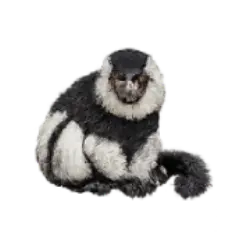
Black-and-white Ruffed Lemur
Black-and-white Ruffed Lemur is a mammal known for black-and-white shaggy coat, loud…
Baca panduan spesiesLebih banyak hewan dengan kekuatan Adaptability
Jelajahi semua hewan Adaptability

Bawa ensiklopedia ke dunia nyata
AnimalDex membantumu memindai hewan nyata, mengidentifikasi spesies, mengoleksi kartu, dan belajar dari alam di mana pun kamu berada.