lionsanimal communicationbig cats
Do All Lions Roar? Why Some Lions Stay Silent
Not every lion roars. The silent ones are males still hunting for a pride, and a lioness's roar can summon the wrong listener. Here's who roars, and why.
Dalam panduan ini
- Do all lions roar?
- Can lions count the voices in a roar?
- Do female lions roar, and why is it risky?
- What happens when a stranger roars on a male's territory?
- Does every lioness answer the call?
- How do lions roar? Square vocal folds and a newly named roar
- How many lions are left in the wild?
- What does the silent nomad know?
The short answer
Quick answer
No, not all of them. Lions roar to stay in touch with their pride and to claim territory, and a listening lion can tell the caller's sex, group and familiarity, then weigh how many voices it hears. But in long-running Serengeti studies, some males stayed silent: the very ones with a pride still to win.
The quiet ones
Do all lions roar?
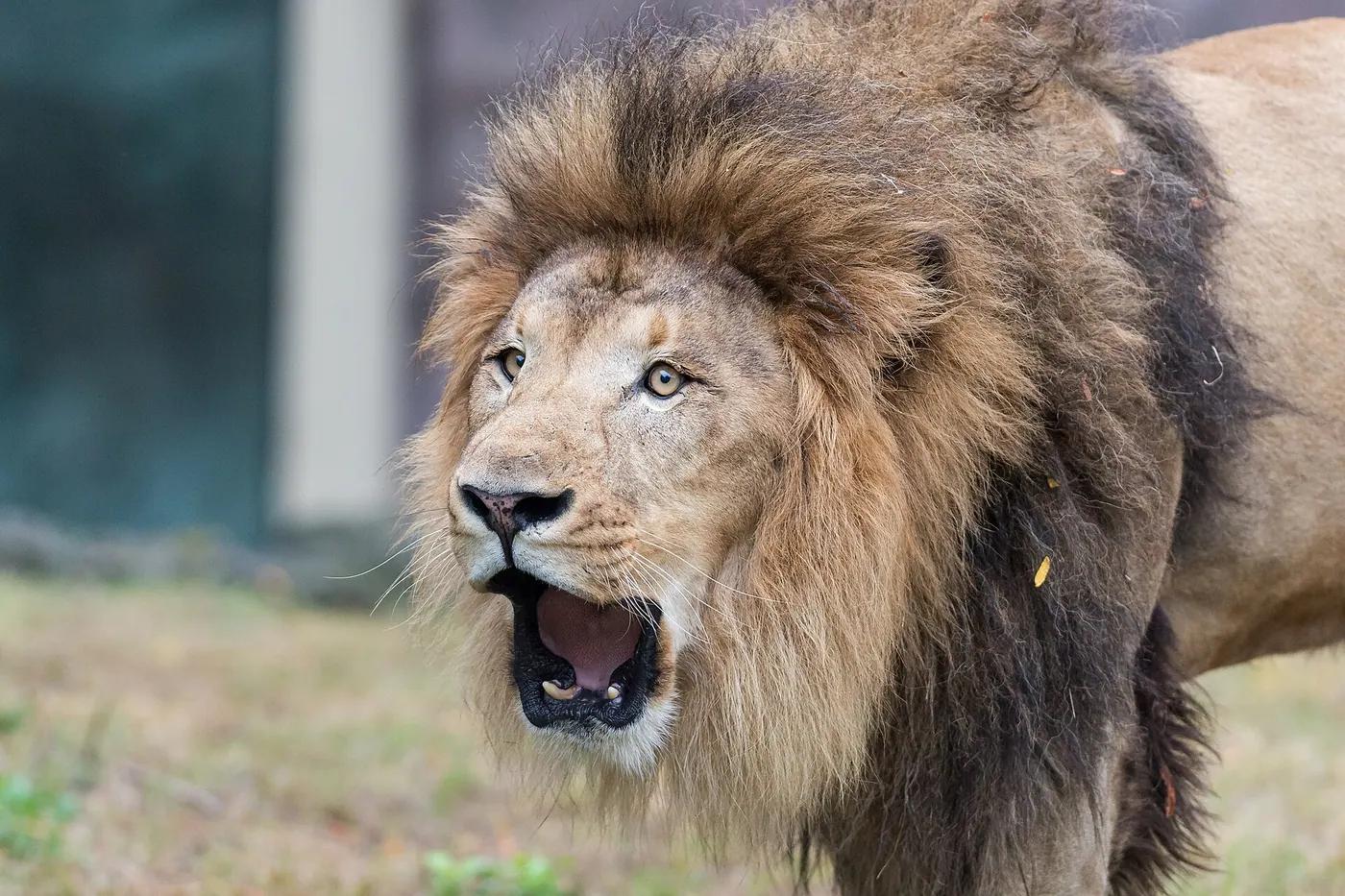
Some male lions on the Serengeti go about their lives without making the sound their species is famous for. They are nomads: males with no territory and no pride of their own, the lions with the most to win. And they stay quiet.
Then, when a nomad moves in to take over a pride, he starts roaring. That pattern comes from field studies by Jon Grinnell and Karen McComb in Serengeti National Park and Tanzania's Ngorongoro Crater, among lions whose family records go back to 1963. In both study areas, the males that roared were the territory residents.
So what is a roar for? From a roaring bout, lions can pick up the caller's sex, whether it belongs to their group and whether they know it. In good conditions the message carries about 8 km, possibly 10. A mother with cubs can tell the cubs' father from an unfamiliar male by roar alone, as McComb and colleagues showed in 1993.
Lionesses roar to keep in touch with pridemates and to defend territory against other prides. Resident males roar over the ground they hold. Every roar can carry a name, a claim and a location to everyone in earshot, including the lions you'd least like to meet.
Every roar can carry a name, a claim and a location.
The count
Can lions count the voices in a roar?
Roughly. The experiment behind how lionesses count the voices is a field classic. McComb, Packer and Pusey played recordings of one female roaring, or three females roaring in chorus, to stand in for strangers in the territories of 21 prides in Serengeti National Park. The results came out in February 1994.
Defending females were less likely to approach three intruders than one, and when they did, they went more cautiously. They approached consistently only when the defenders outnumbered the voices they heard. If some pridemates were missing, they roared to call them in first.
Whether that counts as counting is still argued over. The paper describes lionesses judging the number of intruders relative to their own group size, not tallying exact figures. Karen McComb, at the University of Sussex, still sees in the work 'a possible biological basis for the evolution of mathematical abilities'.
There's a flip side. If listeners are counting, every roar hands information to whoever is listening, and not every listener is another pride.
Short of numbers, lionesses roar for backup before they move.
how lionesses count the voices
Eavesdroppers
Do female lions roar, and why is it risky?
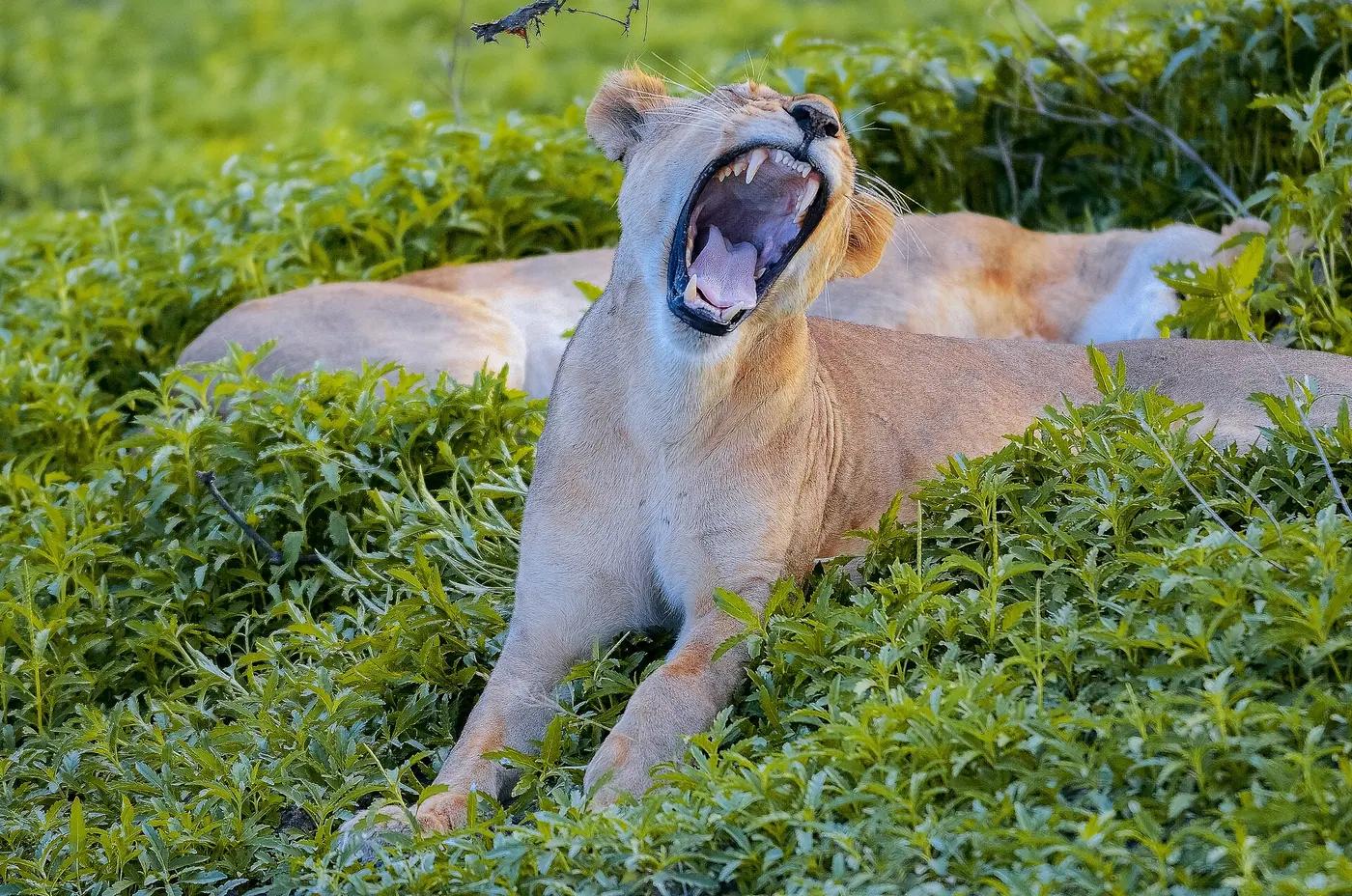
They do, and it can bring in exactly the wrong listener. Grinnell and McComb played female roars to non-resident males: 24 playbacks from a loudspeaker 200 m away. The males walked towards the female roars. They avoided male roars.
The strangers did their own sums. They were more reluctant to approach three females roaring than one. Single males hung back more than pairs, and old males more than young ones.
That turns a chorus into a shield. The authors suggest that mothers roaring together may keep encounters with infanticidal males from happening at all.
A 2025 study in Tanzania's Nyerere National Park adds a quiet footnote. Across 10 continuous days of recording, no females roared. The authors put this down to small cubs in the pride.
Strange males walked towards female roars and steered clear of male ones.
No hesitation
What happens when a stranger roars on a male's territory?
Resident males skip the careful arithmetic. In Grinnell's playback work on 15 male coalitions in Serengeti National Park, residents approached a recorded unfamiliar male in all 28 trials where the numbers were similar. That is far less cautious than the lionesses.
How committed are they? In mane research by West and Packer, published in Science in 2002, an unfamiliar male's roar was twice played beside a model lion with almost no mane. The resident males attacked the model.
Here's the tempting conclusion: a roar is an honest count, because the lions who make it are the ones ready to stand behind it. It's a good idea, not a proven one. Grinnell and McComb asked directly whether roaring reliably shows a lion's willingness to fight, and their paper's title gives the gist: roaring is limited by who is listening.
What these studies show is who roars, who stays quiet and how listeners react, recapped in the table below. None of them shows that a lion can't fake its numbers. Read it as a pattern from these populations, not a law of lions.
| Lion | Roars? | What the studies found |
|---|---|---|
| Resident males | Yes | Roared as territory holders; approached unfamiliar males in all 28 trials where numbers were similar |
| Nomadic males | Not until a takeover | Stayed silent, then began roaring while taking over a pride |
| Lionesses | Yes | Roar for contact and territory, but outside males are drawn to female roars |
| Mothers with small cubs | None recorded | No females roared in the 2025 Nyerere recordings; the authors linked it to small cubs |
Resident males approached the stranger in all 28 evenly matched trials.
Leaders and laggards
Does every lioness answer the call?
No, and this finding rattled a theory. In 1995, Heinsohn (Australian National University) and Packer (University of Minnesota) reported in Science that some females always led the approach to a recorded intruder. Others lagged behind and avoided the risk. The differences held steady over time.
The leaders recognised who the laggards were. They didn't punish them. That cut against reciprocity, the idea that cooperation is held together by tit-for-tat, and Science's news story ran under the headline 'Cowardly Lions Confound Cooperation Theory'.
It gets stranger. Some laggards join in when they're most needed, while others hold back even more in serious fights. The authors compared this with personality differences in humans. Later work found females track how reliable their companions have been and use that to judge the risk an intruder poses.
Not everyone agreed. In 1996, G.C. Jahn challenged the conclusions in Science under the title 'Lioness Leadership', and Packer and Heinsohn replied. Put lions on a list of the bravest animals and you have to ask: which lions?
The leaders knew exactly who was hanging back. They didn't punish them.
Inside the roar
How do lions roar? Square vocal folds and a newly named roar
Lions have square vocal folds. In most species the folds are triangular, but lions and tigers have flat, square ones. A 2011 PLOS ONE study of folds from six lions and tigers, co-authored by Tobias Riede (University of Utah) and Ingo Titze (National Center for Voice and Speech), found that this shape, plus folds that tolerate strong stretching and shearing, lets them roar loudly and deeply.
The fat in the folds isn't bulk for volume, as was long assumed. It sits deep in the ligament and gives them their square shape. The folds vibrate passively, so the brain doesn't have to fire for each pulse of sound. Titze compared a roar to a baby's cry for attention, only much deeper.
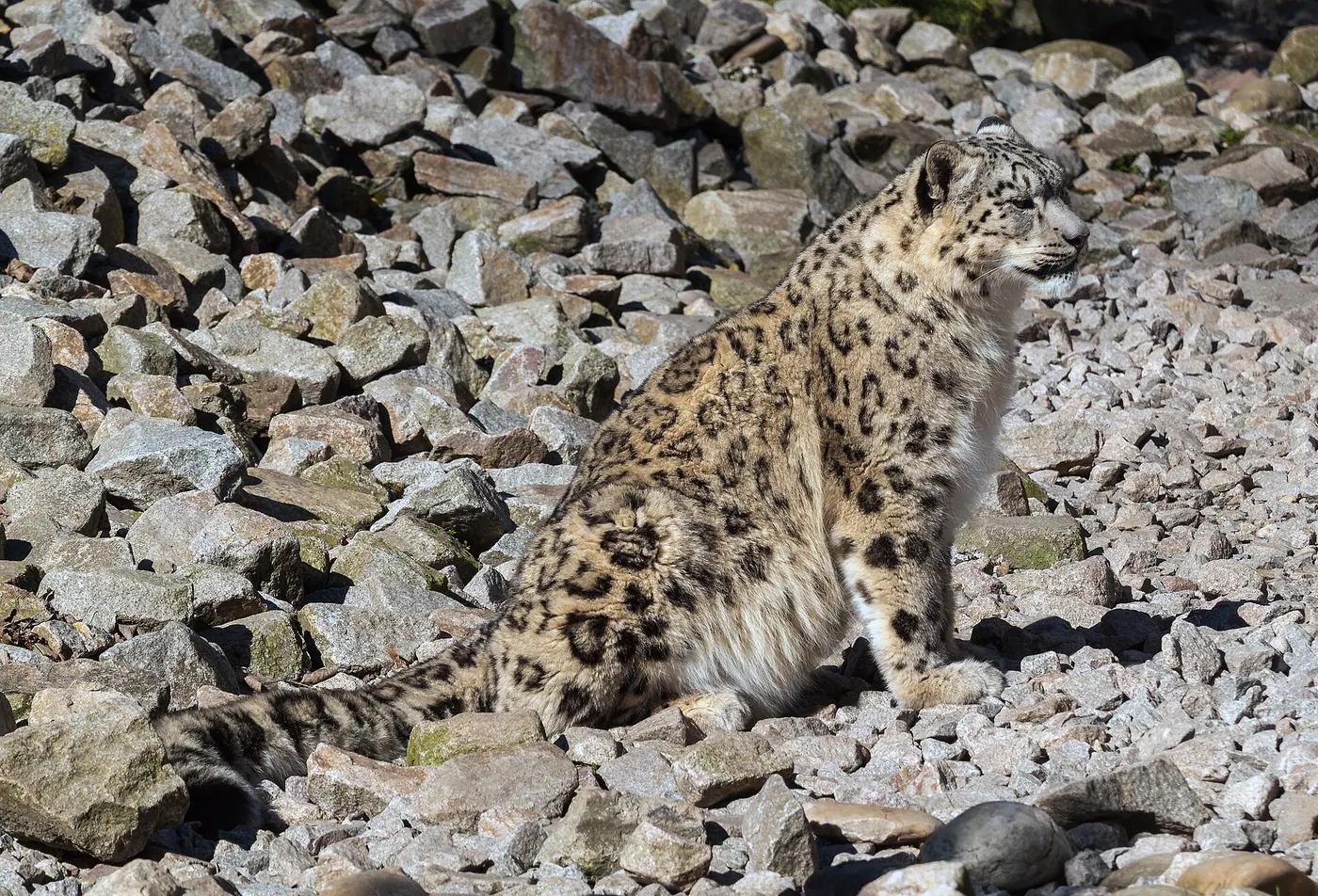
The rest of the throat matters too. Roaring needs a long, specially adapted larynx and hyoid, and the lion's larynx is the longest of the big cats. The snow leopard has the long hyoid and still can't roar.
And the roar isn't one sound. In a study published on 20 November 2025, Jonathan Growcott, a PhD student at the University of Exeter, and colleagues sorted 1,216 male lion calls recorded over 10 days in 2023 in Nyerere National Park. A roaring bout holds four call types: the full-throated roar, a newly named intermediary roar, grunts and moans. Their models separated the two roars with 84.7% accuracy and identified individual lions with 95.4% accuracy.
Lions have square vocal folds. Most animals' are triangular.
Stakes
How many lions are left in the wild?
Fewer than the roar suggests. The IUCN lists lions as Vulnerable, and its 2016 assessment put the wild population at 23,000 to 39,000 mature individuals and falling. WWF says other data suggest the true number may be nearer 20,000.
Lions declined about 43% between 1993 and 2014. Leave out fenced, managed areas and the drop is 49%, close to the 50% threshold for Endangered. West Africa had about 250 mature lions left as of 2014.
Three of the five largest lion populations are in Tanzania, where the 2025 roar study was recorded. Because every full-throated roar is an individual signature, the sound lions use to size each other up could become a way to count them for surveys.
Fewer than the roar suggests: perhaps nearer 20,000 lions.
The lesson
What does the silent nomad know?
A nomad lion has the same throat as a resident, square vocal folds and all. What he lacks is ground to stand on, so he keeps quiet until he has some. A lioness who hears strangers weighs their voices against her own side and, if she's short, calls her pridemates before she moves. The roar comes after the ground and the numbers, not before.
Got a plan you're itching to announce? Take it to the lion on AnimalDex Talk and hear how its kind would see it, from how lions really live rather than the usual answer.
The roar comes after the ground and the numbers, not before.
Pertanyaan singkat
Jawaban ringkas untuk pertanyaan yang paling sering muncul pada topik ini.
- Do female lions roar?
- Yes. Lionesses roar to keep in touch with pridemates and to defend territory against other prides. Their roars carry a risk: in playback experiments, non-resident males were drawn to female roars but avoided male ones.
- How far can you hear a lion's roar?
- In good conditions a lion's roar can be heard about 8 km (5 miles) away, possibly up to 10 km (6 miles).
- Can lions count?
- Partly, and it is debated. In a 1994 Serengeti study, lionesses judged how many strangers were roaring relative to their own group size and approached consistently only when they outnumbered them. The paper doesn't show exact counting.
- Why is a lion's roar so loud?
- Lions have flat, square vocal folds that tolerate strong stretching and shearing, which a 2011 study found lets them roar loudly and deeply. They also have the longest larynx of the big cats.
- Can all big cats roar? Why can't snow leopards roar?
- No. Roaring depends on a long, specially adapted larynx and hyoid. The snow leopard has the long hyoid but still cannot roar.
- Can you identify a lion by its roar?
- Yes. Each lion's full-throated roar is an individual signature, and a 2025 study identified individual lions from their roars with 95.4% accuracy. Lions themselves can tell familiar from unfamiliar callers.
Hewan yang disebut
Lompat dari artikel ini ke halaman spesies di balik contoh, catatan systems, dan referensi field guide.
Sources and further reading
- University of Minnesota: Grinnell & McComb, Roaring and social communication in African lions
- ResearchGate: Grinnell & McComb, Maternal grouping as a defense against infanticide by males
- University of Minnesota: Grinnell, Modes of cooperation during territorial defense by African lions
- ScienceDirect: McComb, Packer & Pusey, Roaring and numerical assessment in contests between groups of female lions
- Science: Heinsohn & Packer, Complex Cooperative Strategies in Group-Territorial African Lions
- Wiley, Ecology and Evolution: Growcott et al., Roar Data
- University of Minnesota: West et al., Wounding, mortality and mane morphology
- Humane World for Animals: African Lion factsheet
- WWF: Lion
Panduan jawaban terkait topik ini
Kalau kamu ingin perbandingan langsung dan rekomendasi yang jelas, lanjutkan ke halaman jawaban berikut.
Best Animal Identification Apps
Compare the best animal identification apps by features like photo/video identification, species coverage, collection capabilities, offline use, and more.
What Is Animal Collecting
Learn what animal collecting means in modern apps and how AnimalDex turns real-world sightings into cards, sets, rarity, and species learning.
Pokemon-Like Animal App
Looking for a Pokemon-like app with real animals? AnimalDex is something else: take any idea to a real animal for a genuinely different take, and every animal you meet in the wild joins your collection.