late startersalbatrossGreenland shark
Is It Too Late to Start? This Reptile Became a Dad at 111
Is it too late to start? A shark that matures around 156, a bird with a chick at 74 and a reptile dad at 111 say you may be on the wrong clock.
Dalam panduan ini
- Is it too late to start? Ask a shark that grows up at 156
- How old is Wisdom, the oldest known wild bird?
- Is Wisdom the albatross still raising chicks?
- How long do Greenland sharks live, and when do they grow up?
- Did Diego the tortoise really save his species?
- Why do orcas go through menopause?
- Henry the tuatara: a first-time father at 111
- So, is it too late to start?
The short answer
Quick answer
A tuatara named Henry became a first-time father at about 111, after turning down the same female for decades. Wisdom, a wild Laysan albatross, found a new mate and hatched a chick at about 74. Female Greenland sharks are thought to reach breeding age around 156. For many animals, the deadline people fear is the wrong clock.
Wrong clock
Is it too late to start? Ask a shark that grows up at 156
A female Greenland shark is thought to reach breeding age at around 156 years old, give or take 22. Do the subtraction: a shark born around 1870 could only now be reaching breeding age.
Hold that thought the next time you type 'is it too late to start' into a search bar, whether it ends in 'a 401k at 40', 'piano at 20' or 'college at 30'. The usual answer is a pep talk. The animals offer something stranger: evidence that some lives simply run on a different timetable.
Five of them answer below. One famous rescue story is half wrong, and one father waited a century.
Oldest known
How old is Wisdom, the oldest known wild bird?
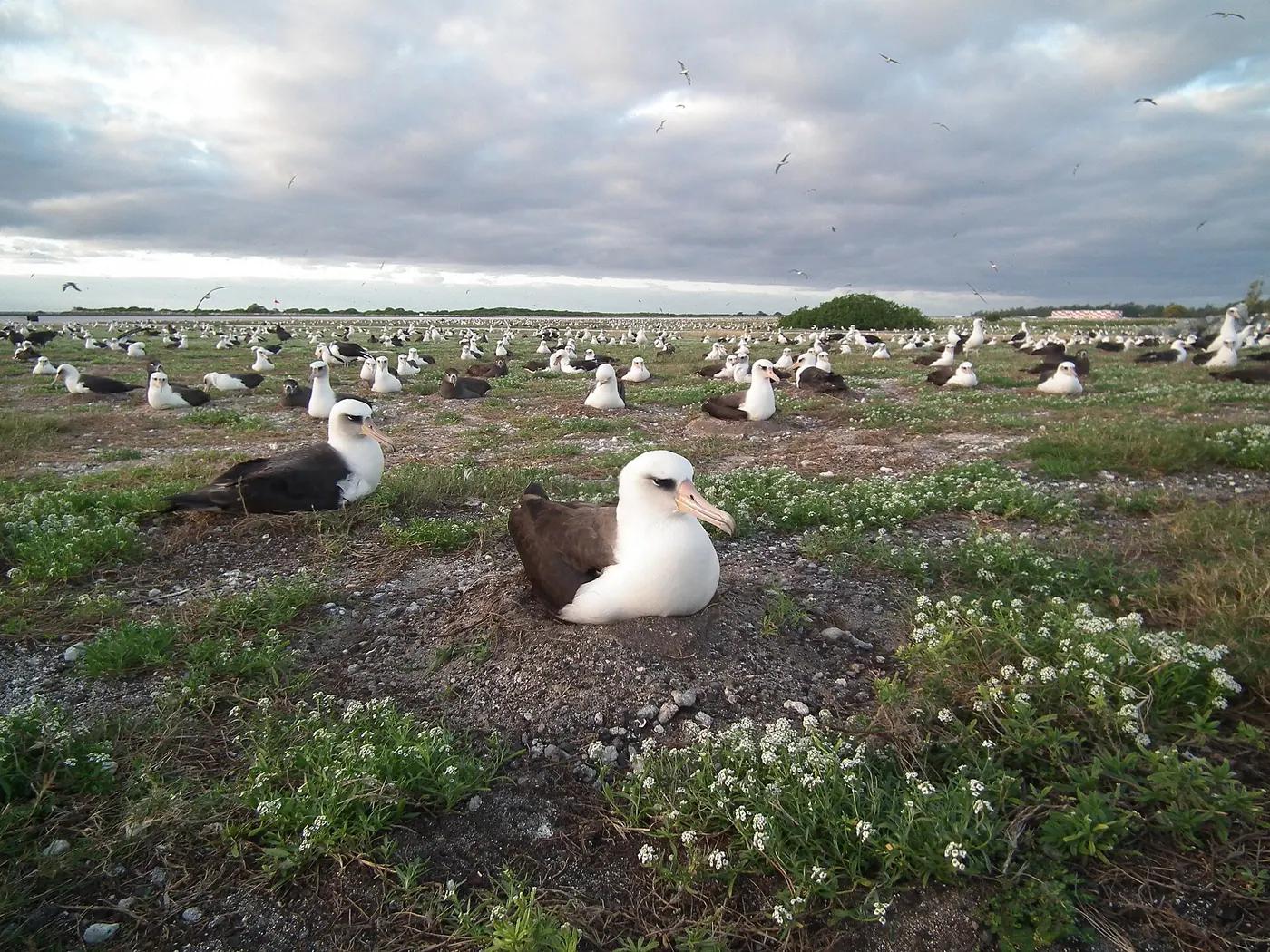
In 1956, ornithologist Chandler Robbins fitted a band to a Laysan albatross nesting on Midway Atoll. She had already laid an egg, and the species isn't known to breed before age 5, so she was at least 5 that day. Her age now, about 75, is an estimate and a minimum.
Robbins found her again in 2001, when she was at least 50. Her red band reads Z333, and she became known as Wisdom.
Here is the number that makes her a category of one. Since 1956, more than 250,000 birds have been banded, and the next oldest known is 52, according to Jon Plissner of the US Fish and Wildlife Service (USFWS), speaking to NPR in early 2025. Wisdom isn't a little older than the field. She is more than two decades clear of it.
She also covers ground. In 2011 the US Department of the Interior estimated she flies about 50,000 miles a year, which adds up to at least 2–3 million miles (3.2–4.8 million km) since her banding. That same year she survived the tsunami that swept across Midway.
Every season she nests among more than half a million other albatross nests, and she still comes back to the same island.
More than 250,000 birds have been banded since Wisdom got her band in 1956. The next oldest one anyone knows of is 52.
Starting over
Is Wisdom the albatross still raising chicks?
Laysan albatrosses lay one egg a season. Over her life Wisdom has produced an estimated 50–60 eggs, with up to 30 chicks fledged, according to USFWS. In December 2016, at about 66, she hatched and raised another.
Then her long-time mate, Akeakamai, stopped coming back. By late 2022 he had been missing for more than a season. For a bird already past 70, that looked like the natural end of the story.
Instead, in late 2024 she was seen with a new male, band EX25, and laid an egg. The chick hatched by 30 January 2025, when Wisdom was about 74. When she returned from the ocean on 6 February, she took over chick duty so EX25 could go to sea and feed.
That same season, her son N333, hatched in 2010–11, was sitting on an egg of his own elsewhere on the island. Wisdom was, in effect, expecting a chick and a grandchick in the same season.
Now the part most headlines skip. The 2025 chick survived several months but died before it could fledge. Wisdom came back in November 2025, EX25 arrived within days, and in January 2026 USFWS confirmed she laid no egg that season, though she kept visiting the atoll.
So 'still raising chicks' is out of date. What the record does show is a bird who lost her long-time mate and started again with a new one in her seventies. The result was never in her control. The attempt was.
Slow clock
How long do Greenland sharks live, and when do they grow up?
In 2016, a team led by Julius Nielsen published the study in Science that made the Greenland shark the longest-lived vertebrate known. They worked out ages by radiocarbon-dating the eye lenses of 28 females caught by accident as bycatch.
The sharks grow about 1 cm a year. Females are thought to mature at lengths over 400 cm, which the study's figures put at around 156 years old, give or take 22. And they live at least 272 years.
The two biggest sharks, 493 cm and 502 cm long, came out at about 335 and about 392 years old. The margin of error is about ±120 years, so even the error bar is a century and change.
Measured against a human timetable, a female Greenland shark would look hopelessly behind for a century and a half. She isn't behind. She is on a slower clock, which is why she belongs on any list of the most patient animals.
A Greenland shark born around 1870 could only now be reaching breeding age.
Myth check
Did Diego the tortoise really save his species?
About 50 years before 2016, Diego's species on the island of Española was down to 2 males and 12 females. Historical records suggest there were once more than 5,000. Of 15 Galápagos giant tortoise species, 3 have already gone extinct.
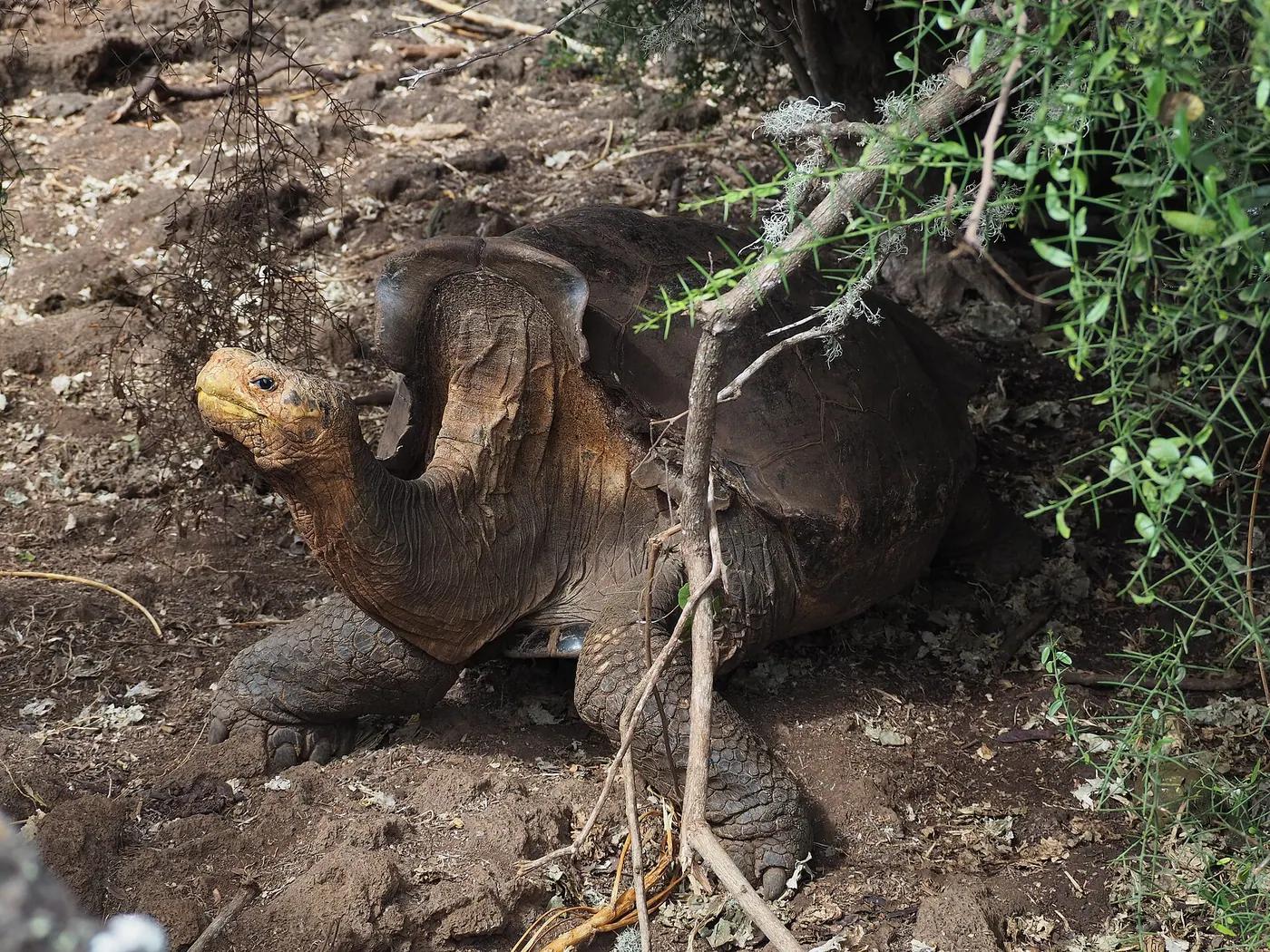
Diego, a Galápagos tortoise of about 80 kg and 90 cm, was probably taken from Española sometime between 1900 and 1959, according to Washington Tapia of Galápagos National Park. He spent decades at the San Diego Zoo before returning to the Galápagos Islands in 1976 to join the breeding programme.
He threw himself into it. Diego is credited with about 800 offspring, around 40% of the roughly 2,000 tortoises released on Española, and headlines hailed his 'sexploits' as what saved the species. He was later retired back to Española a celebrity.
Genetic testing of the released tortoises tells a quieter story. As reported by Reptiles Magazine, a male known only as E5 fathered about 60%, while a third male, E3, fathered very few. Estimates differ between outlets: CNN put E5 at twice Diego's total, which doesn't square with a 60/40 split (that works out to 1.5 times). Either way, the giant tortoise doing most of the work was the one with a code instead of a name.
Grandmothers
Why do orcas go through menopause?
As of 2015, menopause was known in only three species: humans, pilot whales and killer whales. Researchers have since documented it in more toothed whales, including false killer whales, belugas and narwhals. That makes the puzzle bigger, not smaller: why does evolution keep producing animals that stop having young and then carry on living for years?
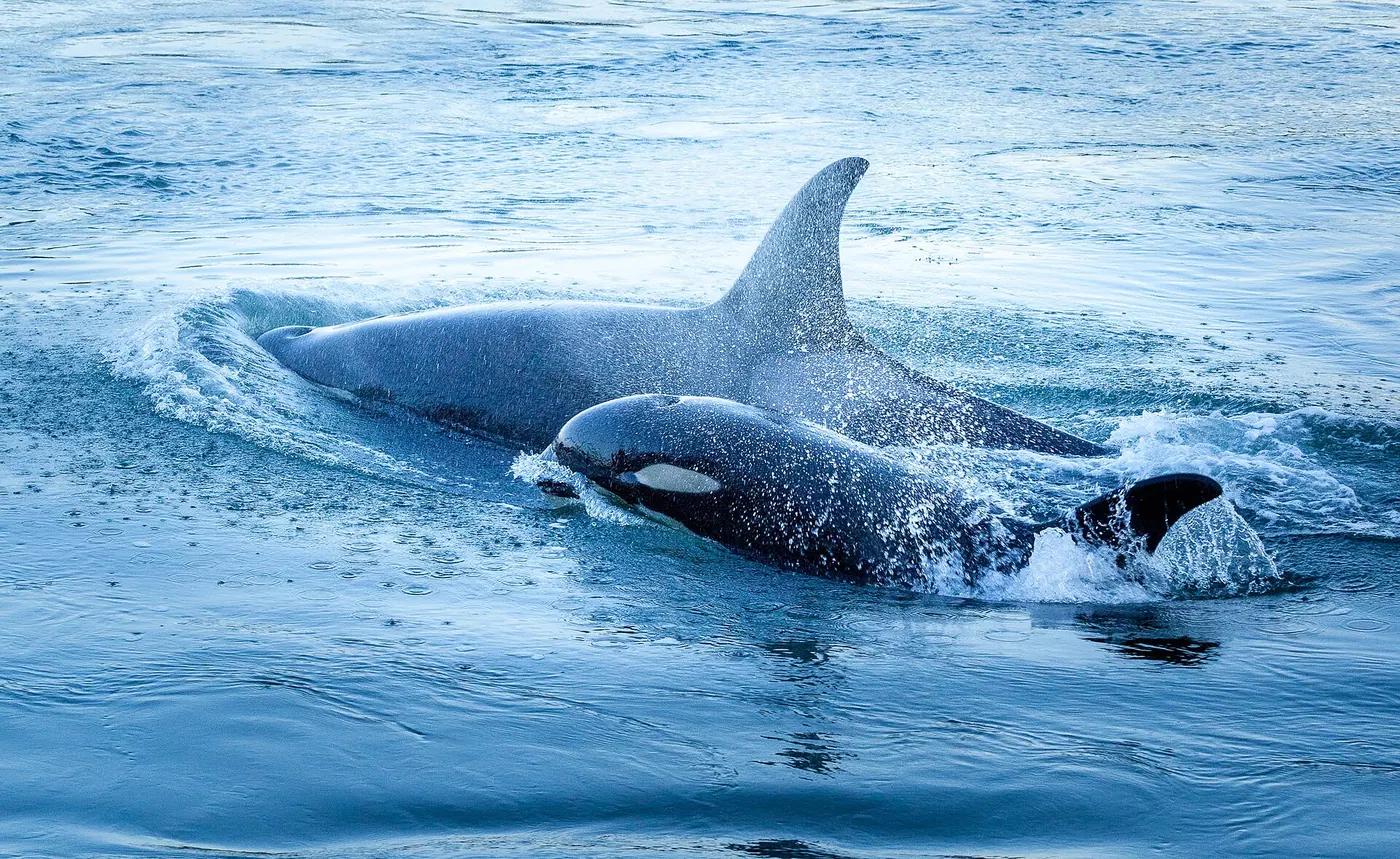
Brent, Croft and colleagues tackled it in Current Biology, using 9 years of observations of southern resident killer whales off Vancouver Island. In summer these orca eat almost nothing but Chinook salmon, so finding the fish is everything.
Females past breeding age led their groups through salmon feeding grounds. They led most in the years when salmon were scarce, exactly when a wrong turn costs the most. The study's title names the link: ecological knowledge.
Related work from Croft's group shows the same thing from the other side. When a mother dies, her adult son's risk of dying the following year rises sharply. Fully grown, he still does measurably worse without her.
So the old females aren't along for the ride. What they bring isn't calves. It's knowing where the food is when the food is hard to find.
Best reveal
Henry the tuatara: a first-time father at 111
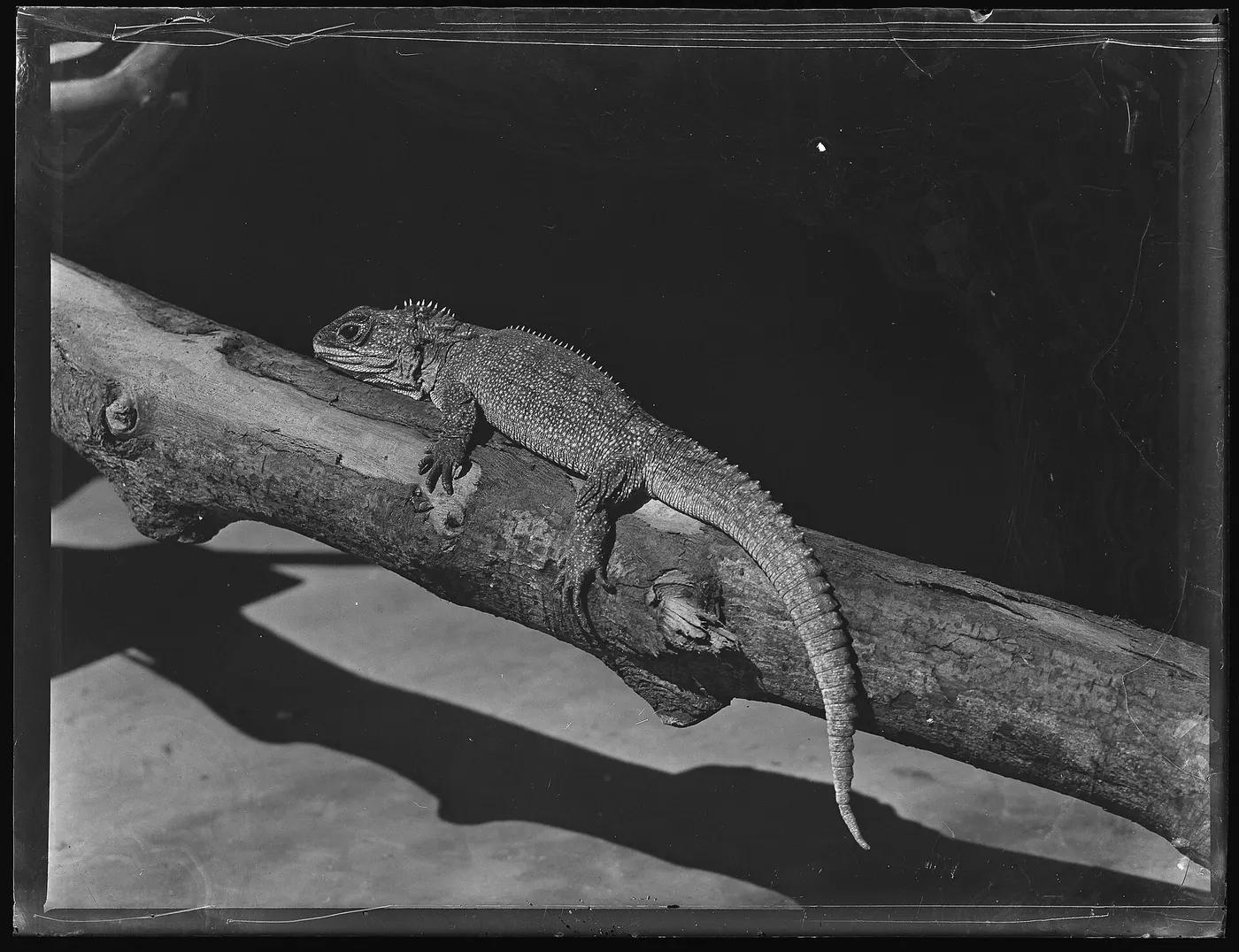
Henry arrived at the Southland Museum and Art Gallery in Invercargill, New Zealand, in 1970, at about 70 years old. He is a tuatara, and the staff hoped he would breed.
Henry had other plans. When he first arrived he attacked the girlfriend staff gave him, according to curator Lindsay Hazley. In the 1980s he turned down another female, Mildred.
Decades passed. Then, in 2008, a cancerous tumour was removed from his genital region, and his libido came back.
On 23 January 2009, Henry and Mildred's eggs hatched: all 11 of them. Henry was a first-time father at about 111, though reports put him at 110 or 111 and Mildred at about 80 or 'in her seventies'. For comparison, wild tuatara are known to still be breeding at about 60.
The best part isn't the number. For decades, Henry's lack of interest looked like simply who he was. It turned out to be something fixable.
Henry turned down Mildred in the 1980s. In 2009, at about 111, he became a first-time father: of 11.
Your clock
So, is it too late to start?
None of these animals knows anything about a 401k at 40, piano at 20 or college at 30, and the real answer to those depends on your own situation. What they do show is how often the deadline we measure ourselves against belongs to someone else's clock.
A Greenland shark spends around 156 years getting ready and isn't late. Wisdom lost her long-time mate, started again at about 74, lost that chick too, and was back on Midway the next season. Henry's 'too late' was a tumour. For more creatures that keep going after a setback, browse the most resilient animals.
Maybe the question isn't whether you missed the window. It's whose window you were looking through.
On AnimalDex you can take your own 'is it too late to start?' to one of these animals and hear how its kind would see it, whether that's an albatross on her second mate or a shark still waiting to grow up.
Pertanyaan singkat
Jawaban ringkas untuk pertanyaan yang paling sering muncul pada topik ini.
- How old is Wisdom the albatross, and is she still alive?
- Wisdom is about 75, but that is a minimum estimate: she was already breeding when she was banded in 1956, and Laysan albatrosses aren't known to breed before 5. In January 2026, USFWS reported she was still visiting Midway Atoll, though she laid no egg in the 2025–26 season.
- What is the oldest wild bird?
- Wisdom, a Laysan albatross on Midway Atoll, is the oldest known wild bird. More than 250,000 birds have been banded since she was in 1956, and the next oldest known is 52.
- How long do Greenland sharks live, and when do they become adults?
- A 2016 study led by Julius Nielsen estimated they live at least 272 years, with the largest shark put at about 392, give or take about 120 years. Females are thought to mature at over 400 cm long, which works out to around 156 years old, give or take 22.
- Did Diego the tortoise really save his species?
- Only partly. Diego is credited with about 800 offspring, around 40% of the tortoises released on Española, but genetic testing showed a quieter male, E5, fathered about 60%. Outlets differ on the exact split, but every version has E5 ahead.
- Why do orcas go through menopause?
- One leading explanation comes from a 2015 Current Biology study by Brent, Croft and colleagues. Over 9 years, they found that killer whale females past breeding age led their groups to salmon, and led most when salmon were scarce, suggesting their ecological knowledge keeps the family fed.
- Is it too late to learn piano at 20 or 30?
- That depends on you, not on an albatross. What these animals show is that the deadline people fear often belongs to a different clock: Wisdom started again with a new mate at about 74, and Henry the tuatara became a first-time father at about 111.
Hewan yang disebut
Lompat dari artikel ini ke halaman spesies di balik contoh, catatan systems, dan referensi field guide.
Sources and further reading
- Earth.com: A biologist banded her in 1956, and the world's oldest known wild bird is still nesting on the same island today
- ScienceDaily: Longest-lived vertebrate is Greenland shark: Lifespan of 400 years
- Phys.org: Sexploits of Diego the Tortoise save Galapagos species
- Reptiles Magazine: Diego the Galápagos tortoise returned to the wild
- CNN: Diego the Galápagos tortoise and the fight against extinction
- Current Biology: Ecological Knowledge, Leadership, and the Evolution of Menopause in Killer Whales
- Science: Menopausal killer whales are family leaders
- Wikipedia: Henry (tuatara)
- Wikipedia: Tuatara
- ABC: Henry the reptile becomes father at 111
Panduan jawaban terkait topik ini
Kalau kamu ingin perbandingan langsung dan rekomendasi yang jelas, lanjutkan ke halaman jawaban berikut.
Best Animal Identification Apps
Compare the best animal identification apps by features like photo/video identification, species coverage, collection capabilities, offline use, and more.
What Is Animal Collecting
Learn what animal collecting means in modern apps and how AnimalDex turns real-world sightings into cards, sets, rarity, and species learning.
Pokemon-Like Animal App
Looking for a Pokemon-like app with real animals? AnimalDex is something else: take any idea to a real animal for a genuinely different take, and every animal you meet in the wild joins your collection.