
Red-spotted Guard Crab
Prinsip spesies: Armored Courtesy
Step with armor.
Protection does not need to become clumsy or rude.
Reef crabs use hard exoskeletons, claws, and careful movement among coral or rocky crevices to feed and avoid danger.
Kekuatan Hewan
Step with armor.
Hewan di sini menunjukkan kekuatan yang serupa melalui perilakunya di alam. Setiap spesies tetap punya prinsip, pelajaran, makna, dan halaman field guide sendiri.
74 spesies
Prinsip spesies: Armored Courtesy
Step with armor.
Protection does not need to become clumsy or rude.
Reef crabs use hard exoskeletons, claws, and careful movement among coral or rocky crevices to feed and avoid danger.
Prinsip spesies: Venomous Stillness
Do not step here.
A boundary can be quiet until someone ignores it.
Stonefish are camouflaged bottom-dwellers with venomous dorsal spines, relying on stillness and painful defense in reef or coastal habitats.
Prinsip spesies: Pair Steadiness
Guard the pair.
A bond becomes stronger when both bodies stand at the edge.
Ruddy Shelducks are often seen in pairs and are known for strong pair bonds, territorial behavior near wetlands, and vocal guarding around breeding areas.
Prinsip spesies: Moving Shelter
Bring your shelter.
A slow pace is not weakness when the shield never leaves.
Russian tortoises are hardy burrowing reptiles adapted to dry steppe and semi-desert conditions.
Prinsip spesies: Territorial Bluff
Open wide.
Defend the small space that keeps your life intact.
Sarcastic Fringeheads occupy shelters such as crevices or shells and use dramatic mouth-gaping contests to settle territorial disputes.
Prinsip spesies: Gentle Armor
Guard the gentle.
A sturdy outside can protect a gentle pace.
Shingleback Skinks have heavy armored bodies, short tails that resemble the head, and blue-tongue threat displays used to deter predators.
Prinsip spesies: Defense
Raise the quills.
When protection is built into you, you can move without asking permission.
Southern African Porcupines are nocturnal rodents with long defensive quills. When threatened, they raise and rattle quills, back toward danger, and make themselves difficult to attack.
Prinsip spesies: Theatrical Defense
Defend with Drama.
The Southern Lapwing uses dramatic displays, like pretending to be injured, to distract predators and protect its nest, showcasing the power of creative deception in defense.
The Southern Lapwing performs injury-feigning displays to lure predators away from its nest, ensuring the safety of its young.
Prinsip spesies: Closure
Close the shell.
Some problems are solved by becoming impossible to open.
Southern Three-banded Armadillos are among the armadillos able to roll completely into a tight armored ball when threatened, protecting soft parts inside.
Prinsip spesies: Internal Defense
Raise the ribs.
A flexible defender can turn its own frame into a warning.
Spanish Ribbed Newts can push rib tips through the skin as a defensive mechanism, aided by toxin-bearing skin secretions when threatened.
Prinsip spesies: Wrapped Protection
Wrap the delicate work.
Great protection can wrap around delicate, patient work.
Sunda Pangolins have overlapping keratin scales for defense and long sticky tongues for feeding on ants and termites at night.
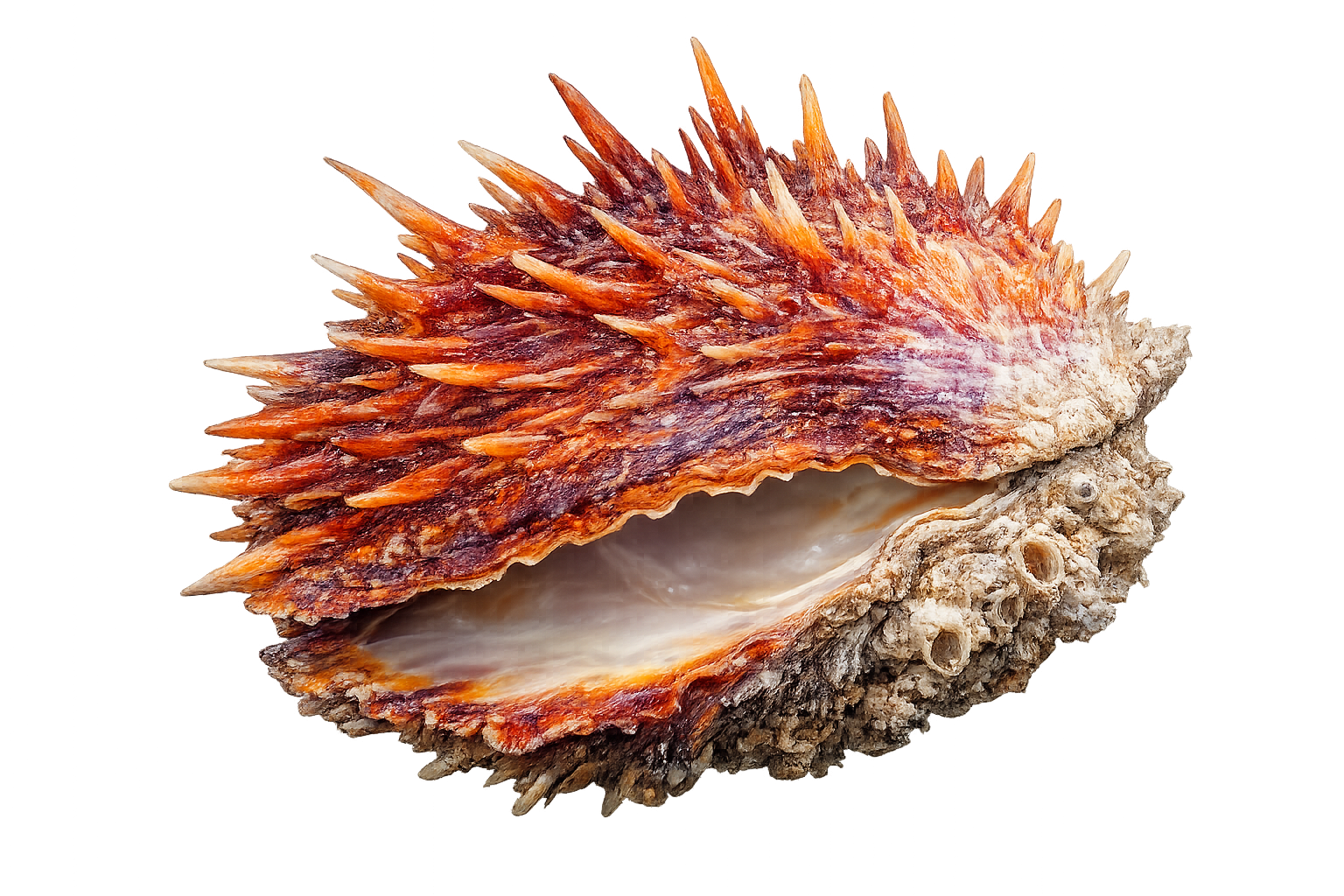
Prinsip spesies: Spined Display
Stand spined.
Strong defenses can still be vivid and hard to ignore.
Thorny oysters cement to reef and grow long spines that deter predators while showing bold color on tropical hard bottoms.
Prinsip spesies: Defensive Texture
Make pressure costly.
Soft bodies can survive by making contact costly.
Thorny stick insects use plant mimicry and spines as protection against predators.
Prinsip spesies: Explosive Release
Snap and launch.
A single sharp tool can become both weapon and escape.
Trap-jaw Ants close their mandibles at extreme speeds to capture prey, defend themselves, and even launch their bodies away from threats.
Prinsip spesies: Alternative Weapon
Grow the other weapon.
When the usual crown is absent, another weapon can speak.
Tufted Deer have small or hidden antlers and elongated canine tusks, especially in males, used in display or conflict in forested mountain habitats.
Prinsip spesies: Velvet Snap
Snap bigger than size.
Attitude becomes protection when size is not enough.
Velvet Swimming Crabs are agile coastal crabs with paddle-like rear legs and a famously defensive posture.
Prinsip spesies: Repulsion
Leave the warning.
A boundary can be remembered by the scent it leaves behind.
Vinegaroons are whip scorpions that defend themselves by spraying acetic acid-like fluid, producing a vinegar smell that deters predators.
Prinsip spesies: Unusual Answer
Use the other weapon.
The expected tool is not the only way to solve the field.
Water Deer lack antlers but males have elongated canine tusks used in display and combat, especially in wet meadows and reed habitats.