
Panduan lapangan hewan
Chameleon
Identifikasi, habitat, rarity, perilaku, simbolisme, fakta, dan pelajaran praktis dari alam.
The still color-shifting watcher animal. The Chameleon is a slow climbing lizard with eyes that can look in different directions. It likes to stay still, blend in, and shoot out its tongue when the bug is close enough. In human life, that means flexibility keeps us effective when the world changes around us.
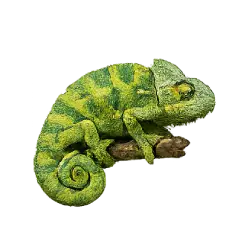
Kartu AnimalDex
Buka kartu hewan ini
Pindai atau tangkap hewan ini dengan AnimalDex untuk membuka kartu koleksi dan menambahkannya ke koleksi satwa liarmu.
Dapatkan AnimalDexNama ilmiah
Chamaeleonidae
Kategori
Reptile
Habitat
Forest edges, scrub, savannah woodland, and garden habitats with vertical structure and insect prey.
Rarity
Uncommon · 58/100
Native range
Most diverse in Madagascar and Africa, with additional species in southern Europe, the Middle East, and Asia.
Precision
Target what matters most.
Apa yang diajarkannya
Do not confuse stillness with inactivity. Good surveillance buys better timing than constant motion.
Bukti alam
Independently mobile eyes, a ballistic tongue, and branch-gripping feet let a chameleon scan multiple angles before converting visual lock into a precise strike. Chameleons operate as small-scale insect regulators in arboreal environments. They show how patient sensory coverage can stabilize a niche without high-speed roaming or constant conflict.
Gunakan untuk
Tangkapan Chameleon berperingkat
Belum ada tangkapan komunitas berperingkat untuk spesies ini.
Mengapa Precision?
Alasan di balik Prinsip Hewan ini dan biologi yang mendukungnya.
Chameleons are visually specialized lizards built for slow arboreal hunting, color change, and precise tongue-based prey capture.
Cara mengidentifikasi Chameleon
- Laterally compressed body with turret-like eyes
- Grasping feet and often a curled prehensile tail
- Slow swaying movement through branches and shrubs
Kenapa Chameleon menarik
- Chameleons combine visual surveillance and ballistic feeding in a very compact design.
- They are strong examples of how patience can be an active hunting strategy.
Habitat: Forest edges, scrub, savannah woodland, and garden habitats with vertical structure and insect prey.
Native range: Most diverse in Madagascar and Africa, with additional species in southern Europe, the Middle East, and Asia.
nativeRangeCardTitle
nativeRangeCardDescription
Forest edges, scrub, savannah woodland, and garden habitats with vertical structure and insect prey.
To find Chameleon in the wild, focus on the exact habitat patches that match its body design and daily behavior, not just the broad country where it exists. You usually do better by working one good piece of habitat inside most diverse in Madagascar and Africa, with additional species in southern Europe, the Middle East, and Asia. than by covering too much ground.
- Forest edge, canopy gaps, fruiting trees, or shaded trails where cover and food meet
- Open grassland edges, lightly wooded plains, or raised ground where you can scan long distances
- Sunlit logs, exposed branches, warm rocks, or regular perch sites used for scanning
- Start early, pick one strong patch of habitat, and stay long enough for movement to return after you arrive.
- Work edges, clearings, fruiting trees, and stream crossings rather than walking randomly through dense cover.
- Warm rocks, trail edges, fallen timber, and quiet water margins are usually better than heavily disturbed ground.
Most chameleons are insect-eaters that hunt by waiting, aiming, and striking with a rapid tongue. Their diet centers on live prey small enough to swallow whole.
- Insects such as crickets, flies, beetles, and grasshoppers
- Spiders and other small invertebrates
- Occasional larger prey for bigger species
Food choice depends on body size, habitat structure, and how much moving prey is available in the vegetation.
- Tracks different parts of the scene with independently moving eyes
- Holds still for long periods before rapid tongue projection
- Uses posture and color shifts for stress, display, and thermal regulation
Chameleon most often symbolizes precision in AnimalDex because its real survival behavior repeatedly shows this pattern.
Do not confuse stillness with inactivity. Good surveillance buys better timing than constant motion.
Independently mobile eyes, a ballistic tongue, and branch-gripping feet let a chameleon scan multiple angles before converting visual lock into a precise strike. Chameleons operate as small-scale insect regulators in arboreal environments. They show how patient sensory coverage can stabilize a niche without high-speed roaming or constant conflict.
- Search branches slowly instead of handling vegetation aggressively.
- Do not force color-change responses by crowding or touching the animal.
- Anole species
- Leaf-tailed gecko
- Small iguanian lizards
statsTitle
statsDescription
statsSourceLabel: statsSourceGenerated
dominanceStat
53
speedStat
41
sizeStat
40
intelligenceStat
30
rarityStat
58%
Total
222
Size scale
Medium
Uses the canonical size stat for consistent placement


US$181 – US$375
Perkiraan rentang nilai
Kepercayaan 60%
Perkiraan nilai AnimalDex dibuat dari stat spesies kanonik.
Not a marketplace listing.
Perkiraan nilai berdasarkan hewan yang teridentifikasi dan konteks harga yang tersedia. Bukan daftar marketplace.
Seberapa langka Chameleon?
Rarity: Uncommon (58/100)
Some chameleons are widespread, but many species have small ranges and lose ground quickly when forests and shrub habitats are fragmented.
Systems Intelligence & Hidden Purpose
Sudut pandang systems biology untuk melihat bagaimana spesies ini dibangun, peran apa yang dijalankannya di ekosistem, dan pelajaran praktis apa yang bisa dipetik manusia.
System Role
The Directional Surveillance Turret
Chameleon
Specialized Hardware
Independently mobile eyes, a ballistic tongue, and branch-gripping feet let a chameleon scan multiple angles before converting visual lock into a precise strike.
Systems Script
Chameleons operate as small-scale insect regulators in arboreal environments. They show how patient sensory coverage can stabilize a niche without high-speed roaming or constant conflict.
Strategic Insight
Do not confuse stillness with inactivity. Good surveillance buys better timing than constant motion.
Public Animal Power
Explore this Animal Power
This is a public capture, so you can explore its Animal Power here. Personal Apex matches and challenges use your Wild Profile and animals you own.
Own an animal with this power to use it in Growth challenges.
Hewan terkait
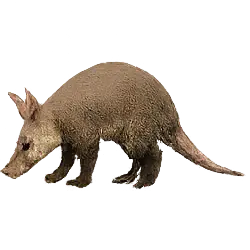
Aardvark
The aardvark is a nocturnal African mammal known for its long snout, strong digging…
Baca panduan spesies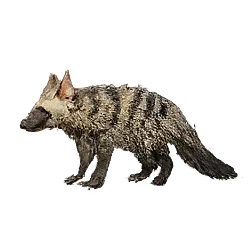
Aardwolf
The aardwolf is a small striped relative of hyenas that feeds mainly on termites rather…
Baca panduan spesies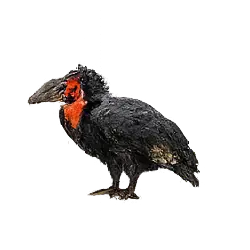
Abyssinian Ground Hornbill
Abyssinian Ground Hornbill is a bird known for bare red facial skin, huge…
Baca panduan spesiesLebih banyak hewan dengan kekuatan Timing
Jelajahi semua hewan Timing
Bawa ensiklopedia ke dunia nyata
AnimalDex membantumu memindai hewan nyata, mengidentifikasi spesies, mengoleksi kartu, dan belajar dari alam di mana pun kamu berada.
Panduan blog terkait
Lanjutkan belajar lewat artikel praktis yang terhubung dengan spesies ini.
Chameleon Symbolism: Directional Vision, Patient Surveillance & Color Truth
Explore chameleon symbolism through independently mobile eyes, color change, ballistic precision, and the archetype of targeting what matters most.
Baca artikel blogHow Chameleons See and Strike: Vision, Behavior, and Survival Strategy
Learn how chameleon vision, camouflage, tongue mechanics, animal behavior, and ecosystem role make this reptile an elite patient hunter.
Baca artikel blogMuncul di tier list
Lihat posisi spesies ini di halaman tier list AnimalDex yang dibangun dengan perbandingan terstruktur dan metodologi yang jelas.
#3 · Camouflage
Animals with the Best Camouflage: Top 100 Tier List
Chameleon deserves a top slot because it combines camouflage with exceptional visual control and branch-level positioning.
Baca tier list#7 · Eyesight
Animals with the Best Eyesight: Top 100 Tier List
Chameleon deserves a place because its turreted eyes solve a very different but very effective visual problem.
Baca tier list