
Panduan lapangan hewan
Indian Peafowl
Identifikasi, habitat, rarity, perilaku, simbolisme, fakta, dan pelajaran praktis dari alam.
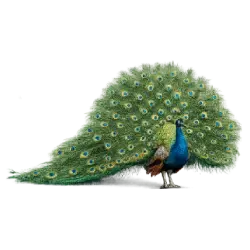
The Royal Feather Showman. The Indian Peafowl lifts its giant fan of shining tail feathers and lets the whole display shimmer in the light. It teaches us that sharing our gifts can turn attention into wonder.
Nama ilmiah
Pavo cristatus
Kategori
Bird
Habitat
Dry forest edge, scrub, farmland, temple grounds, and village mosaic with cover and open feeding ground.
Rarity
Relatively common · 30/100
Native range
Indian subcontinent, with introduced populations in some other regions.
Magnificence
Open the fan.
Train-Fan Courtship
Apa yang diajarkannya
Some gifts are meant to be opened fully in the light.
Coba
You keep getting overlooked, so you show your best work more boldly.
Bukti alam
Male Indian Peafowl display elongated ornamental train feathers in a large fan during courtship, often vibrating or positioning the train to attract female attention.
Gunakan untuk
Tangkapan Indian Peafowl berperingkat
4 tangkapan berperingkat dalam grup ini dari kolektor AnimalDex.
Mengapa Magnificence?
Alasan di balik Prinsip Hewan ini dan biologi yang mendukungnya.
The Indian peafowl is a large pheasant known for shimmering plumage, loud calls, and elaborate train displays in open woodland and human-modified landscapes.
Cara mengidentifikasi Indian Peafowl
- Male shows metallic blue neck and massive eye-spotted tail train
- Crested head and long legs on a heavy ground bird frame
- Females are browner with green neck tones and no long train
Kenapa Indian Peafowl menarik
- Peafowl are classic examples of display-driven selection made visually obvious.
- They are also surprisingly practical omnivores rather than decorative specialists.
Habitat: Dry forest edge, scrub, farmland, temple grounds, and village mosaic with cover and open feeding ground.
Native range: Indian subcontinent, with introduced populations in some other regions.
nativeRangeCardTitle
nativeRangeCardDescription
Dry forest edge, scrub, farmland, temple grounds, and village mosaic with cover and open feeding ground.
To find Indian Peafowl in the wild, focus on the exact habitat patches that match its body design and daily behavior, not just the broad country where it exists. You usually do better by working one good piece of habitat inside indian subcontinent, with introduced populations in some other regions. than by covering too much ground.
- Forest edge, canopy gaps, fruiting trees, or shaded trails where cover and food meet
- Protected habitat blocks within indian subcontinent, with introduced populations in some other regions.
- Start early, pick one strong patch of habitat, and stay long enough for movement to return after you arrive.
- Work edges, clearings, fruiting trees, and stream crossings rather than walking randomly through dense cover.
- Slow down and scan shapes, outlines, and eye-level silhouettes; many good sightings come from noticing what does not move.
Seeds, grains, shoots, fruit, insects, small reptiles, and other small animals support the lesson because the peafowl’s beauty is grounded in practical foraging. Display is carried by a body that still has to feed.
Leopards, dogs, jackals, pythons, mongooses, raptors, and nest predators pressure peafowl to stay alert despite their ornament. The train is magnificent, but survival still depends on roosting, alarm calls, and cover.
Indian Peafowl are active by day, foraging, calling, and displaying in light, then roosting high in trees at night. Their rhythm saves the full fan for visible hours.
Indian Peafowl can live for many years, especially where roosts and food are secure. Magnificence is not a one-day costume; it is a repeated breeding-season investment carried by a practical foraging body.
Females lay eggs in ground nests and raise peachicks that must follow, hide, and feed soon after hatching. Offspring keep the display honest because visual glory still has to lead to survival on the ground.
Sex difference is central: males carry the huge train and brilliant colors, while females are more cryptic. Magnificence belongs especially to male courtship, while female camouflage protects the next generation.
- Feeds on seeds, shoots, insects, and small animals on the ground
- Roosts in trees despite spending much of the day on foot
- Uses loud calls and visual display during breeding season
Indian Peafowl most often symbolizes magnificence in AnimalDex because its real survival behavior repeatedly shows this pattern.
Some gifts are meant to be opened fully in the light.
Male Indian Peafowl display elongated ornamental train feathers in a large fan during courtship, often vibrating or positioning the train to attract female attention.
- Give displaying males room and avoid walking through active lek areas.
- Watch dawn and dusk edges where birds move between roost and feeding ground.
- Green peafowl
- Domestic peafowl variants
- Large pheasant species
0/1 XP toward Level 2
statsTitle
statsDescription
statsSourceLabel: statsSourceSpeciesProfile
dominanceStat
50
speedStat
53
sizeStat
28
intelligenceStat
42
rarityStat
30%
Total
203
Size scale
Medium
Uses the canonical size stat for consistent placement




US$124 – US$258
Perkiraan rentang nilai
Kepercayaan 69%
Perkiraan nilai AnimalDex dibuat dari stat spesies kanonik.
Not a marketplace listing.
Perkiraan nilai berdasarkan hewan yang teridentifikasi dan konteks harga yang tersedia. Bukan daftar marketplace.
Seberapa langka Indian Peafowl?
Rarity: Relatively common (30/100)
Indian peafowl remain common in many parts of their range and tolerate human presence where hunting pressure is low.
Systems Intelligence & Hidden Purpose
Sudut pandang systems biology untuk melihat bagaimana spesies ini dibangun, peran apa yang dijalankannya di ekosistem, dan pelajaran praktis apa yang bisa dipetik manusia.
System Role
The Display-Weighted Forager
Indian Peafowl
Specialized Hardware
Ground-running legs, omnivorous feeding hardware, and visually extravagant male trains make peafowl a blend of practical forager and display machine.
Systems Script
Peafowl connect insect control, seed use, and visual signaling in human-adjacent landscapes. They prove that showmanship can coexist with very practical resource use.
Strategic Insight
A system can carry a costly display only if the operational core still works.
Public Animal Power
Explore this Animal Power
This is a public capture, so you can explore its Animal Power here. Personal Apex matches and challenges use your Wild Profile and animals you own.
Own an animal with this power to use it in Growth challenges.
Comparison hearts ready
3 of 3 hearts remaining. Each loss removes 1 heart.
✦ Available actions
Compare this public animal when your deck meets the current rules.
⚡CompareUnavailable›Hewan terkait
Aardvark
The aardvark is a nocturnal African mammal known for its long snout, strong digging…
Baca panduan spesies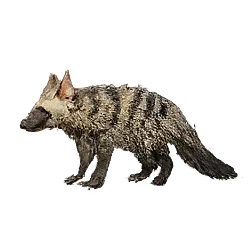
Aardwolf
The aardwolf is a small striped relative of hyenas that feeds mainly on termites rather…
Baca panduan spesies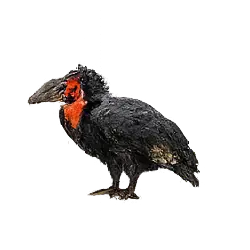
Abyssinian Ground Hornbill
Abyssinian Ground Hornbill is a bird known for bare red facial skin, huge…
Baca panduan spesiesLebih banyak hewan dengan kekuatan Attraction
Jelajahi semua hewan Attraction
Bolas Spider
Bolas Spider expresses Scented Snare through real survival details, not a generic…
Baca panduan spesies
Featherfin Cichlid
Bower-making Cichlid is framed by Sand-Circle Display: a fish whose body and habits…
Baca panduan spesies
Fire-maned Bowerbird
The Fire-maned Bowerbird turns display into craft. Its lesson is that desire is shaped…
Baca panduan spesiesBawa ensiklopedia ke dunia nyata
AnimalDex membantumu memindai hewan nyata, mengidentifikasi spesies, mengoleksi kartu, dan belajar dari alam di mana pun kamu berada.
Comparisons terkait
Lihat bagaimana spesies ini tampil di halaman perbandingan AnimalDex yang terstruktur.
Greater Bird-of-Paradise vs Indian Peafowl: Which Display Bird Is More Agile?
Greater bird-of-paradise usually has the agility edge because it stays lighter, more arboreal, and more maneuverable through display space. Indian peafowl carries more size and ground-based presence than fine aerial or branch agility.
Baca halaman comparisonMuncul di tier list
Lihat posisi spesies ini di halaman tier list AnimalDex yang dibangun dengan perbandingan terstruktur dan metodologi yang jelas.
#5 · Culture
Most Sacred Animals in History: Top 100 Tier List
Indian peafowl earns a high slot because beauty and sacred symbolism overlap strongly in South Asian religious traditions.
Baca tier list