
Panduan lapangan hewan
Orangutan
Identifikasi, habitat, rarity, perilaku, simbolisme, fakta, dan pelajaran praktis dari alam.
The Keen Survivor. Orangutan handles daily life with a body and senses shaped for its own world. It teaches that real strength often comes from knowing how to use what you already have.

Kartu AnimalDex
Buka kartu hewan ini
Pindai atau tangkap hewan ini dengan AnimalDex untuk membuka kartu koleksi dan menambahkannya ke koleksi satwa liarmu.
Dapatkan AnimalDexNama ilmiah
Pongo spp.
Kategori
Mammal
Habitat
Lowland rainforest, peat swamp forest, hill forest, and mixed tropical canopy systems.
Rarity
Very rare · 89/100
Native range
Restricted to Borneo and Sumatra, with different species and isolated populations across remaining forests.
Memory
Learn slowly. Retain deeply.
Apa yang diajarkannya
Slow learning can outperform fast reacting in complex environments.
Bukti alam
Orangutans rely on long learning windows, strong spatial memory, and deliberate movement to navigate changing canopy routes.
Gunakan untuk
Tangkapan Orangutan berperingkat
Belum ada tangkapan komunitas berperingkat untuk spesies ini.
Mengapa Memory?
Alasan di balik Prinsip Hewan ini dan biologi yang mendukungnya.
Orangutans are large arboreal apes famous for deliberate movement, long learning periods, and strong dependence on complex tropical forest canopies.
Cara mengidentifikasi Orangutan
- Long reddish fur with very long arms and grasping hands
- Slow controlled climbing in the upper forest canopy
- Large adult males may show broad cheek pads and throat sacs
Kenapa Orangutan menarik
- Orangutans reveal how intelligence can be shaped by long-term forest memory rather than social crowding.
- They are key flagship animals for Southeast Asian rainforest conservation.
Habitat: Lowland rainforest, peat swamp forest, hill forest, and mixed tropical canopy systems.
Native range: Restricted to Borneo and Sumatra, with different species and isolated populations across remaining forests.
nativeRangeCardTitle
nativeRangeCardDescription
Lowland rainforest, peat swamp forest, hill forest, and mixed tropical canopy systems.
To find Orangutan in the wild, focus on the exact habitat patches that match its body design and daily behavior, not just the broad country where it exists. You usually do better by working one good piece of habitat inside restricted to Borneo and Sumatra, with different species and isolated populations across remaining forests. than by covering too much ground.
- Quiet marsh edges, reedbeds, river bends, or shallow wetland margins
- Forest edge, canopy gaps, fruiting trees, or shaded trails where cover and food meet
- Protected habitat blocks within restricted to Borneo and Sumatra, with different species and isolated populations across remaining forests.
- Start early, pick one strong patch of habitat, and stay long enough for movement to return after you arrive.
- Work edges, clearings, fruiting trees, and stream crossings rather than walking randomly through dense cover.
- Move quietly, stop often, and give the habitat time to settle; many mammals and insects show themselves only after the first pause.
Orangutan has a mammal diet shaped by anatomy, habitat, and competition. The exact food mix depends on whether the species is built more for hunting, grazing, browsing, or omnivory.
- Plant material, prey, or both depending on species design
- Seasonally abundant foods in the local habitat
- Higher-value foods that match energy demands
The food available in lowland rainforest, peat swamp forest, hill forest, and mixed tropical canopy systems. often matters as much as the species' ideal diet.
- Builds fresh night nests in trees from bent branches and leaves
- Learns food routes, seasonal fruit timing, and travel structure over years
- Moves carefully to avoid falls and wasted energy in the canopy
Orangutan most often symbolizes memory in AnimalDex because its real survival behavior repeatedly shows this pattern.
Slow learning can outperform fast reacting in complex environments.
Orangutans rely on long learning windows, strong spatial memory, and deliberate movement to navigate changing canopy routes.
- Keep strict disease-safe distance and follow all sanctuary or field guide rules.
- Observe quietly from below rather than trying to reposition under every movement.
- Gibbon at distance
- Young gorilla in images
- Proboscis monkey in canopy silhouette
statsTitle
statsDescription
statsSourceLabel: statsSourceSpeciesProfile
dominanceStat
61
speedStat
49
sizeStat
42
intelligenceStat
68
rarityStat
89%
Total
309
Size scale
Large
Uses the canonical size stat for consistent placement



US$281 – US$585
Perkiraan rentang nilai
Kepercayaan 60%
Perkiraan nilai AnimalDex dibuat dari stat spesies kanonik.
Not a marketplace listing.
Perkiraan nilai berdasarkan hewan yang teridentifikasi dan konteks harga yang tersedia. Bukan daftar marketplace.
Seberapa langka Orangutan?
Rarity: Very rare (89/100)
Orangutans are highly threatened by deforestation, fragmentation, and conflict in a very limited geographic range.
Systems Intelligence & Hidden Purpose
Sudut pandang systems biology untuk melihat bagaimana spesies ini dibangun, peran apa yang dijalankannya di ekosistem, dan pelajaran praktis apa yang bisa dipetik manusia.
System Role
The Arboreal Problem Solver
Orangutan
Specialized Hardware
Long, powerful arms, hook-like hands and feet, strong spatial memory, and an unusually long learning period make orangutans high-capacity canopy navigation and problem-solving hardware.
Systems Script
Orangutans disperse seeds, prune movement routes through the canopy, and help maintain forest regeneration over long timescales. Their niche rewards cognition, patience, and memory more than constant aggression.
Strategic Insight
Complex environments do not always reward speed first. Sometimes the edge comes from learning slowly enough that the model actually holds.
Public Animal Power
Explore this Animal Power
This is a public capture, so you can explore its Animal Power here. Personal Apex matches and challenges use your Wild Profile and animals you own.
Own an animal with this power to use it in Growth challenges.
Hewan terkait
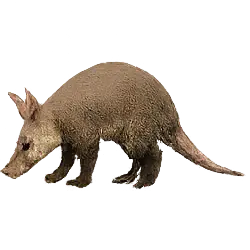
Aardvark
The aardvark is a nocturnal African mammal known for its long snout, strong digging…
Baca panduan spesies
Aardwolf
The aardwolf is a small striped relative of hyenas that feeds mainly on termites rather…
Baca panduan spesies
Abyssinian Ground Hornbill
Abyssinian Ground Hornbill is a bird known for bare red facial skin, huge…
Baca panduan spesiesLebih banyak hewan dengan kekuatan Strategy
Jelajahi semua hewan Strategy

Bawa ensiklopedia ke dunia nyata
AnimalDex membantumu memindai hewan nyata, mengidentifikasi spesies, mengoleksi kartu, dan belajar dari alam di mana pun kamu berada.
Panduan blog terkait
Lanjutkan belajar lewat artikel praktis yang terhubung dengan spesies ini.
Orangutan Symbolism: Canopy Memory, Slow Wisdom & Deliberate Intelligence
Explore orangutan symbolism through long learning windows, spatial memory, canopy navigation, and the archetype of learning slowly and retaining deeply.
Baca artikel blogHow Orangutans Think and Survive in the Canopy
Discover orangutan intelligence, canopy behavior, survival strategy, and ecosystem role through a systems view of one of the forest’s best problem solvers.
Baca artikel blogComparisons terkait
Lihat bagaimana spesies ini tampil di halaman perbandingan AnimalDex yang terstruktur.
Chimpanzee vs Orangutan: Which Ape Has the Better Edge?
Orangutan gets the stronger pure-strength verdict, while chimpanzee gets the faster, more aggressive, and more socially volatile profile.
Baca halaman comparisonDolphin vs Orangutan Intelligence: Which Animal Thinks Better?
Dolphin gets the broader intelligence edge through communication, social learning, and fluid group coordination. Orangutan remains exceptional in deliberate problem solving, memory, and tool-oriented planning, especially in structured tasks.
Baca halaman comparisonGorilla vs Orangutan: Which Ape Is Stronger?
Gorilla is the stronger overall answer because it brings much more total mass and collision power. Orangutan remains extraordinary in arm strength and climbing control, but it is built for the trees, not for overpowering a gorilla on the ground.
Baca halaman comparisonMuncul di tier list
Lihat posisi spesies ini di halaman tier list AnimalDex yang dibangun dengan perbandingan terstruktur dan metodologi yang jelas.
#6 · Rarity
Rarest Animals in the World: Top 250 Tier List
Orangutan remains one of the strongest rare-and-endangered icons because habitat loss keeps shrinking safe strongholds.
Baca tier list