
Panduan lapangan hewan
Proboscis Monkey
Identifikasi, habitat, rarity, perilaku, simbolisme, fakta, dan pelajaran praktis dari alam.
The River-Nose Leaf Swimmer. The Proboscis Monkey uses a long nose, webbed feet, and a leaf-loving belly to live along muddy river forests. It shows us that unusual features can become perfect tools.
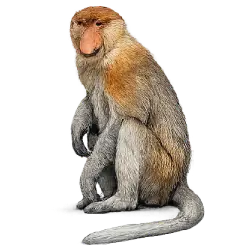
Kartu AnimalDex
Buka kartu hewan ini
Pindai atau tangkap hewan ini dengan AnimalDex untuk membuka kartu koleksi dan menambahkannya ke koleksi satwa liarmu.
Dapatkan AnimalDexNama ilmiah
Nasalis larvatus
Kategori
Mammal
Habitat
Mangroves, peat swamp forest, river edges, and lowland coastal woodland.
Rarity
Rare · 82/100
Native range
Endemic to Borneo.
Odd Utility
Use the strange tool.
River-Nose Swimming
Apa yang diajarkannya
Unusual features become perfect when the whole habitat uses them.
Coba
A big life choice needs long views, not just whoever is loudest nearby.
Bukti alam
Proboscis Monkeys live near rivers and mangroves, with enlarged noses in males, partially webbed feet, swimming ability, and leaf-specialized digestion.
Gunakan untuk
Tangkapan Proboscis Monkey berperingkat
Belum ada tangkapan komunitas berperingkat untuk spesies ini.
Mengapa Odd Utility?
Alasan di balik Prinsip Hewan ini dan biologi yang mendukungnya.
Proboscis monkeys are riverine Bornean primates famous for large noses, strong swimming ability, and social groups tied to mangroves and lowland forest edges.
Cara mengidentifikasi Proboscis Monkey
- Large pendulous nose in adult males
- Pot-bellied body with orange-brown back and pale limbs
- Long tail and confident movement through riverside trees
Kenapa Proboscis Monkey menarik
- Proboscis monkeys are excellent examples of primates adapted to swampy edge habitats rather than inland canopy life alone.
- They are signature wildlife for Borneo’s river systems.
Habitat: Mangroves, peat swamp forest, river edges, and lowland coastal woodland.
Native range: Endemic to Borneo.
nativeRangeCardTitle
nativeRangeCardDescription
nativeRangeMissingAssets
Mangroves, peat swamp forest, river edges, and lowland coastal woodland.
To find Proboscis Monkey in the wild, focus on the exact habitat patches that match its body design and daily behavior, not just the broad country where it exists. You usually do better by working one good piece of habitat inside endemic to Borneo. than by covering too much ground.
- Quiet marsh edges, reedbeds, river bends, or shallow wetland margins
- Forest edge, canopy gaps, fruiting trees, or shaded trails where cover and food meet
- Headlands, reef edges, island colonies, tidal channels, or productive coastal water
- First light and late afternoon are often best, when animals come out to feed along the edge of water.
- Work edges, clearings, fruiting trees, and stream crossings rather than walking randomly through dense cover.
- Slow down and scan shapes, outlines, and eye-level silhouettes; many good sightings come from noticing what does not move.
They eat leaves, unripe fruit, seeds, flowers, and some other plant matter. The diet supports the principle because their strange belly is not a flaw; it is the internal tool that lets them use difficult food.
Predators include crocodiles, clouded leopards, pythons, and eagles on young. Their defense includes trees, group vigilance, swimming, and choosing river-edge routes where odd abilities become protection.
Day-active, they feed and move in groups, often sleeping near rivers. The rhythm shows utility as place-based: the troop rests and travels where water and trees create escape options.
Often around 15 to 20 years in the wild. The lifespan why is that oddness becomes durable when it is used daily, not hidden or apologized for.
Females usually bear one infant, which is carried and protected within the group. Young learn river-edge life slowly, inheriting not just a body but a social map of water, leaves, and danger.
Males are much larger with bigger noses and stronger display roles; females are smaller and more infant-focused. The principle is clearest in this difference: odd features can be social tools.
- Travels in social groups linked to riverbank sleeping sites
- Crosses water confidently and swims well for a primate
- Feeds heavily on leaves, shoots, and unripe fruits
Proboscis Monkey most often symbolizes odd utility in AnimalDex because its real survival behavior repeatedly shows this pattern.
Unusual features become perfect when the whole habitat uses them.
Proboscis Monkeys live near rivers and mangroves, with enlarged noses in males, partially webbed feet, swimming ability, and leaf-specialized digestion.
- Observe from boats at slow speed without cutting off river crossings.
- Keep noise low around evening roost trees along riverbanks.
- Macaque species
- Silvered langur
- Young male proboscis monkeys before nose growth
statsTitle
statsDescription
statsSourceLabel: statsSourceSpeciesProfile
dominanceStat
54
speedStat
45
sizeStat
45
intelligenceStat
80
rarityStat
82%
Total
306
Size scale
Large
Uses the canonical size stat for consistent placement

US$272 – US$564
Perkiraan rentang nilai
Kepercayaan 69%
Perkiraan nilai AnimalDex dibuat dari stat spesies kanonik.
Not a marketplace listing.
Perkiraan nilai berdasarkan hewan yang teridentifikasi dan konteks harga yang tersedia. Bukan daftar marketplace.
Seberapa langka Proboscis Monkey?
Rarity: Rare (82/100)
The species has a limited range and relies heavily on threatened lowland wet forests and river corridors.
Systems Intelligence & Hidden Purpose
Sudut pandang systems biology untuk melihat bagaimana spesies ini dibangun, peran apa yang dijalankannya di ekosistem, dan pelajaran praktis apa yang bisa dipetik manusia.
System Role
The River-Corridor Browser
Proboscis Monkey
Specialized Hardware
Multi-chambered digestion, strong swimming ability, and group movement through mangrove and riverside canopy make proboscis monkeys wet-forest browsing hardware.
Systems Script
They tie river edges, mangroves, and lowland leaves into one living corridor system. Where they persist, riparian forest still functions as more than scenery.
Strategic Insight
Protect the corridors, not just the endpoints. Systems fail in transit before they fail on paper.
Public Animal Power
Explore this Animal Power
This is a public capture, so you can explore its Animal Power here. Personal Apex matches and challenges use your Wild Profile and animals you own.
Own an animal with this power to use it in Growth challenges.
Hewan terkait
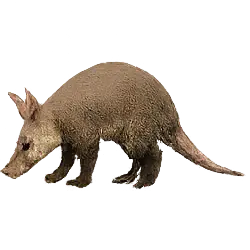
Aardvark
The aardvark is a nocturnal African mammal known for its long snout, strong digging…
Baca panduan spesies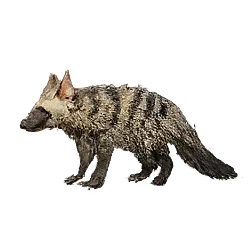
Aardwolf
The aardwolf is a small striped relative of hyenas that feeds mainly on termites rather…
Baca panduan spesies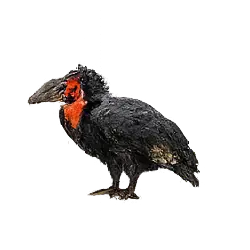
Abyssinian Ground Hornbill
Abyssinian Ground Hornbill is a bird known for bare red facial skin, huge…
Baca panduan spesiesLebih banyak hewan dengan kekuatan Habitat Fit
Jelajahi semua hewan Habitat Fit
American Pika
Mountain Pika explains Haymaking through a body and routine shaped for its exact…
Baca panduan spesies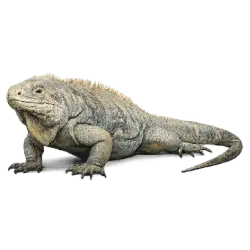
Anegada Rock Iguana
The Anegada Rock Iguana is island grounding made biological. Its traits, movement,…
Baca panduan spesies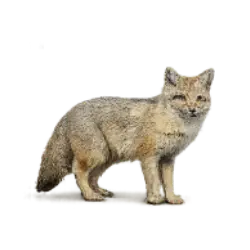
Corsac Fox
Corsac Fox is a mammal known for pale steppe coat, light dryland body, and burrow-using…
Baca panduan spesiesBawa ensiklopedia ke dunia nyata
AnimalDex membantumu memindai hewan nyata, mengidentifikasi spesies, mengoleksi kartu, dan belajar dari alam di mana pun kamu berada.
Muncul di tier list
Lihat posisi spesies ini di halaman tier list AnimalDex yang dibangun dengan perbandingan terstruktur dan metodologi yang jelas.
#7 · Reputation
Ugliest Animals in the World: Top 100 Tier List
Proboscis monkey ranks because its nose is so visually dominant that people often describe it as absurd before they notice anything else.
Baca tier list