
Panduan lapangan hewan
Red-eyed Tree Frog
Identifikasi, habitat, rarity, perilaku, simbolisme, fakta, dan pelajaran praktis dari alam.
The Flash-Eye Escaper. The Red-eyed Tree Frog uses sticky climbing feet and bright red eyes that flash open when danger gets too near. It reminds us that a surprising signal can buy us one important second.
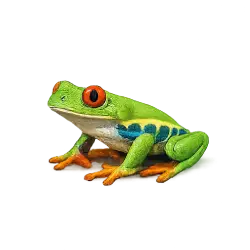
Kartu AnimalDex
Buka kartu hewan ini
Pindai atau tangkap hewan ini dengan AnimalDex untuk membuka kartu koleksi dan menambahkannya ke koleksi satwa liarmu.
Dapatkan AnimalDexNama ilmiah
Agalychnis callidryas
Kategori
Amphibian
Habitat
Lowland rainforest, wet secondary growth, and forest-edge ponds with overhanging vegetation.
Rarity
Relatively common · 48/100
Native range
Central America from southern Mexico to northwestern South America.
Startle
Flash and flee.
Flash-Eye Escape
Apa yang diajarkannya
One bright second can break the spell of danger.
Coba
A toddler tantrum shrinks when a silly song suddenly changes the mood.
Bukti alam
Red-eyed Tree Frogs use bright red eyes, vivid side colors, and sudden movement as startle coloration when disturbed, helping them escape predators.
Gunakan untuk
Tangkapan Red-eyed Tree Frog berperingkat
Belum ada tangkapan komunitas berperingkat untuk spesies ini.
Mengapa Startle?
Alasan di balik Prinsip Hewan ini dan biologi yang mendukungnya.
The red-eyed tree frog is a bright canopy amphibian known for leaf-side resting, explosive color contrast, and breeding tied to humid forest pools.
Cara mengidentifikasi Red-eyed Tree Frog
- Bright green back with vivid red eyes
- Blue and yellow flank striping and orange feet
- Usually rests flattened against leaves in the day
Kenapa Red-eyed Tree Frog menarik
- Its color pattern is one of the clearest examples of startle contrast in a frog.
- The species is a strong gateway animal for understanding tropical amphibian breeding strategies.
Habitat: Lowland rainforest, wet secondary growth, and forest-edge ponds with overhanging vegetation.
Native range: Central America from southern Mexico to northwestern South America.
nativeRangeCardTitle
nativeRangeCardDescription
Lowland rainforest, wet secondary growth, and forest-edge ponds with overhanging vegetation.
To find Red-eyed Tree Frog in the wild, focus on the exact habitat patches that match its body design and daily behavior, not just the broad country where it exists. You usually do better by working one good piece of habitat inside central America from southern Mexico to northwestern South America. than by covering too much ground.
- Quiet marsh edges, reedbeds, river bends, or shallow wetland margins
- Forest edge, canopy gaps, fruiting trees, or shaded trails where cover and food meet
- Protected habitat blocks within central America from southern Mexico to northwestern South America.
- Start early, pick one strong patch of habitat, and stay long enough for movement to return after you arrive.
- Work edges, clearings, fruiting trees, and stream crossings rather than walking randomly through dense cover.
- Warm rocks, trail edges, fallen timber, and quiet water margins are usually better than heavily disturbed ground.
Insects such as flies, moths, crickets, and small arthropods support Startle because the frog feeds by night while staying hidden by day.
Snakes, bats, birds, spiders, and small mammals threaten adults, eggs, and tadpoles. Flash color buys the tiny delay needed to flee.
Red-eyed Tree Frogs are nocturnal, resting hidden by day and calling or feeding after dark. Their rhythm saves the flash for moments of danger.
Red-eyed Tree Frogs can live several years, especially in stable humid habitat or protected care. Their life depends on repeating the cycle between hidden leaves and breeding pools.
Females lay jelly-coated eggs on leaves over water, where tadpoles can fall into pools after hatching. Egg placement links trees directly to the pond below.
Females are usually larger than males, while males call to attract mates. The Startle display belongs to both, but breeding roles differ clearly.
- Breeds on leaves above water so tadpoles drop in after hatching
- Uses still posture and closed eyes to reduce daytime visibility
- Becomes highly active during warm wet nights
Red-eyed Tree Frog most often symbolizes startle in AnimalDex because its real survival behavior repeatedly shows this pattern.
One bright second can break the spell of danger.
Red-eyed Tree Frogs use bright red eyes, vivid side colors, and sudden movement as startle coloration when disturbed, helping them escape predators.
- Use dim light at night and avoid handling leaf perches.
- Stay on trails around breeding pools to protect eggs and vegetation.
- Other Agalychnis tree frogs
- Glass frog species at quick glance
- Bright green geckos in poor light
statsTitle
statsDescription
statsSourceLabel: statsSourceSpeciesProfile
dominanceStat
12
speedStat
45
sizeStat
4
intelligenceStat
28
rarityStat
48%
Total
137
Size scale
Tiny
Uses the canonical size stat for consistent placement





US$77 – US$159
Perkiraan rentang nilai
Kepercayaan 69%
Perkiraan nilai AnimalDex dibuat dari stat spesies kanonik.
Not a marketplace listing.
Perkiraan nilai berdasarkan hewan yang teridentifikasi dan konteks harga yang tersedia. Bukan daftar marketplace.
Seberapa langka Red-eyed Tree Frog?
Rarity: Relatively common (48/100)
The species remains locally common where humid forest and breeding pools persist, but it declines with drainage and forest loss.
Systems Intelligence & Hidden Purpose
Sudut pandang systems biology untuk melihat bagaimana spesies ini dibangun, peran apa yang dijalankannya di ekosistem, dan pelajaran praktis apa yang bisa dipetik manusia.
System Role
The Startle-Signal Sleeper
Red-eyed Tree Frog
Specialized Hardware
Adhesive toe pads, bright concealed eye color, and leaf-resting camouflage make this frog arboreal hardware built for hiding until surprise becomes useful.
Systems Script
Red-eyed tree frogs operate in canopy-edge moisture systems where stillness is the main budget saver and sudden contrast buys escape time. They use visibility strategically, not constantly.
Strategic Insight
Not every capability belongs in your default state. Some advantages work best when revealed late.
Public Animal Power
Explore this Animal Power
This is a public capture, so you can explore its Animal Power here. Personal Apex matches and challenges use your Wild Profile and animals you own.
Own an animal with this power to use it in Growth challenges.
Hewan terkait
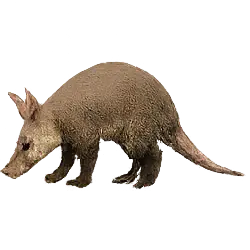
Aardvark
The aardvark is a nocturnal African mammal known for its long snout, strong digging…
Baca panduan spesies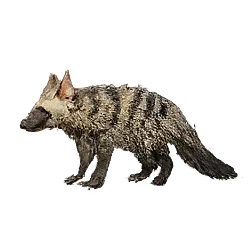
Aardwolf
The aardwolf is a small striped relative of hyenas that feeds mainly on termites rather…
Baca panduan spesies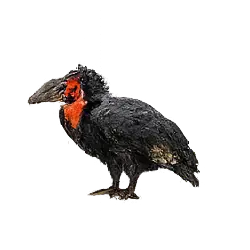
Abyssinian Ground Hornbill
Abyssinian Ground Hornbill is a bird known for bare red facial skin, huge…
Baca panduan spesiesLebih banyak hewan dengan kekuatan Escape
Jelajahi semua hewan Escape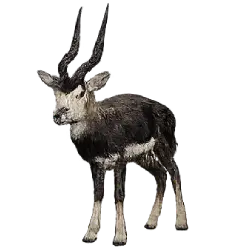
Black Lechwe
Black Lechwe is a mammal known for dark marsh-adapted coat, elongated wet-ground…
Baca panduan spesies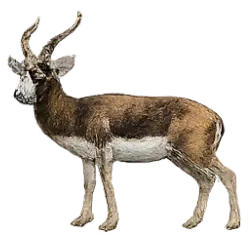
Blackbuck
Blackbuck is a mammal known for spiraled horns on males, fast bounding movement, and…
Baca panduan spesies
Brown Shrimp
Brown Shrimp matches the sand, surviving in shallow water by blending, flicking away,…
Baca panduan spesiesBawa ensiklopedia ke dunia nyata
AnimalDex membantumu memindai hewan nyata, mengidentifikasi spesies, mengoleksi kartu, dan belajar dari alam di mana pun kamu berada.