
Panduan lapangan hewan
Red Panda
Identifikasi, habitat, rarity, perilaku, simbolisme, fakta, dan pelajaran praktis dari alam.
The Flame-Tail Bamboo Climber. The Red Panda uses a ringed tail and gripping paws to move through cool mountain trees while feeding on bamboo. It reminds us that gentle creatures can still be excellent climbers.
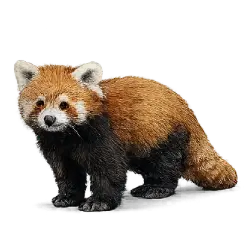
Kartu AnimalDex
Buka kartu hewan ini
Pindai atau tangkap hewan ini dengan AnimalDex untuk membuka kartu koleksi dan menambahkannya ke koleksi satwa liarmu.
Dapatkan AnimalDexNama ilmiah
Ailurus fulgens
Kategori
Mammal
Habitat
Temperate montane forest with bamboo understorey and dense tree structure.
Rarity
Rare · 81/100
Native range
Eastern Himalaya and southwestern China.
Gentle Climbing
Grip the bamboo softly.
Pseudo-Thumb Bamboo Feeding
Apa yang diajarkannya
A soft presence can still hold tightly to the branch that feeds it.
Coba
A nervous child tries the slide because a kind hand stays nearby.
Bukti alam
Red Pandas use semi-retractile claws and a pseudo-thumb wrist bone to grip branches and bamboo while moving through cool mountain forests.
Gunakan untuk
Tangkapan Red Panda berperingkat
Belum ada tangkapan komunitas berperingkat untuk spesies ini.
Mengapa Gentle Climbing?
Alasan di balik Prinsip Hewan ini dan biologi yang mendukungnya.
Red pandas are small Himalayan and Chinese forest mammals known for ringed tails, reddish fur, and cool-climate bamboo browsing in tree-rich mountain habitat.
Cara mengidentifikasi Red Panda
- Rust-red coat with white facial mask and ringed tail
- Cat-sized arboreal body with short face and dark legs
- Often curls or rests on branches in cool forest cover
Kenapa Red Panda menarik
- Red pandas are biologically distinct enough to sit in their own family.
- They are excellent flagship animals for mountain forest conservation.
Habitat: Temperate montane forest with bamboo understorey and dense tree structure.
Native range: Eastern Himalaya and southwestern China.
nativeRangeCardTitle
nativeRangeCardDescription
Temperate montane forest with bamboo understorey and dense tree structure.
To find Red Panda in the wild, focus on the exact habitat patches that match its body design and daily behavior, not just the broad country where it exists. You usually do better by working one good piece of habitat inside eastern Himalaya and southwestern China. than by covering too much ground.
- Forest edge, canopy gaps, fruiting trees, or shaded trails where cover and food meet
- Sunlit logs, exposed branches, warm rocks, or regular perch sites used for scanning
- Protected habitat blocks within eastern Himalaya and southwestern China.
- Start early, pick one strong patch of habitat, and stay long enough for movement to return after you arrive.
- Work edges, clearings, fruiting trees, and stream crossings rather than walking randomly through dense cover.
- Slow down and scan shapes, outlines, and eye-level silhouettes; many good sightings come from noticing what does not move.
They eat mostly bamboo leaves and shoots, plus fruit, acorns, insects, eggs, and small foods. The diet supports the principle because a gentle-looking animal must still grip, strip, and repeat a difficult low-energy meal.
Predators include snow leopards, martens, birds of prey on young, and humans through habitat loss. Their defense is climbing, camouflage, nocturnal/crepuscular movement, and retreat into branches.
Often crepuscular or nocturnal, resting in trees and becoming active in cooler hours. The rhythm makes gentleness efficient: move when the forest is quiet, rest when energy must be saved.
Often 8 to 10 years in the wild, longer in care. The lifespan why is that gentle strategies still demand discipline when food is low-energy and weather is cold.
Females give birth in tree hollows or sheltered nests and raise small litters alone. Offspring begin as hidden warmth, making gentle climbing first a mother's protective architecture.
Sexes look similar, though males may be slightly larger. The principle is shared through the same soft grip, tail balance, and bamboo dependence.
- Feeds heavily on bamboo but supplements with fruit and small prey
- Climbs well and uses tail for balance and insulation
- Most active in cool low-light periods
Red Panda most often symbolizes gentle climbing in AnimalDex because its real survival behavior repeatedly shows this pattern.
A soft presence can still hold tightly to the branch that feeds it.
Red Pandas use semi-retractile claws and a pseudo-thumb wrist bone to grip branches and bamboo while moving through cool mountain forests.
- Use quiet canopy scanning rather than expecting active ground movement.
- Keep dogs and loud groups out of known habitat edges.
- Raccoon in photos
- Martens at a glance
- Rust-colored domestic cat in villages
statsTitle
statsDescription
statsSourceLabel: statsSourceSpeciesProfile
dominanceStat
45
speedStat
57
sizeStat
26
intelligenceStat
46
rarityStat
81%
Total
255
Size scale
Medium
Uses the canonical size stat for consistent placement


US$207 – US$431
Perkiraan rentang nilai
Kepercayaan 69%
Perkiraan nilai AnimalDex dibuat dari stat spesies kanonik.
Not a marketplace listing.
Perkiraan nilai berdasarkan hewan yang teridentifikasi dan konteks harga yang tersedia. Bukan daftar marketplace.
Seberapa langka Red Panda?
Rarity: Rare (81/100)
Red pandas have a limited fragmented range and are sensitive to habitat loss, disturbance, and disease from domestic animals.
Systems Intelligence & Hidden Purpose
Sudut pandang systems biology untuk melihat bagaimana spesies ini dibangun, peran apa yang dijalankannya di ekosistem, dan pelajaran praktis apa yang bisa dipetik manusia.
System Role
The Cool-Canopy Browser
Red Panda
Specialized Hardware
Insulating fur, balancing tail, climbing skill, and bamboo-tolerant digestion make red pandas mountain forest browsing hardware with low-noise precision.
Systems Script
Red pandas move through cool bamboo forests where canopy continuity and understory structure decide everything. They are a signal that the mountain system still has enough texture to support specialists.
Strategic Insight
Fragile systems often depend on continuity more than scale. Break the chain and the specialist disappears first.
Public Animal Power
Explore this Animal Power
This is a public capture, so you can explore its Animal Power here. Personal Apex matches and challenges use your Wild Profile and animals you own.
Own an animal with this power to use it in Growth challenges.
Hewan terkait
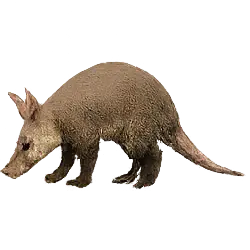
Aardvark
The aardvark is a nocturnal African mammal known for its long snout, strong digging…
Baca panduan spesies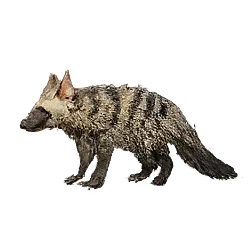
Aardwolf
The aardwolf is a small striped relative of hyenas that feeds mainly on termites rather…
Baca panduan spesies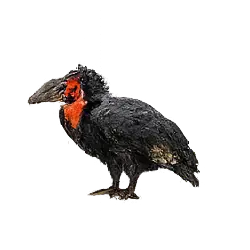
Abyssinian Ground Hornbill
Abyssinian Ground Hornbill is a bird known for bare red facial skin, huge…
Baca panduan spesiesLebih banyak hewan dengan kekuatan Climbing
Jelajahi semua hewan Climbing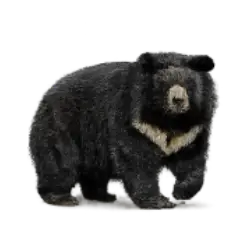
Asiatic Black Bear
Asiatic Black Bear teaches Mountain Strength through a heavy body that still climbs.…
Baca panduan spesies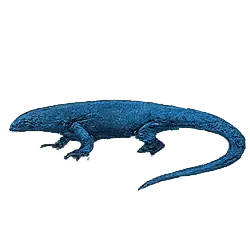
Blue Tree Monitor
Blue Tree Monitor is a reptile known for electric blue body pattern, long prehensile…
Baca panduan spesies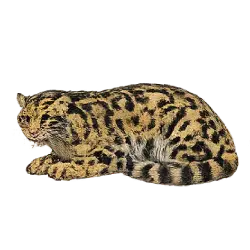
Clouded Leopard
Clouded Leopard is a mammal known for cloud-shaped coat markings, large gripping paws,…
Baca panduan spesiesBawa ensiklopedia ke dunia nyata
AnimalDex membantumu memindai hewan nyata, mengidentifikasi spesies, mengoleksi kartu, dan belajar dari alam di mana pun kamu berada.