
Panduan lapangan hewan
Variegated Lizardfish
Identifikasi, habitat, rarity, perilaku, simbolisme, fakta, dan pelajaran praktis dari alam.
Panduan lapangan hewan
Variegated Lizardfish
Sand Ambush
Disappear to Observe.
The Variegated Lizardfish uses its camouflaged body to blend into sandy ocean floors, allowing it to observe and ambush prey effectively.
You’re #1 of 1
RECORD ID
4997E26C-5412-4408-9126-0780100742E5
Native range
Natural range, not this capture location
Native range keys: indian_ocean, south_pacific, coral_triangle, red_sea. Sand patches, rubble and reef flats suit Variegated Lizardfish because Sand Ambush needs open ground where prey passes and a bottom the fish can disappear into.
Wild reward hint
First-time wild species earn bonus rewards, including 1 free credit.
0/1 XP toward Level 2
AnimalDex stats
Dominance
41
Speed
46
Size
20
Intelligence
27
Rarity
39%
Total
173
Size scale
Zoo animal · comparisons disabled
Zoo animals stay in your collection, but they can't enter scenario comparisons or the Arena.
✦ Available actions
Compare this public animal when your deck meets the current rules.
Nama ilmiah
Synodus variegatus
Kategori
Animal
Habitat
Native range keys: indian_ocean, south_pacific, coral_triangle, red_sea. Sand patches, rubble and reef flats suit Variegated Lizardfish because Sand Ambush needs open ground where prey passes and a bottom the fish can disappear into.
Rarity
Relatively common · 39/100
Native range
Native range keys: indian_ocean, south_pacific, coral_triangle, red_sea. Sand patches, rubble and reef flats suit Variegated Lizardfish because Sand Ambush needs open ground where prey passes and a bottom the fish can disappear into.
Mengapa Sand Ambush?
Alasan di balik Prinsip Hewan ini dan biologi yang mendukungnya.
Variegated Lizardfish teaches Sand Ambush by resting half-buried on open sand, motionless for long stretches, then covering the gap to a passing fish in a single explosive lunge.
Cara mengidentifikasi Variegated Lizardfish
- Mottled red-brown blotching that matches coral rubble and sand
- Large mouth lined with fine, needle-like teeth, including on the tongue
- Props itself on its pelvic fins in a lizard-like posture
- Often half-buried, with only the eyes and back exposed
Kenapa Variegated Lizardfish menarik
- Its tongue carries teeth, which is why prey rarely escapes once taken.
- It can bury itself in sand with only its eyes showing.
- The strike is a single upward lunge from a standing start.
- It occurs across the Indo-Pacific on reef flats, sand and rubble.
- It sits still long enough that divers routinely swim straight past one.
Habitat: Native range keys: indian_ocean, south_pacific, coral_triangle, red_sea. Sand patches, rubble and reef flats suit Variegated Lizardfish because Sand Ambush needs open ground where prey passes and a bottom the fish can disappear into.
Native range: Native range keys: indian_ocean, south_pacific, coral_triangle, red_sea. Sand patches, rubble and reef flats suit Variegated Lizardfish because Sand Ambush needs open ground where prey passes and a bottom the fish can disappear into.
nativeRangeCardTitle
nativeRangeCardDescription
nativeRangeMissingAssets
Native range keys: indian_ocean, south_pacific, coral_triangle, red_sea. Sand patches, rubble and reef flats suit Variegated Lizardfish because Sand Ambush needs open ground where prey passes and a bottom the fish can disappear into.
To find Variegated Lizardfish in the wild, focus on the exact habitat patches that match its body design and daily behavior, not just the broad country where it exists. You usually do better by working one good piece of habitat inside native range keys: indian_ocean, south_pacific, coral_triangle, red_sea. Sand patches, rubble and reef flats suit Variegated Lizardfish because Sand Ambush needs open ground where prey passes and a bottom the fish can disappear into. than by covering too much ground.
- Headlands, reef edges, island colonies, tidal channels, or productive coastal water
- Protected habitat blocks within native range keys: indian_ocean, south_pacific, coral_triangle, red_sea. Sand patches, rubble and reef flats suit Variegated Lizardfish because Sand Ambush needs open ground where prey passes and a bottom the fish can disappear into.
- Start early, pick one strong patch of habitat, and stay long enough for movement to return after you arrive.
- Time your search around tide, wind, and visibility, then focus on feeding lines, reef edges, and known haul-out or nesting spots.
- Move quietly, stop often, and give the habitat time to settle; many mammals and insects show themselves only after the first pause.
Small fish and occasional crustaceans taken in a single lunge. This diet supports Sand Ambush because one successful strike can pay for hours of waiting.
Larger reef predators, including groupers and sharks. Its answer is the same stillness it hunts with — an unmoving lizardfish is very hard to find.
Variegated Lizardfish rest on the bottom around the clock, hunting during daylight and remaining settled on sand at night.
They live several years, and Sand Ambush becomes site knowledge — which sand patch sits on a route fish actually use.
They spawn in open water and the elongate larvae drift as plankton before settling. Offspring fit the principle because a settling juvenile must find its own patch of productive sand.
Males and females look alike. Appearance carries no signal because a hunter that depends on being invisible cannot afford a display.
- Mottled red-brown blotching that matches coral rubble and sand
- Large mouth lined with fine, needle-like teeth, including on the tongue
- Props itself on its pelvic fins in a lizard-like posture
- Often half-buried, with only the eyes and back exposed
Variegated Lizardfish most often symbolizes sand ambush in AnimalDex because its real survival behavior repeatedly shows this pattern.
The Variegated Lizardfish uses its camouflaged body to blend into sandy ocean floors, allowing it to observe and ambush prey effectively.
This fish's mottled coloration helps it remain hidden from both predators and prey, making it a master of stealth in its habitat.
- Observe from a respectful distance and avoid changing the animal's behavior.
- Do not block feeding, shelter, nesting, or travel routes.
- Use a live camera capture without handling or staging wildlife.
Lebih banyak hewan dengan kekuatan Strategic Camouflage
Jelajahi semua hewan Strategic Camouflage
American Badger
American Badger turns Burrow Strategy into muscular problem-solving, using claws,…
Baca panduan spesies
Band-eyed Drone Fly
The Striped Hoverer. Eristalinus taeniops, known for its strikingly striped eyes, is a…
Baca panduan spesies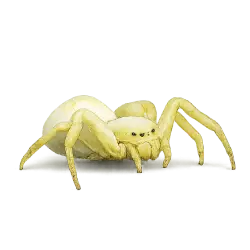
Goldenrod Crab Spider
Goldenrod Crab Spider expresses Flower-Edge Ambush through real survival details, not a…
Baca panduan spesiesBawa ensiklopedia ke dunia nyata
AnimalDex membantumu memindai hewan nyata, mengidentifikasi spesies, mengoleksi kartu, dan belajar dari alam di mana pun kamu berada.