
Panduan lapangan hewan
Three-toed Sloth
Identifikasi, habitat, rarity, perilaku, simbolisme, fakta, dan pelajaran praktis dari alam.
The Invisible Tree Hugger. The Three-toed Sloth uses slow gentle movements and a branch-hugging body to melt into the trees almost like moss. It reminds us that quiet calm can sometimes keep us safer than rushing.
Kartu AnimalDex
Buka kartu hewan ini
Pindai atau tangkap hewan ini dengan AnimalDex untuk membuka kartu koleksi dan menambahkannya ke koleksi satwa liarmu.
Dapatkan AnimalDexNama ilmiah
Bradypus variegatus
Kategori
Mammal
Habitat
Lowland rainforest, secondary forest, and humid tropical woodland with continuous canopy.
Rarity
Relatively common · 47/100
Native range
Central and South America.
Slow Camouflage
Move like moss.
Algae-Tinted Branch Living
Apa yang diajarkannya
A quiet life can disappear by moving at the speed of leaves.
Coba
A rushed morning calms down when everyone moves gently and speaks softly.
Bukti alam
Three-toed Sloths move slowly through trees, host algae in their fur, and use slow motion and canopy living to reduce detection by predators.
Gunakan untuk
Tangkapan Three-toed Sloth berperingkat
Belum ada tangkapan komunitas berperingkat untuk spesies ini.
Mengapa Slow Camouflage?
Alasan di balik Prinsip Hewan ini dan biologi yang mendukungnya.
Three-toed sloths are slow arboreal folivores that survive through low metabolic demand, camouflage, and careful movement in tropical forest canopies.
Cara mengidentifikasi Three-toed Sloth
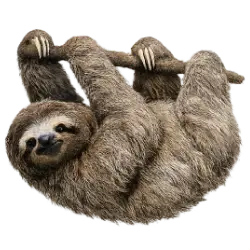
- Small round head with dark eye mask and long shaggy fur
- Three long curved claws on each forelimb
- Usually hangs suspended beneath branches rather than standing on top
Kenapa Three-toed Sloth menarik
- Sloths are good examples of survival built around low output rather than high performance.
- Their fur often carries algae and small invertebrates, adding another ecological layer.
Habitat: Lowland rainforest, secondary forest, and humid tropical woodland with continuous canopy.
Native range: Central and South America.
nativeRangeCardTitle
nativeRangeCardDescription
Lowland rainforest, secondary forest, and humid tropical woodland with continuous canopy.
To find Three-toed Sloth in the wild, focus on the exact habitat patches that match its body design and daily behavior, not just the broad country where it exists. You usually do better by working one good piece of habitat inside central and South America. than by covering too much ground.
- Forest edge, canopy gaps, fruiting trees, or shaded trails where cover and food meet
- Sunlit logs, exposed branches, warm rocks, or regular perch sites used for scanning
- Protected habitat blocks within central and South America.
- Start early, pick one strong patch of habitat, and stay long enough for movement to return after you arrive.
- Work edges, clearings, fruiting trees, and stream crossings rather than walking randomly through dense cover.
- Slow down and scan shapes, outlines, and eye-level silhouettes; many good sightings come from noticing what does not move.
Leaves, buds, and tender shoots support the lesson because the low-energy diet explains slow movement and long digestion.
Harpy eagles, jaguars, ocelots, snakes, and humans threaten sloths. Slow motion and algae-tinted fur reduce detection in trees.
Rest is spread across day and night; activity is slow and energy-limited. The rhythm is an energy budget, not laziness.
Three-toed Sloth's lifespan note should be read through Slow Camouflage: the behavior gains meaning through repeated seasons, growth, breeding, and survival rather than one isolated moment.
For Three-toed Sloth, offspring notes connect the lesson to real reproduction: nests, eggs, dens, calves, larvae, pups, chicks, or young survival where relevant.
Sex differences are only important when they sharpen Three-toed Sloth's lesson; otherwise the shared species body plan carries Slow Camouflage.
- Moves slowly to avoid attention and conserve energy
- Feeds on selected leaves that provide little fast fuel
- Often descends rarely despite spending most of life in trees
Three-toed Sloth most often symbolizes slow camouflage in AnimalDex because its real survival behavior repeatedly shows this pattern.
A quiet life can disappear by moving at the speed of leaves.
Three-toed Sloths move slowly through trees, host algae in their fur, and use slow motion and canopy living to reduce detection by predators.
- Scan treetops patiently instead of expecting obvious movement.
- Avoid any wildlife venue that encourages touching or staged handling.
- Two-toed sloth
- Sleeping monkey in dense foliage
- Epiphyte-covered branch cluster
statsTitle
statsDescription
statsSourceLabel: statsSourceSpeciesProfile
dominanceStat
24
speedStat
8
sizeStat
28
intelligenceStat
41
rarityStat
47%
Total
148
Size scale
Medium
Uses the canonical size stat for consistent placement

US$115 – US$239
Perkiraan rentang nilai
Kepercayaan 69%
Perkiraan nilai AnimalDex dibuat dari stat spesies kanonik.
Not a marketplace listing.
Perkiraan nilai berdasarkan hewan yang teridentifikasi dan konteks harga yang tersedia. Bukan daftar marketplace.
Seberapa langka Three-toed Sloth?
Rarity: Relatively common (47/100)
Many sloth populations remain locally stable, but canopy fragmentation makes movement and reproduction more difficult.
Systems Intelligence & Hidden Purpose
Sudut pandang systems biology untuk melihat bagaimana spesies ini dibangun, peran apa yang dijalankannya di ekosistem, dan pelajaran praktis apa yang bisa dipetik manusia.
System Role
The Low-Metabolism Camouflage Platform
Three-toed Sloth
Specialized Hardware
Curved claws, hanging limb structure, and exceptionally slow energy use make three-toed sloths built for invisibility through understatement.
Systems Script
Sloths reduce predation pressure by refusing the pace most predators expect. They are reminders that ecosystems also make room for organisms whose main move is not being worth noticing.
Strategic Insight
Sometimes the strongest defense is lowering your signal below the threshold that triggers attention.
Public Animal Power
Explore this Animal Power
This is a public capture, so you can explore its Animal Power here. Personal Apex matches and challenges use your Wild Profile and animals you own.
Own an animal with this power to use it in Growth challenges.
Hewan terkait
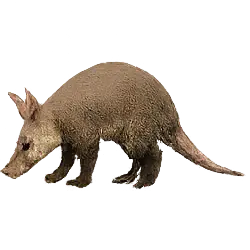
Aardvark
The aardvark is a nocturnal African mammal known for its long snout, strong digging…
Baca panduan spesies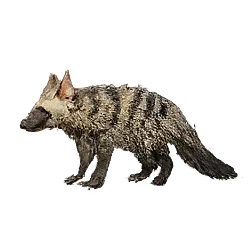
Aardwolf
The aardwolf is a small striped relative of hyenas that feeds mainly on termites rather…
Baca panduan spesies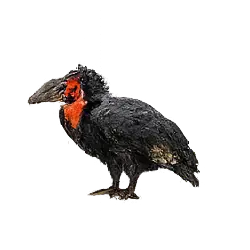
Abyssinian Ground Hornbill
Abyssinian Ground Hornbill is a bird known for bare red facial skin, huge…
Baca panduan spesiesLebih banyak hewan dengan kekuatan Calm
Jelajahi semua hewan Calm
Bawa ensiklopedia ke dunia nyata
AnimalDex membantumu memindai hewan nyata, mengidentifikasi spesies, mengoleksi kartu, dan belajar dari alam di mana pun kamu berada.